General
Best Tools for GameFi Projects in 2026: Complete Review
GameFi market cap collapsed from $23.87B at the end of 2024 to $7.8B by the end of 2025, a 67% decline, according to ChainPlay's 2025 GameFi report published in March 2026.
That reset separated speculative play-to-earn experiments from projects building durable in-game economies, and the difference almost always came down to infrastructure.
Streamflow, the Solana-native token operations platform with over $1.4B in total value locked across 40,000+ projects, sits at the center of that infrastructure layer for studios serious about token design.
The hard lesson from 2025 is that emissions without structure kill games. Uncontrolled reward inflation, opaque treasury moves, and manual airdrops drained player trust faster than any single exploit.
Solana captured roughly 50% of GameFi application fees in Q1 2025 per industry data, making it the natural home for studios that need high throughput and near-zero fees to run live token economies.
This review breaks down the criteria that actually matter for GameFi tooling in 2026, ranks the categories of tools every studio needs, and shows where each one fits into a healthy in-game economy.
Key Takeaways
The best tools for GameFi projects in 2026 prioritize sustainable emissions over short-term play-to-earn hype.
Streamflow handles GameFi token distribution, vesting, staking, and airdrops through audited on-chain smart contracts on Solana.
Controlled vesting and token locks protect GameFi treasuries from the inflation that collapsed many 2025 projects.
Over 40,000 projects use Streamflow, including Solana metaverse Heavenland for transparent token distribution.
Solana's high throughput and near-zero fees make it the strongest base layer for live GameFi economies.
The Criteria for Choosing GameFi Tools in 2026
Not every tool that worked in the 2021 play-to-earn boom survives contact with a mature market. The 2025 contraction rewarded studios that treated token operations as serious infrastructure rather than a launch-day afterthought. Use these five criteria to evaluate any tool on this list.
Emission control: The tool must let you schedule and cap token releases, not just dump rewards into circulation.
On-chain transparency: Players and investors should be able to verify token locks, vesting, and treasury movements on Solscan or Solana Explorer.
Scale: In-game reward distribution and airdrops can hit hundreds of thousands of wallets, so the tool must handle volume without manual work.
Low transaction cost: Per-transaction fees compound fast in a live economy, which is why Solana's near-zero fees matter for GameFi.
Developer integration: A usable SDK lets studios embed token logic directly into game clients and backends.
The strongest GameFi stacks combine several of these into one workflow. A tool that nails emission control but cannot scale distribution forces studios back into spreadsheets, which is exactly what 2025 punished.
1. Token Distribution and Reward Platforms
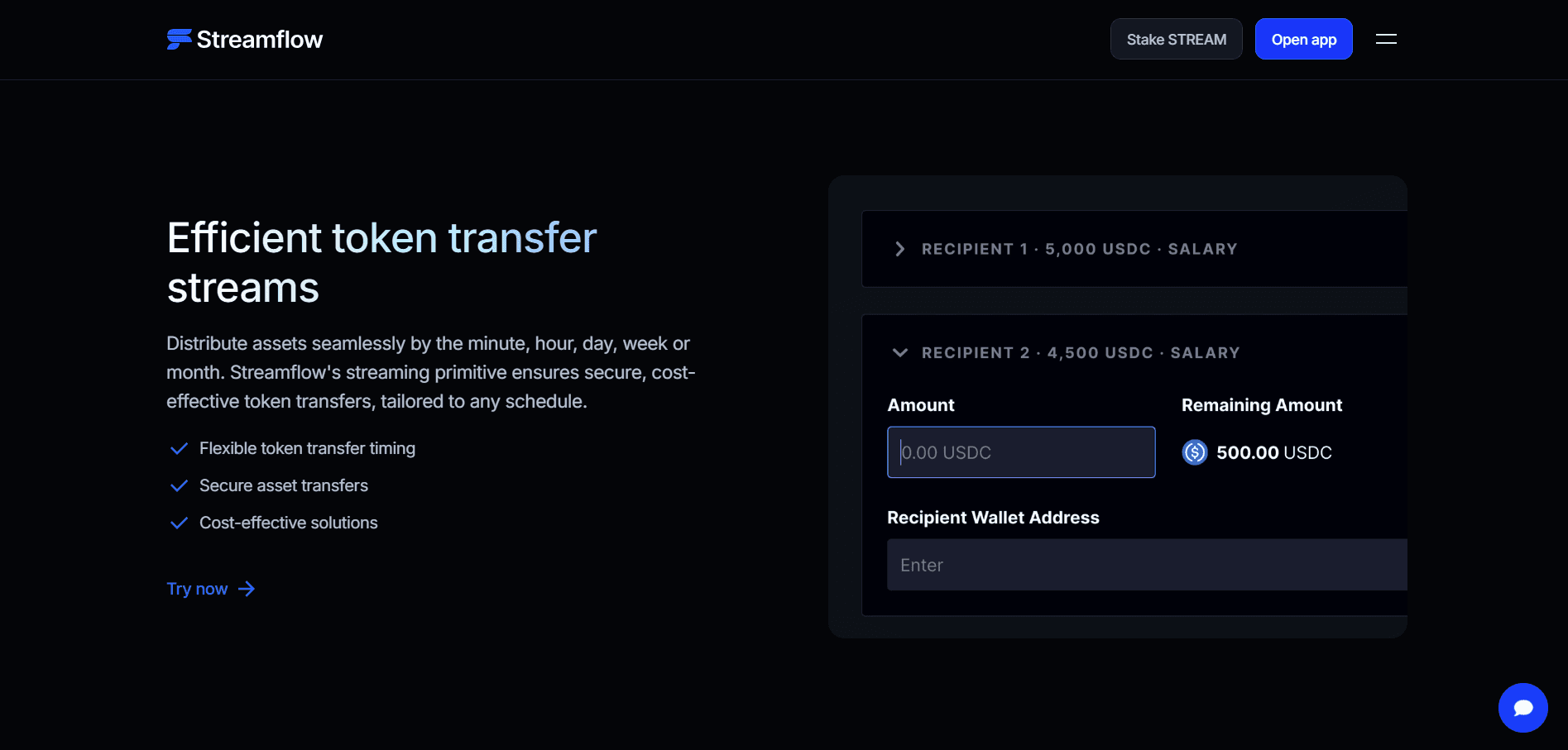
The core job in any GameFi economy is moving tokens to the right players at the right time. GameFi token distribution covers in-game currency payouts, achievement rewards, seasonal drops, and contributor allocations, all of which need to happen automatically and verifiably.
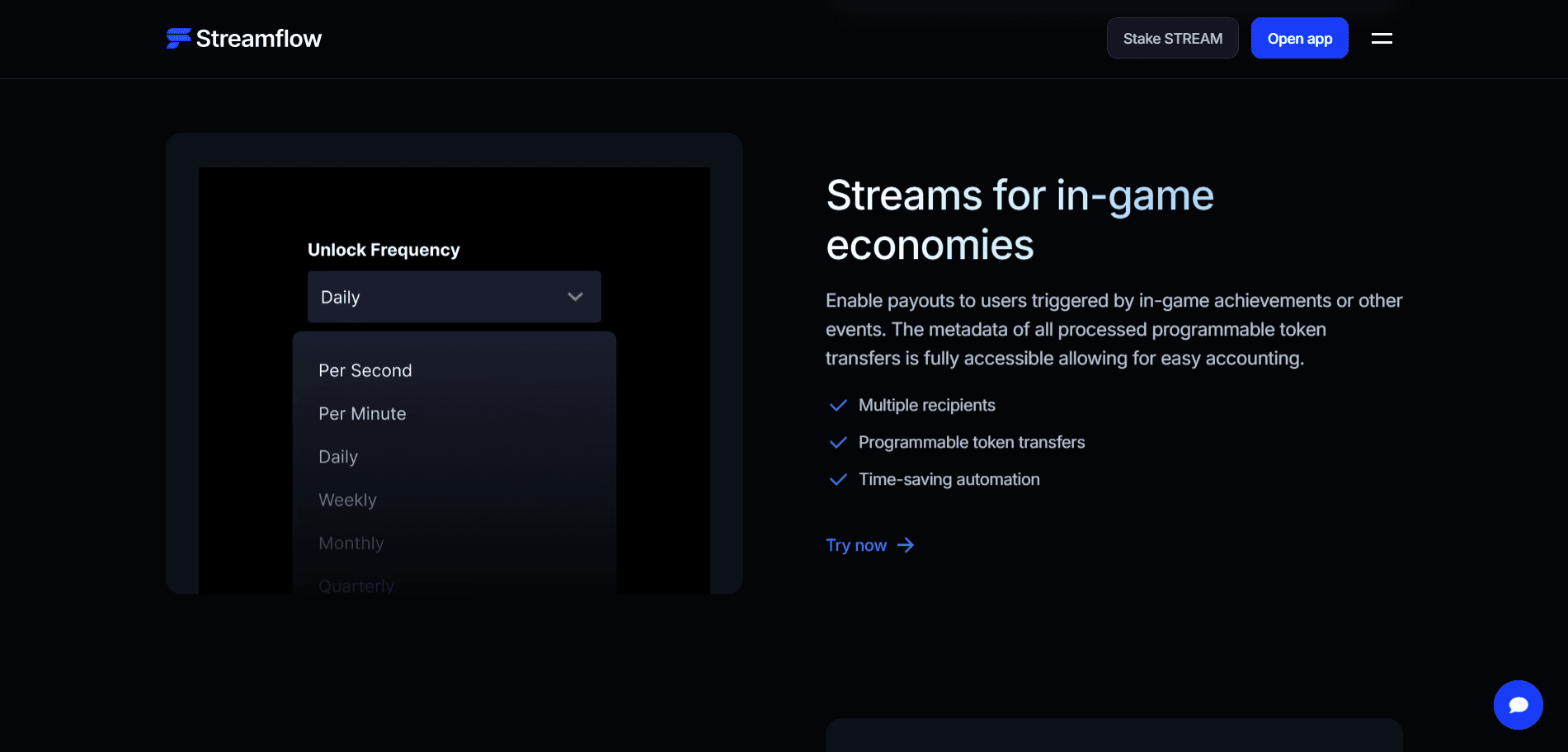
Distribute in-game currency based on player achievements or events.
Attach metadata to each processed transfer so accounting stays clean.
Run claim-based or auto-send distribution depending on your reward design.
Streamflow centralizes all of this into one programmable system instead of fragmented scripts.
A studio rewarding tournament winners can define the logic once and let smart contracts execute every payout, with each transfer recorded on-chain for audit. This is the difference between a reward system that scales and one that breaks at 10,000 players.
2. Token Vesting Tools
Vesting is the single most underused tool in GameFi, and its absence is why so many game tokens cratered in 2025. Controlled, gradual release of team, treasury, and investor allocations prevents the supply shocks that wreck player confidence.
Automated token vesting turns a tokenomics plan into an enforceable on-chain contract.
Choose linear, cliff, cliff-plus-linear, graded, milestone, or price-based schedules.
Bulk-import recipients via CSV for large contributor and team sets.
Share public proof links so the community can verify every schedule.
Streamflow enforces vesting through immutable smart contracts that cannot be changed unilaterally after deployment.
For a GameFi studio, that means locking core-team tokens on a multi-year schedule and proving it, which signals long-term commitment to players deciding whether to invest time and money.
You can create a vesting schedule on Streamflow without writing a single line of code.
3. Token Lock Platforms
Token locks are the fastest trust signal a GameFi project can send. Locking liquidity, team allocations, and treasury funds until predefined dates or price levels tells players the team cannot dump on them.
Transparent token locks make that commitment publicly verifiable.
Lock SPL and LP tokens with fixed-date or price-based unlock conditions.
Locked tokens cannot be transferred, traded, or accessed before unlock.
Verify every lock on Solscan, Solana Explorer, or RugCheck.
Streamflow turns locking into a transparent trust mechanism rather than a private promise. In a sector where 93% of GameFi projects are reported as effectively dead, a verifiable lock is one of the few credible ways a new studio can stand apart.
Token locking on Solana also costs a fraction of what equivalent operations cost on Ethereum.
4. Staking Infrastructure
Staking is how mature GameFi economies reduce sell pressure and reward long-term players instead of mercenary farmers. No-code staking pools let studios deploy reward systems without building custom contracts.
Stake any SPL token with configurable APY and lock periods.
Choose pool types like Fund Once, Continuous Funding, Governance Staking, or Custom.
Automate reward distribution and top up pools as needed.
Streamflow makes staking pools fully non-custodial and permissionless to create, with real-time staking data and support for Phantom, Backpack, and Solflare.
For a studio, this means giving players a reason to hold the in-game token between seasons rather than selling the moment rewards land. Reducing circulating supply this way directly counters the emission inflation that defined 2025's worst performers.
5. Airdrop and Claim Platforms
Airdrops remain the primary acquisition tool in GameFi, but manual distribution falls apart at scale and invites sybil abuse. A dedicated airdrop launch platform handles eligibility, claim windows, and delivery for hundreds of thousands of players.
Run instant, vested, or price-based airdrops to up to 1M recipients.
Import up to 100,000 recipients per CSV for large campaigns.
Track claims in real time and recover unclaimed tokens.
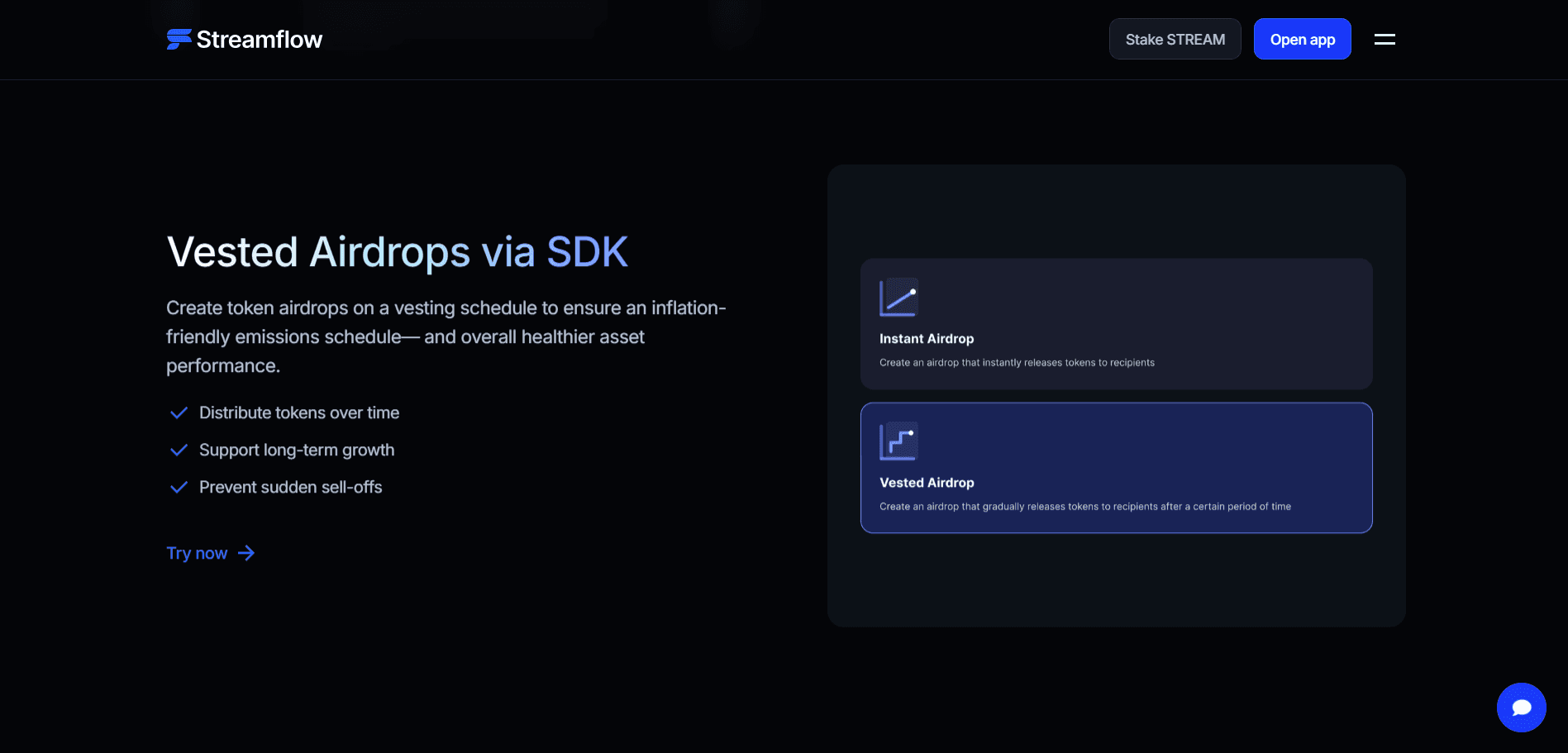
Streamflow supports vested airdrops through the SDK, which lets studios reward players gradually instead of handing out fully liquid tokens that get sold immediately. Pairing an airdrop with a vesting schedule keeps emissions healthy and aligns recipients with the game's long-term economy.
Eligibility filtering and sybil checks help ensure rewards reach real players, not bot farms.
6. Developer SDKs and Programmable Infrastructure
GameFi economies live inside game clients and backends, so the best tooling exposes a developer layer. Streamflow's SDK lets studios embed token distribution, vesting, and reward logic directly into their applications.
Build custom reward flows triggered by in-game events.
Deploy vested airdrops programmatically as players progress.
Access processed-transfer metadata for accounting and analytics.
This programmable layer is what separates infrastructure from a dashboard. A studio can wire achievement unlocks straight to on-chain token releases, creating a healthier economy with an inflation-friendly emissions schedule baked into the code itself.
How to Choose the Right GameFi Stack
The right combination depends on your stage and economy design, but the decision framework is consistent.
Pre-launch: lock liquidity and team tokens, then set vesting for all core allocations.
Launch: run a vested airdrop to seed the player base without flooding supply.
Live operations: automate in-game reward distribution and deploy staking to absorb sell pressure.
Scale: integrate the SDK so token logic runs natively inside the game.
The studios that survived 2025 did not use six disconnected tools. They used unified infrastructure that handled distribution, vesting, locks, staking, and airdrops in one verifiable system, which is exactly the gap Streamflow fills for GameFi teams on Solana.
Case Study: Heavenland
Heavenland is a metaverse built on Solana with its $HTO token distributed across team, incentives, treasury, and community allocations. With a large community and a token central to the in-game economy, the project needed secure and transparent distribution to avoid the inflation problems that sink GameFi economies.
Heavenland placed 97% of its token supply on a 5-year linear vesting schedule, with all allocations subject to cliffs.
The design allowed initial liquidity without excessive inflation, and the outcome was a more engaged and dedicated player community.
The Heavenland case study shows how disciplined vesting, rather than aggressive emissions, builds a durable GameFi economy.
Conclusion
The 2025 GameFi reset made one thing clear: studios that control emissions, lock commitments transparently, and automate distribution outlast those that chase short-term play-to-earn hype.
The best tools for GameFi projects in 2026 are the infrastructure pieces that make a sustainable in-game economy enforceable on-chain, and Streamflow unifies distribution, vesting, locks, staking, and airdrops in one Solana-native platform trusted by 40,000+ projects.
Book a demo to see how Streamflow handles GameFi token distribution, vested player airdrops, and on-chain staking at scale.
Read Next:
FAQs:
1. What are the best tools for GameFi projects in 2026?
The best tools for GameFi projects in 2026 are unified token operations platforms that handle distribution, vesting, locks, staking, and airdrops in one place. Streamflow provides all of these as audited on-chain smart contracts on Solana, which is why over 40,000 projects rely on it. After the 2025 market reset, studios prioritize emission control and on-chain transparency over standalone play-to-earn tooling.
2. How does Streamflow help GameFi studios control token inflation?
Streamflow helps GameFi studios control inflation through token vesting, token locks, and staking that absorb circulating supply. Vesting releases team and treasury tokens gradually on immutable schedules, locks prove allocations cannot be dumped early, and staking gives players a reason to hold rather than sell. Together these tools counter the emission inflation that collapsed many GameFi tokens in 2025.
3. Can Streamflow distribute in-game rewards automatically?
Yes, Streamflow can distribute in-game rewards automatically based on player achievements or events. Studios define the distribution logic once, and smart contracts execute every payout on-chain with attached metadata for accounting. Developers can also embed this reward logic directly into their game using the Streamflow SDK.
4. Why is Solana a good blockchain for GameFi token operations?
Solana is a strong blockchain for GameFi token operations because of its high throughput, sub-second finality, and near-zero transaction fees. Live in-game economies process large volumes of small transfers, and Solana keeps those costs viable where other chains do not. Solana also captured roughly 50% of GameFi application fees in Q1 2025, reflecting its dominance in the sector.
5. Is Streamflow's smart contract code audited?
Yes, Streamflow's smart contracts are audited by FYEO and OPCODES. All distribution, vesting, lock, and staking logic executes on-chain and can be verified on Solscan or Solana Explorer. For GameFi studios, this means token operations are both transparent to players and resistant to manipulation.