Home
Token locks
Crypto Token Locks
Token locking lets you show commitment and transparency to your community or just safeguard your assets from selling during bear periods. Launch a lock fast, share a public proof link, and automate release when conditions are met.
Trusted by the best Solana projects








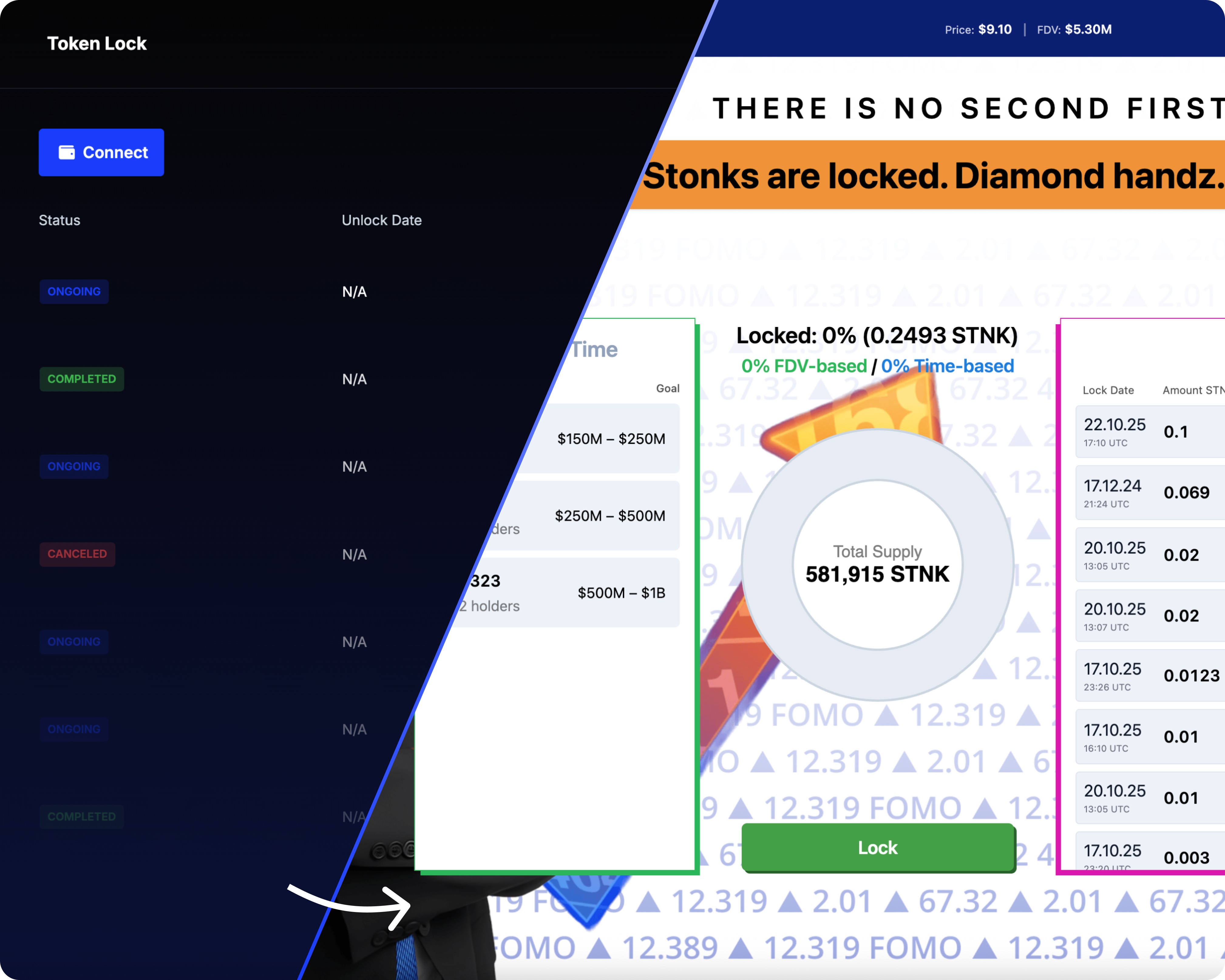
Get a custom lock portal for token locking
Streamflow lets your community time-lock or price-lock tokens directly on your custom, branded page. Get in touch and let us create a white-label dashboard built specifically for your project, so every token lock is easy to verify and the lock in crypto is clear.
Let anyone lock tokens with ease
Customize unlock logic to fit your rules
Automate post-unlock releases
Secure your assets with Streamflow
Streamflow's token locks provide a robust mechanism to support secure token locks. Demonstrate your long-term commitment to your project and foster trust within your community.
Prevent premature selling
Enhance market stability
Build trust
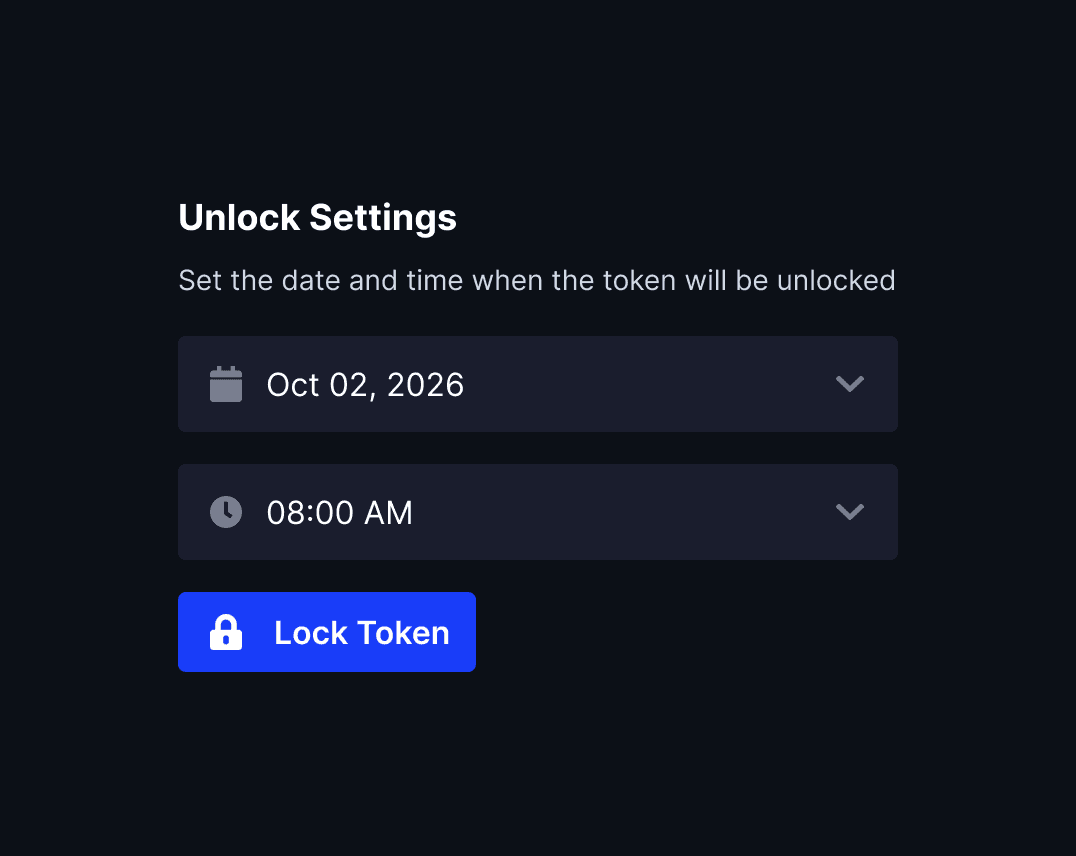
Unmatched security and convenience for secure token locks
Streamflow is committed to providing straightforward token locking without sacrificing transparency. Our audited smart contract ensures the highest level of security for your assets, while our automated release system offers unparalleled ease of use. Streamflow token locks empower you to take control of your investments with confidence and peace of mind.
Audited infrastructure, on-chain proof, and simple operations
Audited smart contracts ensure top-tier asset security
Automated token release
Full control and transparency over your locked assets
Find us on Solana Docs
Streamflow is listed in the official Solana documentation under “token vesting.” To explore related tooling and workflows, see our Solana token automation tools and learn how teams structure on-chain token operations.
Audited by


Frequently asked questions
What’s the difference between a token lock and token vesting?
Token locks hold tokens until a specific unlock date or price-based mechanisms with no gradual release. Token vesting, on the other hand, releases tokens progressively over time based on customizable schedules, conditions, or price-based mechanisms.
How long are tokens typically locked?
Lock durations vary depending on a project’s goals and tokenomics. In general, longer lockups help demonstrate long-term commitment and build stronger community trust.
What happens when a token lock expires?
Once a token lock expires, the tokens are automatically unlocked and sent to the recipient's wallet.
Can locked tokens be traded or transferred?
No. Locked tokens cannot be accessed, transferred, traded, or unlocked under any circumstances before unlock date or unlock based on the chosen market performance metrics. This process is designed to ensure the integrity of the lock mechanism and maintain trust in the system.
What is the difference between token locking and liquidity locking?
Token locking applies to any type of token allocation. Liquidity locking specifically refers to locking LP tokens from a project’s liquidity pool to prevent sudden liquidity withdrawals or rug pulls.
How does a token lock compare to smart contract vesting?
Token locks release all tokens at once on a predetermined date or based on chosen market performance metrics. Vesting uses smart contracts to release tokens gradually over time or based on performance metrics, allowing for more flexible schedules and conditional unlocks.
Is token locking the same as staking?
No. Token locking restricts access to tokens until a set date or price, while token staking involves locking tokens in a protocol to earn rewards over a defined period. Consider ecosystem-specific approaches like Solana staking or automated staking on Solana if your goal is hands-off operations.
What types of tokens can we lock using Streamflow?
Streamflow supports locking any SPL token, including LP tokens, team allocations, treasury funds, and other custom token allocations.
Can we offer our community a public locking dashboard?
Yes. Streamflow provides publicly shareable dashboards that allow communities to transparently view locked token allocations and unlock schedules on-chain.
Can we customize the unlock conditions?
Yes. Streamflow offers flexible unlock configurations, including fixed-date unlocks and price-based unlock conditions tied to market performance.
Token Lock and Crypto Lock - What Does It Mean to Lock Tokens?
A token lock is a rule-based restriction that prevents assets from moving until conditions are satisfied (usually time-based or price-based). A crypto lock is the broader concept: restricting access to crypto assets through verifiable rules.
What Is Blockchain Token Distribution In Crypto Projects and Why Is It Important?
What do lock in crypto and token lockup mean?
A lock in crypto simply means assets are restricted by an on-chain rule until a condition is met. A token lockup is the same idea applied to a specific token lock-up period - the window where tokens can’t be moved. Once the condition or period ends, the tokens unlock according to the rules you set.
Why crypto projects lock tokens?
Projects lock tokens to make supply and liquidity commitments verifiable; this token lock is different from distribution or vesting (a release schedule), and some teams also use a lock in token as a simple rule-based restriction rather than a full vesting schedule.
For most crypto projects, locking is about credibility:
It reduces uncertainty around early supply moves
It supports cleaner token management and communication
It gives communities and investors an on-chain source of truth
How Token Locking Works and How Projects Lock Crypto Assets?
Token locking steps to lock crypto with clear conditions
Most projects follow the same pattern:
Select the asset type (LP tokens, team token, treasury allocation)
Set time rules and/or price triggers
Publish the lock details and keep comms consistent
This is also where token locking connects to broader ops. Many teams pair locking with community distribution and claims - letting users claim airdrops on Solana while you automate token distribution on Solana for scheduled releases.
Choosing a token lock-up period - when you lock tokens
Your token lock-up period is the time window where assets remain unavailable. Teams typically choose a lock-up period based on:
Liquidity protection (especially at launch)
Team token credibility (avoid sudden supply shocks)
Treasury governance (reduce impulsive moves)
Token locking events after you lock tokens
When conditions are met, the release can happen automatically or through a defined claim action, depending on how you structure the lock. Either way, the goal is predictable token flows and fewer surprises.
Crypto Locker Infrastructure and Token Locker Mechanisms
A crypto locker (specifically a token locker) is best thought of as infrastructure. It’s not a one-off script or a manual multisig process, but a repeatable mechanism for creating, verifying, and managing locks. In simple terms, the locker restricts access, so a locker token allocation can’t move until the unlock conditions are met.
This matters if you’re scaling token ops or building your own flow. Some teams want to build Solana programs, but many decide a dedicated locker system is faster and less risky than maintaining custom contracts long-term.
Picking a crypto locker instead of DIY scripts
A crypto locker helps you avoid:
One-off manual processes that are hard to audit
Inconsistent rules across wallets and allocations
Confusing community communications (“Where is the proof?”)
Token locker patterns when you create token locker portals
A token locker portal is useful when you want a public-facing dashboard for community locks or project locks. If you want to create token locker experiences with branding, you can keep the UX consistent while still relying on verifiable on-chain rules.
Why Crypto Projects Use Token Locks to Protect Value and Trust?
Token locks are usually a trust and stability tool. They can protect liquidity, reduce early volatility, and help the community understand future circulating supply. They help protect investors by making supply moves predictable, and it supports secure token locks that anyone can verify on-chain.
In practice, projects often pair token locks with ops automation. For example, setting rules for payouts, contributors, or DAO flows like automated DAO treasury payments, so governance and treasury actions stay predictable.
Token locking reasons to reduce sell pressure
Launch credibility: show you can’t immediately dump
Liquidity locks: reduce the risk of sudden liquidity removal
Supply predictability: limit shock events and rumors
Team token trust: make commitments easy to verify
Lock in crypto signals vs “trust me” messaging
A lock in crypto is valuable because it’s inspectable. Anyone can verify what’s locked, for how long, and under what conditions it unlocks.
Token Locking vs Other Ways to Control Token Supply
A token lock is one option in a broader toolkit that also includes vesting, staking, delayed distribution, and structured release plans. The right choice depends on what you’re trying to control: access, emissions, incentives, or liquidity risk.
Use token locking when you need a simple, verifiable restriction. For example, to lock tokens allocated to the team finance, lock liquidity, or lock crypto held in a treasury until a milestone. A token-based lock is ideal when the main goal is restriction and transparency (not rewards or compensation mechanics).
If your goal is community distribution and supply pacing, you may also want to launch a token airdrop on Solana and coordinate it with a clear token vesting schedule for teams, investors, or advisors.
Locker Token models and Controlled Access to Locked Assets
“Locker Token” models describe who can unlock assets and how that access is controlled once you lock tokens. In practice, a token locker (or crypto locker) can enforce different permission patterns, such as:
Permissionless unlock - anyone can trigger release after the token lock-up period ends
Owner/authority unlock - only a defined wallet can initiate unlock when conditions are met
Governance-controlled unlock - release is gated by DAO approval or a multisig process
Claim-based unlock - recipients claim unlocked tokens over time, reducing one-time supply shocks
If unlocked assets need to move into recurring contributor payouts or vendor flows, connect the unlock to token payments so treasury execution stays consistent.
The Role of Token Locking in Sustainable Crypto Ecosystems
In healthy ecosystems, supply changes are predictable. Token locking supports long-term planning by reducing surprise circulating-supply spikes and giving the market clearer expectations.
The best results happen when a crypto lock is paired with a published token release plan so community members can understand what unlocks, when, and why. This is also where a second token lock-up period can be used for later allocations, to avoid future cliffs.