General
Web3 Payroll: How to Set Up Recurring Token Payments for Your Team
Streamflow, the Solana-native token operations platform trusted by more than 40,000 projects, gives Web3 teams the infrastructure to run that payroll on-chain rather than through fragmented manual transfers.
The shift is no longer experimental; distributed teams now expect to be paid in tokens or stablecoins, on time, and without the multi-day settlement lag of legacy rails.
The problem is that most Web3 teams still run payroll the way Web2 companies did a decade ago: a multisig signer manually batching transfers every two weeks, a spreadsheet tracking who got paid, and no on-chain record that scales. That approach breaks the moment your contributor count crosses a few dozen.
Recurring token payments solve this by turning payroll into a programmable contract that funds and executes itself.
This guide walks through what Web3 payroll actually is, how to set up recurring token payments on Streamflow, and the configuration decisions that separate a payroll system that scales from one that creates liabilities.
Key Takeaways
Streamflow automates recurring token payments on Solana using audited, programmable on-chain payout contracts.
Web3 payroll replaces manual multisig batching with self-executing payouts that scale beyond hundreds of recipients.
Recurring payout contracts let teams fund payroll once and continue paying contributors over time.
Streamflow supports payroll-style streams for salaries, contractor payouts, and subscriptions on near-zero Solana fees.
Over 40,000 projects rely on Streamflow for token distribution, vesting, and on-chain payment operations.
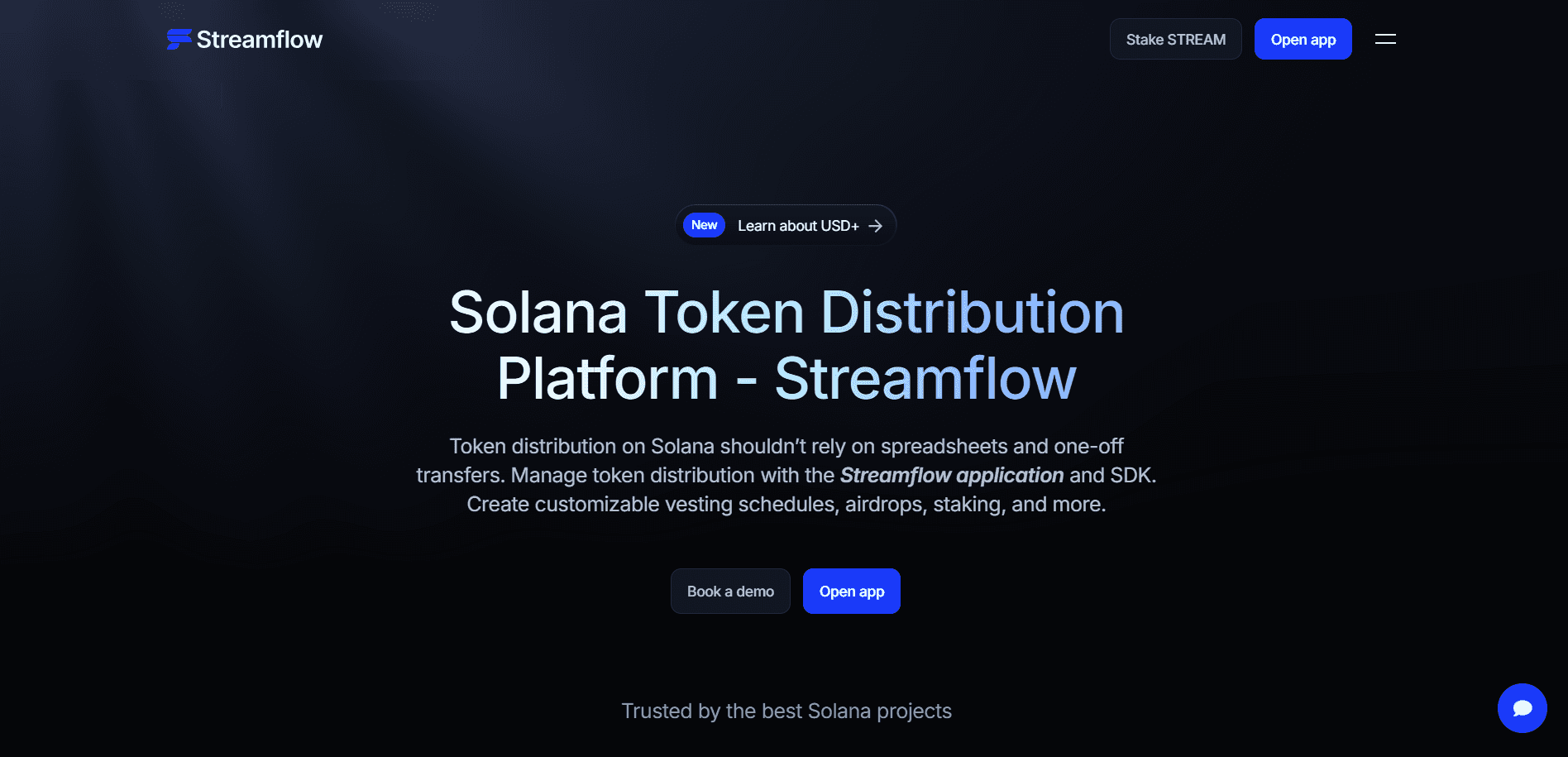
What Web3 Payroll Actually Means
Web3 payroll is the automated, on-chain distribution of tokens or stablecoins to a team on a recurring schedule. Instead of a treasury signer manually pushing transfers every pay period, the payment logic lives in a smart contract that releases funds according to predefined rules.
The distinction matters because manual token payroll carries real operational risk. A single fat-fingered address, a missed pay cycle, or a signer on vacation can stall an entire team's compensation. At scale, those risks compound.
Streamflow approaches payroll as programmable infrastructure. The platform supports recurring payout contracts that fund payments to employees, contractors, and contributors over time, and continue funding them without redeploying new contracts.
This is the same on-chain primitive that powers automated token vesting and distribution, applied to compensation.
The practical result is a payroll system where every payment is verifiable on Solana, every schedule is enforced by code, and no individual signer becomes a single point of failure. That reliability is what makes recurring token payments viable for a real team, not just a side experiment.
Why Recurring Token Payments Beat Manual Transfers
Manual payroll works until it doesn't. The breaking point usually arrives somewhere between 20 and 50 contributors, when the time spent batching transfers and reconciling records starts to outweigh the cost of building real infrastructure.
Recurring token payments fix the structural problems manual processes can't:
Payments execute on schedule without a human triggering each transfer.
Every payout is recorded on-chain, creating a verifiable audit trail.
Contracts can be funded once and continue paying out over time.
Settlement happens in seconds on Solana, not days through intermediary banks.
Errors from manual address entry are eliminated once recipients are configured.
Consider a 40-person remote Web3 team paying contributors across twelve countries. Under manual payroll, that's 40 transfers every cycle, each one a chance for error and each one requiring a signer's time. With a recurring payout structure, the schedule runs itself and the treasury manager moves from executing payroll to simply monitoring it.
The economics reinforce the case. Because Streamflow runs on Solana, with sub-second finality and near-zero fees, the cost of paying hundreds of contributors is a rounding error compared to the wire fees and FX spreads of traditional cross-border payroll. Automation removes the labor cost; Solana removes the transaction cost.
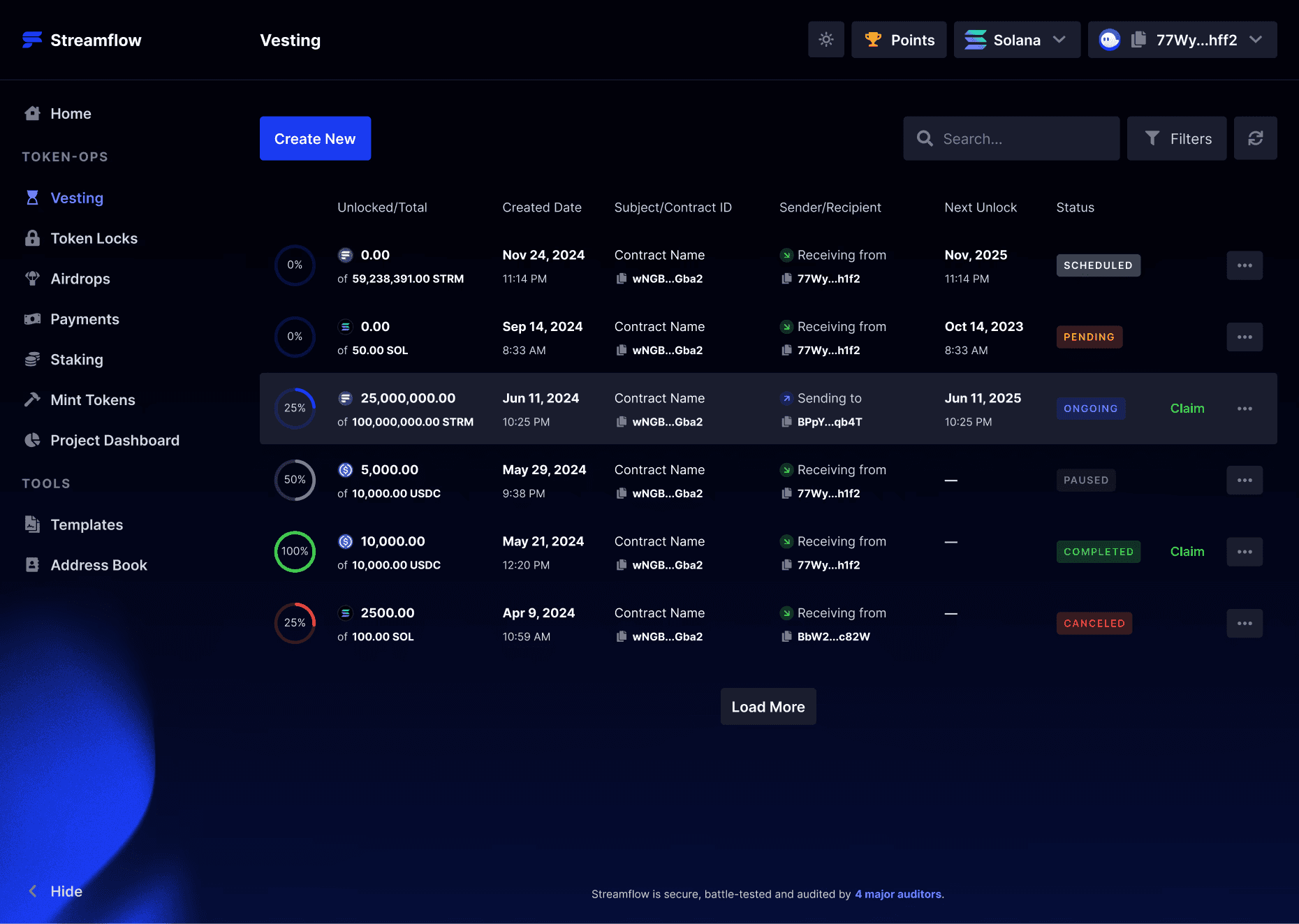
How to Set Up Recurring Token Payments on Streamflow
Setting up Web3 payroll on Streamflow follows a no-code path that mirrors how teams create vesting and distribution contracts. The flow is designed so a treasury manager can configure it without writing a smart contract.
Step 1: Define the Payment Structure
Start by deciding how your team should be paid. Recurring payouts work for fixed salaries, periodic contractor invoices, and ongoing contributor stipends.
Map each recipient to an amount and a cadence before you touch the app. For most teams the structure looks like this:
Full-time contributors on a fixed recurring amount per cycle.
Contractors on variable or milestone-triggered payouts.
Advisors or part-time contributors on smaller periodic stipends.
Clarity here prevents rework later, since the schedule you define is what the contract will enforce.
Step 2: Choose the Payment Token
Pick the token your team will be paid in. Streamflow supports any SPL token, which means you can run payroll in your native project token, in USDC, or in another stablecoin depending on how you want to manage volatility.
Teams managing treasury exposure often pay core salaries in a stablecoin and reserve native tokens for incentive-aligned bonuses.
If treasury management and stable-value payouts are central to your operation, this is where Streamflow Business for financial operations and its USD+ treasury layer become relevant, extending payroll into a full financial operating system on Solana.
Step 3: Configure Recipients and Schedule
Add your recipients and set the recurring schedule. For larger teams, bulk import via CSV removes the need to enter wallets one at a time.
Define the cadence (weekly, biweekly, monthly), the per-recipient amount, and the start date. The contract converts these parameters into enforceable on-chain logic, so payments release exactly as configured.
Step 4: Fund and Deploy
Fund the contract and deploy. Once live, the payout structure executes automatically on the schedule you set, and you can top up funding over time without redeploying.
You can open the Streamflow app to configure the contract directly. From here, payroll runs as infrastructure: funded, scheduled, and verifiable, with the treasury manager monitoring rather than manually executing every cycle.
Configuration Decisions That Matter
The setup is straightforward, but a few decisions determine whether your payroll system scales cleanly or creates friction.
1. Stablecoin vs Native Token
Paying in your native token aligns contributors with the project but exposes their compensation to price volatility. Paying in a stablecoin removes that volatility but doesn't build the same long-term alignment.
Most mature teams split the difference: stable-value tokens for base compensation, native tokens for performance or retention incentives. The right mix depends on your treasury strategy and how much price exposure your contributors are willing to hold.
2. Payroll vs Vesting
Recurring payroll and token vesting solve different problems and shouldn't be conflated. Payroll is ongoing compensation for current work; vesting is the controlled, long-term release of an allocation to align incentives and prevent early selling.
A contributor might receive both: a recurring salary stream and a separate multi-year vesting contract for their token grant. Streamflow handles both as distinct on-chain contracts, so you don't have to force one primitive to do the other's job.
3. Funding Cadence
Decide how often you'll top up the payout contract. Funding a quarter ahead reduces operational touchpoints but ties up treasury; funding monthly keeps capital flexible but requires more frequent action. There's no universal answer, only the tradeoff your treasury can absorb.
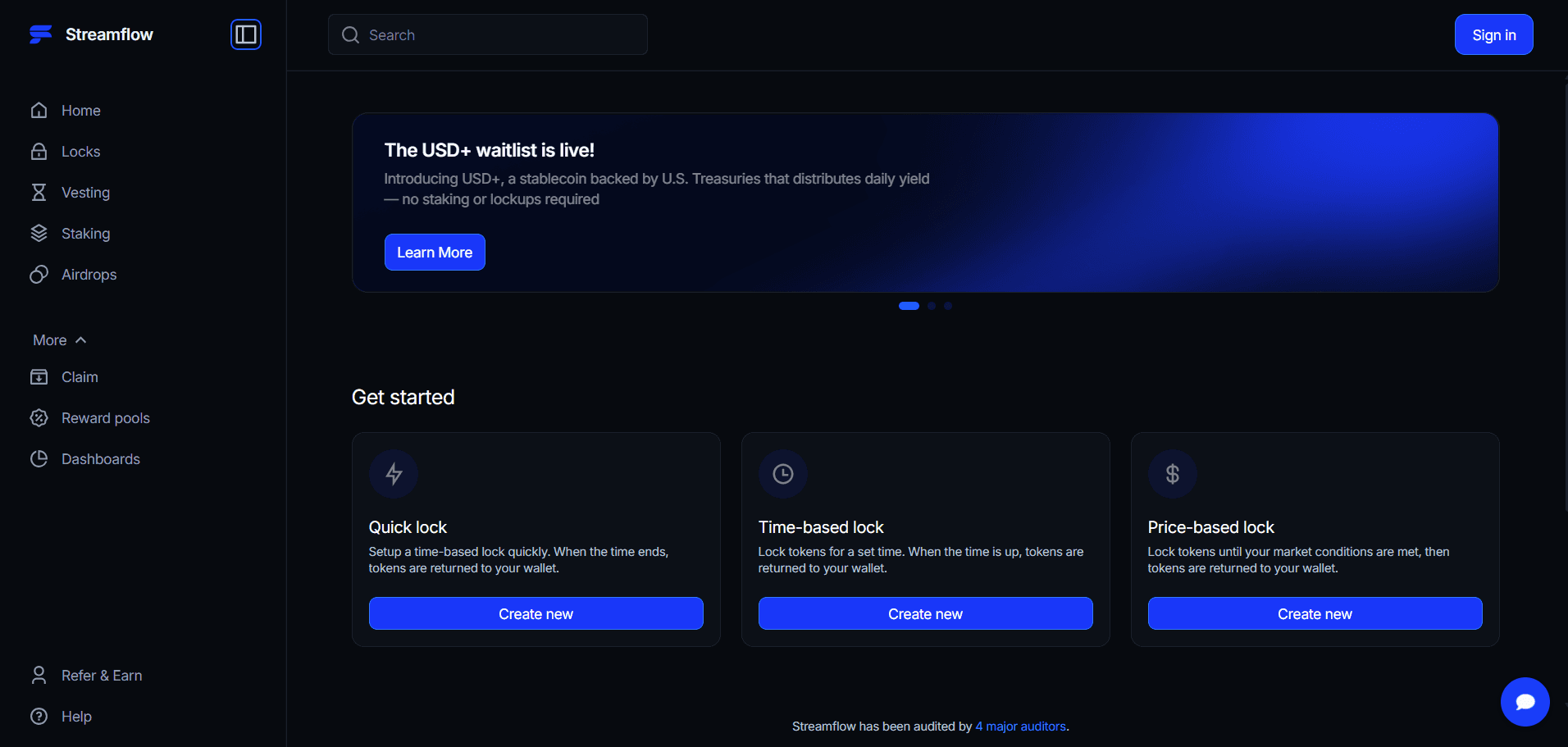
Case Study: How UXD Protocol Combined Payments and Distribution
The clearest proof that on-chain payment infrastructure scales comes from teams already running it.
UXD Protocol, a decentralized stablecoin provider on Solana, needed to manage both contributor-facing distribution and governance in a single interface.
UXD integrated the Streamflow SDK into Realms and ran approximately 46% of its $UXP supply through a four-year linear vesting schedule with a twelve-month cliff, while giving stakeholders a claim portal in the same interface they used for governance.
As Kento Inami of UXD noted, the programmable token transfers and the ease of the SDK let the team consolidate distribution and participation rather than stitching together separate tools.
The lesson for payroll is the same one UXD learned for distribution: when payment logic lives on-chain in audited contracts, you remove the manual overhead and the trust assumptions that break at scale. The infrastructure that handles a four-year vesting schedule is the same class of infrastructure that handles a recurring monthly payout.
Security and Verification
Payroll touches treasury, so the security of the underlying contracts is non-negotiable. Streamflow's smart contracts are audited by FYEO and OPCODES, and once deployed they execute exactly as configured without unilateral override.
Every payment is verifiable on-chain through Solscan or the Solana Explorer, which gives both the team and individual contributors a permanent record of what was paid and when. This is a meaningful upgrade over manual payroll, where the only record is whatever spreadsheet the treasury manager happens to maintain.
For a distributed team, that verifiability doubles as trust. Contributors can confirm their payment terms on-chain rather than relying on a promise, and the team retains a clean, auditable history of every cycle.
Transparent, enforceable payment infrastructure is what turns Web3 payroll from a convenience into a foundation.
What This Means for Web3 Founders and Treasury Managers
For a founder or treasury manager, the practical takeaway is that recurring token payments let you stop spending operational hours on payroll mechanics and start treating compensation as automated infrastructure.
The transition is incremental. You can start by moving contractor payouts on-chain, then expand to full-team recurring salaries as you get comfortable with the funding cadence. Because the same platform handles token vesting on Solana, distribution, and payments, your payroll, your token grants, and your treasury operations live in one verifiable system rather than three disconnected ones.
That consolidation is the real unlock. Payroll stops being a recurring fire drill and becomes one more thing the infrastructure handles while you focus on building.
Conclusion
Crypto payroll moved from niche to mainstream in 2025, and the teams adopting it are replacing manual multisig batching with programmable, on-chain payouts that scale.
Streamflow gives Web3 teams the audited, Solana-native infrastructure to run recurring token payments alongside vesting and distribution, all verifiable on-chain and all running on near-zero fees.
Book a demo to see how Streamflow handles recurring token payroll for a distributed team across dozens of contributors.
Read Next:
FAQs
1. Can Streamflow be used for payroll or recurring payments?
Yes, Streamflow can be used for payroll and recurring payments. The platform supports recurring payout contracts for payroll-style payments to employees, contractors, and contributors, and these contracts can be funded once and topped up over time without redeploying.
2. How do I set up recurring token payments for my team?
You set up recurring token payments on Streamflow by defining the payment structure, choosing an SPL token, configuring recipients and a schedule (with CSV import for larger teams), then funding and deploying the contract. Once live, payouts execute automatically on the schedule you set.
3. What tokens can I use for Web3 payroll on Streamflow?
You can use any SPL token for Web3 payroll on Streamflow, including your native project token or a stablecoin like USDC. Many teams pay base salaries in a stablecoin to manage volatility and reserve native tokens for incentive-aligned bonuses.
4. Is Web3 payroll on Streamflow secure?
Yes, Web3 payroll on Streamflow is secured by smart contracts audited by FYEO and OPCODES that execute exactly as configured. Every payment is verifiable on-chain through Solscan or the Solana Explorer, giving teams and contributors a permanent, auditable record.
5. How much does it cost to run token payroll on Streamflow?
Running token payroll on Streamflow costs a smart contract creation fee plus Solana transaction fees, which are near-zero. Because the platform runs on Solana rather than Ethereum, paying hundreds of contributors remains cost-efficient compared to traditional cross-border payroll fees.