Home
Vesting
Solana Token Vesting
Streamflow is a token vesting platform that’s on-chain and easy to manage. Create a vesting contract today - set schedules, automate releases, and monitor everything transparently.
Trusted by the best Solana projects








Automated token vesting platform
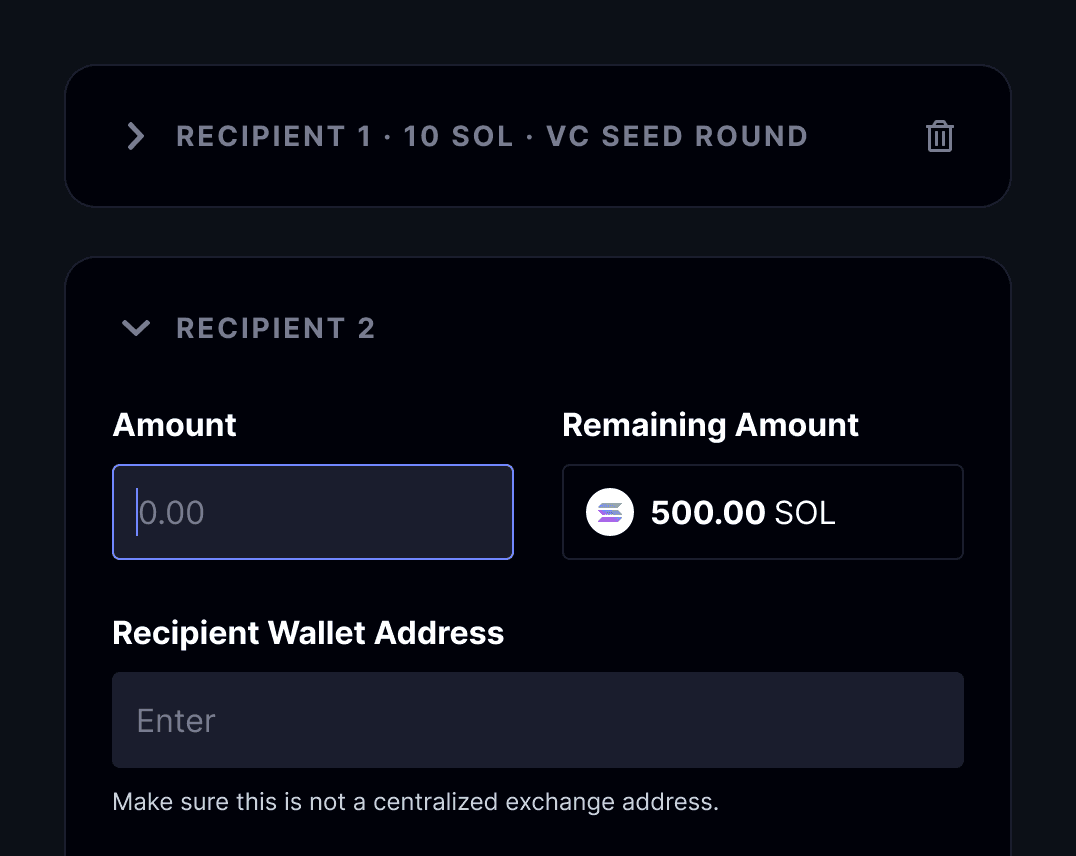
Our token vesting tool allows you to save time, while token vesting automation reduces manual errors in your vesting process. Set up vesting contracts for all your recipients in one efficient sitting with our batch token transfer creation feature. Tokens are automatically transferred to recipients' wallets upon unlocking.
Automate token unlocks
Set cliff dates with ease
Bulk import recipients
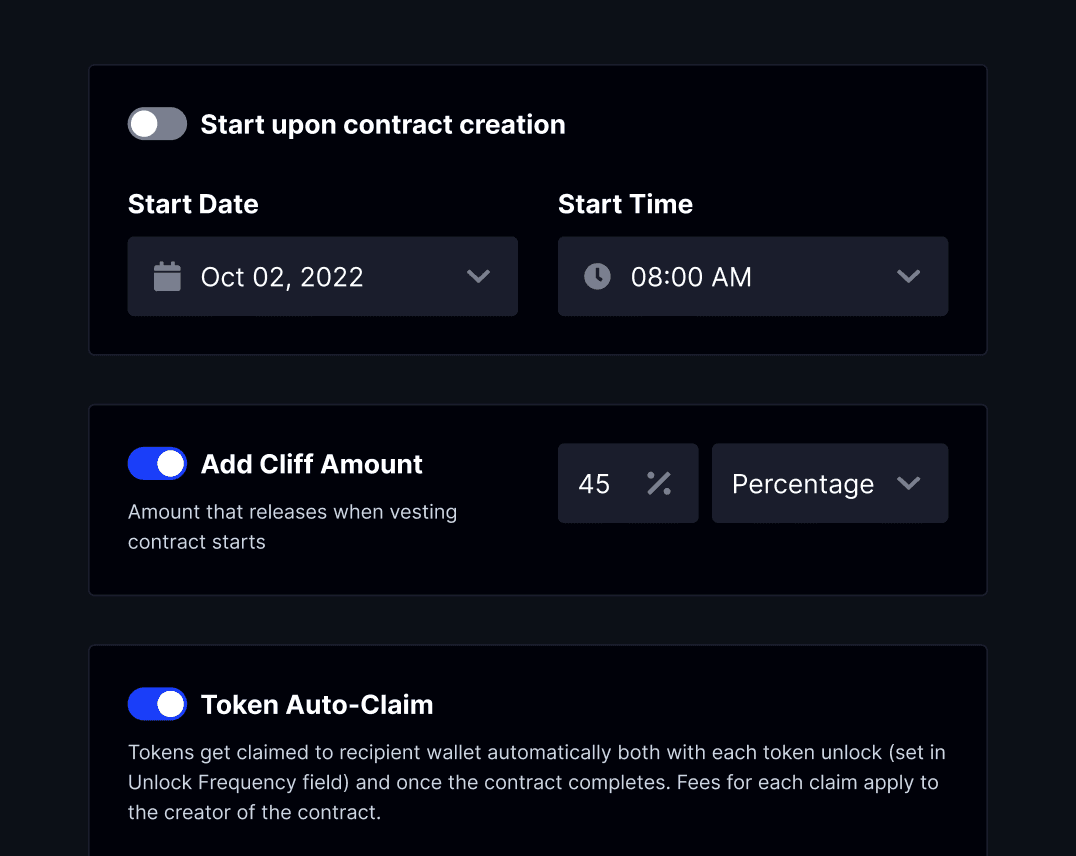
Customize token vesting schedule
Choose how and when to pay recipients, tailoring the vesting schedule to your project's specific needs. Protect your tokens with secure on-chain management, reducing the risk of unauthorized access or fraud.
Flexible token distribution timing
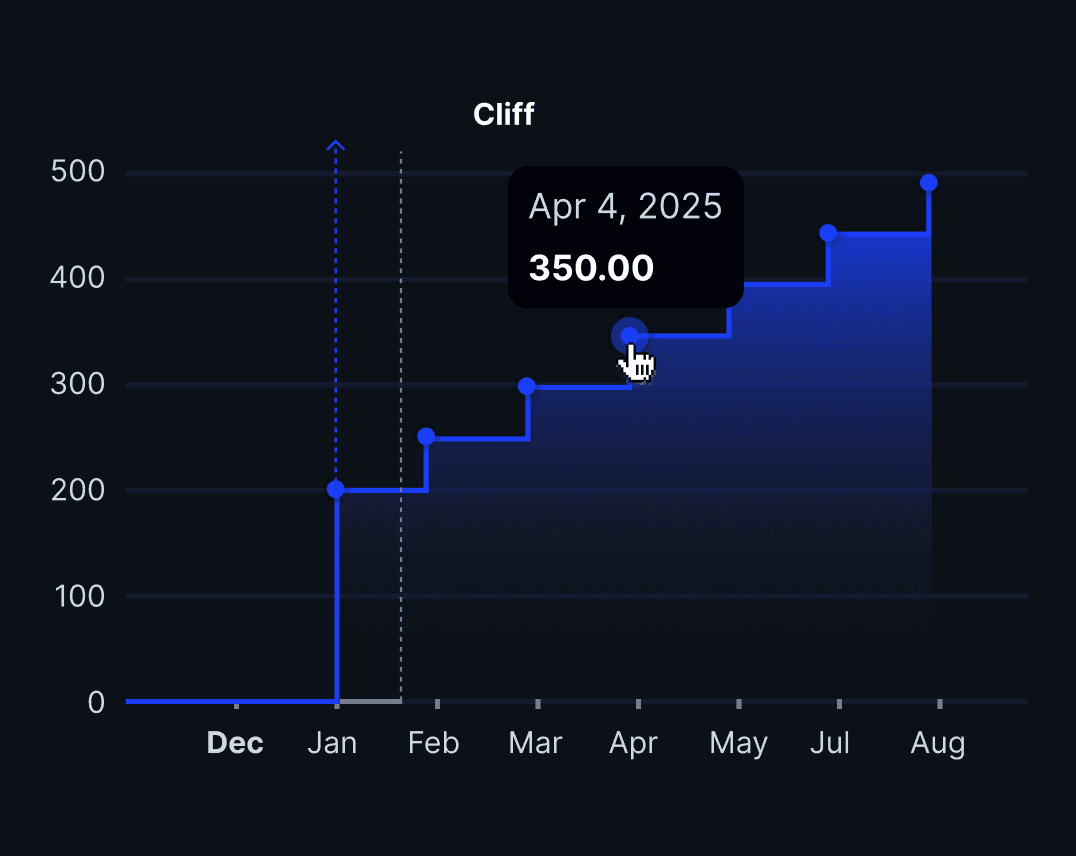
Set up linear, graded or cliff vesting schedule
Transfer or cancel contracts
Keep stakeholders informed with upcoming token releases
Real-time monitoring via Blockchain Explorers
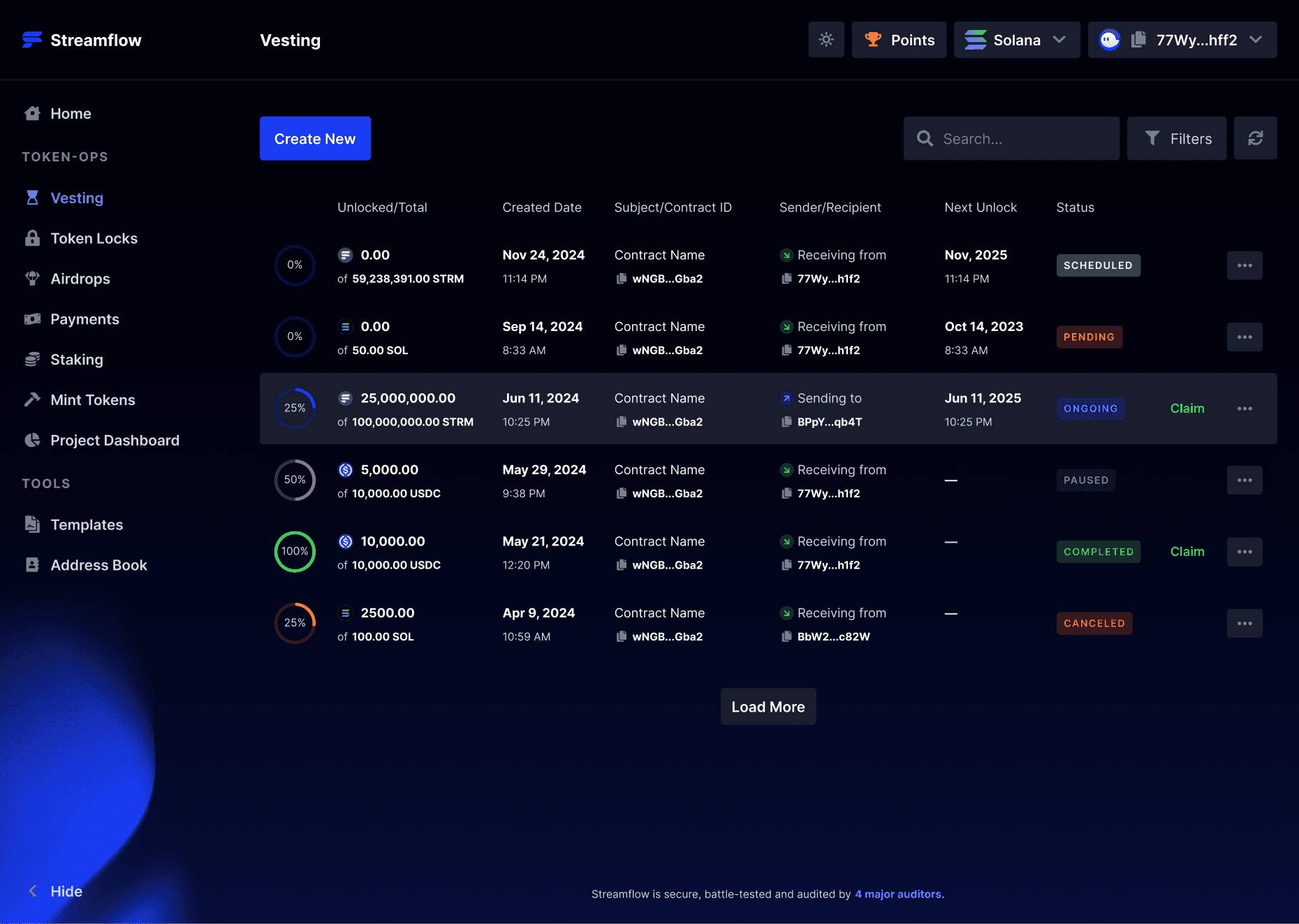
The built-in crypto vesting tracker provides a centralized view of all token vesting and lock contracts, enhancing transparency for your community and investors. All on-chain transactions are visible via Blockchain Explorers, ensuring transparency and building trust with your recipients.
Token vesting transparency
View all active vesting contracts in one place
Verify transactions via public blockchain explorers
Find us on Solana Docs
Streamflow is honored to be listed in the official Solana documentation under 'token vesting'. If you’re exploring broader automation patterns, see Streamflow’s Solana transaction automation
Audited by


Frequently asked questions
What problem does token vesting solve?
Token vesting is a mechanism that gradually releases tokens over time according to predefined schedules, conditions, or price-based rules tied to market performance. It aligns incentives between teams, investors, and the community, prevents sudden sell-offs, and builds long-term trust by ensuring that large token unlocks do not occur regardless of market conditions, which could otherwise create excessive sell pressure.
Is token vesting mandatory for crypto projects?
No, token vesting is not mandatory. However, it is considered one of the best practices for building community trust, aligning long-term incentives, and reducing the risk of sudden sell-offs.
What happens if tokens are not vested?
Without vesting, projects face a higher risk of sudden sell-offs during token unlock events, which can negatively impact price stability. Teams or early investors may liquidate tokens immediately, harming long-term project sustainability.
Can token vesting prevent price dumps?
Yes. Token vesting promotes market stability by preventing large, sudden sell-offs. Streamflow also supports price-based vesting models, where unlock rates adjust dynamically based on market performance.
What is a token vesting platform?
A token vesting platform is a system that automates token distribution over time using smart contracts. By running fully on-chain, it reduces human error and ensures transparent, predictable vesting execution.
Why use a token vesting platform instead of manual vesting?
Vesting platforms save time, reduce operational risk, and eliminate manual errors by automating token unlocks and transfers. There is no need for manual tracking, spreadsheets, or missed vesting events.
How does a token vesting platform automate vesting schedules?
You define the vesting parameters, and the platform automatically unlocks and transfers tokens to recipients’ wallets as milestones are reached. Features include auto-claim, cliff, initial allocation, batch transfers via CSV upload, and automated notifications.
Do I need a developer to use a token vesting platform?
Yes. Security is a core priority at Streamflow. Our smart contracts have been fully audited by FYEO and OPCODES on Solana. Take a look at all Streamflow audits.
How to automate token vesting with Streamflow?
With Streamflow, you can create multiple vesting contracts in a single batch using bulk imports. After defining your vesting schedules, the platform automatically handles token unlocks and transfers as each milestone is reached.
Can I customize how tokens are vested?
Yes. Streamflow offers full flexibility in vesting design, including cliffs, linear or non-linear schedules, and price-based vesting models that adjust unlocks based on market performance.
Vesting Crypto - What Is Vesting in Crypto?
Crypto vesting is the practice of releasing tokens gradually, according to a predefined schedule. The simplest vesting crypto definition: tokens are allocated to a recipient now, but only become claimable (or transferable) over time, creating vested tokens based on rules you set.
Vesting Token Meaning
In short, it’s structured, time-based access to tokens, and it’s a common part of responsible token vesting design.
What is Vesting in Crypto Really For?
It’s a coordination tool in token economies: it aligns incentives, reduces “short-termism,” and gives stakeholders clarity on supply coming to market. For founders, investors, and DAO teams, it’s a way to avoid all-at-once liquidity, making unlocks predictable and easier to plan and communicate than immediate token distribution. Streamflow is a Solana token distribution tool that supports vesting and other token operations in one place.
How Does Vesting Crypto Work and How Token Vesting Periods Are Defined?
At a high level, vesting works by locking tokens under a schedule, then releasing them in intervals, or after certain conditions are met. A well-defined schedule helps recipients know what to expect and helps teams avoid manual payout work.
How to vest crypto - step-by-step
Define recipients - team, advisors, investors, contributors, community
Choose a schedule - cliff, linear, milestones, or a hybrid.
Set amounts + start date and any optional controls - revocation/cancellation rules.
Fund the contract - or the mechanism that enforces the schedule. Tokens are locked until the schedule conditions are met.
Recipients claim tokens as they unlock - time-based, after a cliff, or upon milestones, depending on the rules.
If you also need supply restrictions beyond vesting, consider using token locks to time-lock tokens for a set duration.
How to define a crypto vesting period
A crypto vesting period is the total duration over which tokens become available. It’s usually defined by:
The start date
Any cliff (a “nothing unlocks until X date” window)
The release cadence (daily/weekly/monthly/quarterly, etc.)
The end date (or final unlock condition)
A good timeline balances alignment (longer schedules) with practicality (recipients still need meaningful access).
How to set a token vesting period that recipients understand
A vesting schedule should be easy to communicate and hard to misinterpret. As a rule of thumb:
Use fewer, clearer milestones (avoid over-complicating)
Document assumptions (time zones, rounding, claim mechanics)
Match schedule style to stakeholder type (e.g., team vs. airdrop vs. advisors)
Crypto Vesting Schedules and Token Release Structures
Crypto vesting schedules come in a few common patterns. The right structure depends on your token design, recipient profile, and how you want supply to enter circulation during the vesting timeline.
Linear vesting, cliffs, and graded releases
Linear vesting: tokens unlock steadily over time (e.g., daily over 24 months), which makes supply changes more predictable and easier for stakeholders to plan around.
Cliff-based vesting: nothing unlocks until a cliff, then releases start. Useful for retention and commitment signaling, but the cliff date can create a noticeable behavior shift if many recipients unlock at once.
Graded vesting: unlocks happen in chunks (e.g., monthly or quarterly tranches), which can simplify reporting but may create recurring “event” moments that stakeholders watch.
These approaches can reduce operational overhead and create predictable unlock expectations.
Milestone-based and “based vesting” models
Some projects use milestone-based release structures (e.g., tokens unlock when a deliverable ships or a KPI is met). You’ll also hear the term based vesting used informally to describe milestone-driven or performance-driven unlocks. These models can work well, but they require:
Clear milestone definitions
Transparent verification
Dispute handling expectations
If you’re coordinating vesting with community incentives, Streamflow also supports token airdrop campaigns on Solana.
Team Vesting Crypto and Long-term Alignment of Incentives
Team crypto vesting directly impacts trust, hiring, retention, and governance credibility. A strong team schedule signals long-term commitment and reduces the perception that insiders can exit quickly, and shows investors and the community that insiders are committed beyond the launch window. Practical team uses: Aligning teams and advisors with multi-year roadmaps Structuring contributor incentives without constant manual payouts Coordinating vesting with compensation flows, especially for global contributors If you run recurring token compensation, Streamflow also supports on-chain payroll in tokens. For DAO-style payouts and contributor compensation frameworks, add Web3 DAO token payments to your toolkit.
Token Equity Vesting and The Bridge Between Web2 and Web3
Token equity vesting borrows familiar concepts from Web2 equity: shares and stock options with a cliff and multi-year vesting, then adapts them to on-chain tokens.
In Web3, smart contracts can automate vesting rules and make allocations more transparent, so stakeholders can verify schedules on-chain instead of relying on private cap tables or manual updates. While “equity” and “tokens” are not identical, the mental model helps teams communicate expectations.
For some projects, vesting is paired with deeper protocol work and token utility planning. If you’re building custom token mechanisms, Web3 smart contract development (Solana) can help. If your plan includes rewards and long-term participation, you may also want holders to stake tokens.
Token Vesting Management For Growing Crypto Projects
Token Vesting Management for Scalable Web3 Operations
Token vesting management becomes a core operational layer, not a one-time setup. software instead of spreadsheets starts to pay off. As your recipient list expands, it’s less about “setting a schedule” and more about running an ongoing process - creating new allocations, handling wallet changes, communicating unlocks, and auditing outcomes across teams, investors, advisors, and ecosystem partners.
Token Vesting Management Software - Usual Solid Operating Models
Clear recipient segmentation (team, investors, advisors, community, partners)
Standard schedule templates and naming conventions
A monitoring workflow for unlocks and claims (your internal crypto vesting tracker approach)
Regular comms: “what unlocks when, and why”
If your vesting design ties into staking incentives, check out Solana staking for token holders.
Automated Token Vesting Platforms as an Industry Standard
Token vesting automation without constant manual intervention
Strong token vesting management software features (imports, templates, admin controls)
Clear roles and repeatable workflows as you scale
Evaluating the most efficient token vesting service includes determining if it also supports adjacent token ops (airdrops, staking, payments). Streamflow aims to consolidate those needs, so you can rely on one token vesting provider for multiple token workflows. For recipient UX beyond vesting, you may also want an airdrop checker and claim platform.