General
Best Platforms for Locking Liquidity on Solana
Crypto lost nearly $6 billion to rug pulls in 2025, according to DappRadar, with the majority of new incidents concentrated in the memecoin sector.
Streamflow, the Solana-native token operations platform securing over $281M in total value locked across 40,000+ projects, exists to make that kind of exit impossible to execute and easy to verify.
Locking liquidity on-chain has become the first trust signal investors check before buying any new Solana token.
The problem is that not all lockers are built the same. Some support only one DEX, some charge percentage fees on your tokens, and some provide no public verification at all.
This guide breaks down the best platforms for locking liquidity on Solana, with full pros and cons for each, a side-by-side comparison table, and a framework for choosing the right one for your launch.
Key Takeaways
Locking liquidity on Solana prevents rug pulls by restricting LP token withdrawals on-chain.
Streamflow supports LP token locks with public proof links verifiable on Solscan and RugCheck.
Jupiter Lock, Team Finance, UNCX, Smithii, and Meteora offer alternative Solana liquidity lockers.
Streamflow's contracts, audited by FYEO and OPCODES, secure over $281M in locked value.
Choose a liquidity locking platform based on verification, lock types, fees, and audits.
The Criteria for Choosing a Solana Liquidity Locker
Before comparing platforms, it helps to be precise about what you are locking. A liquidity lock restricts LP tokens to prevent rug pulls on DEX liquidity, while a standard token lock restricts native project tokens like team or treasury allocations. Most serious launches need both, which is covered in detail in this guide for token locking on Solana.
Evaluate every locker against five criteria:
On-chain verifiability: locks should produce public proof links checkable on Solscan, Solana Explorer, or RugCheck.
Lock flexibility: fixed-date unlocks at minimum, with price-based unlock conditions as a differentiator.
Token support: both SPL tokens and LP tokens, across the DEXs you actually use.
Security posture: audited, immutable contracts with no admin override once deployed.
Cost structure: Solana's near-zero fees should translate into cheap locks, not hidden percentage cuts.
A locker that fails on verifiability fails at its entire job. The lock only builds trust if anyone can confirm it without asking the team.
The 6 Best Platforms for Locking Liquidity on Solana
1. Streamflow
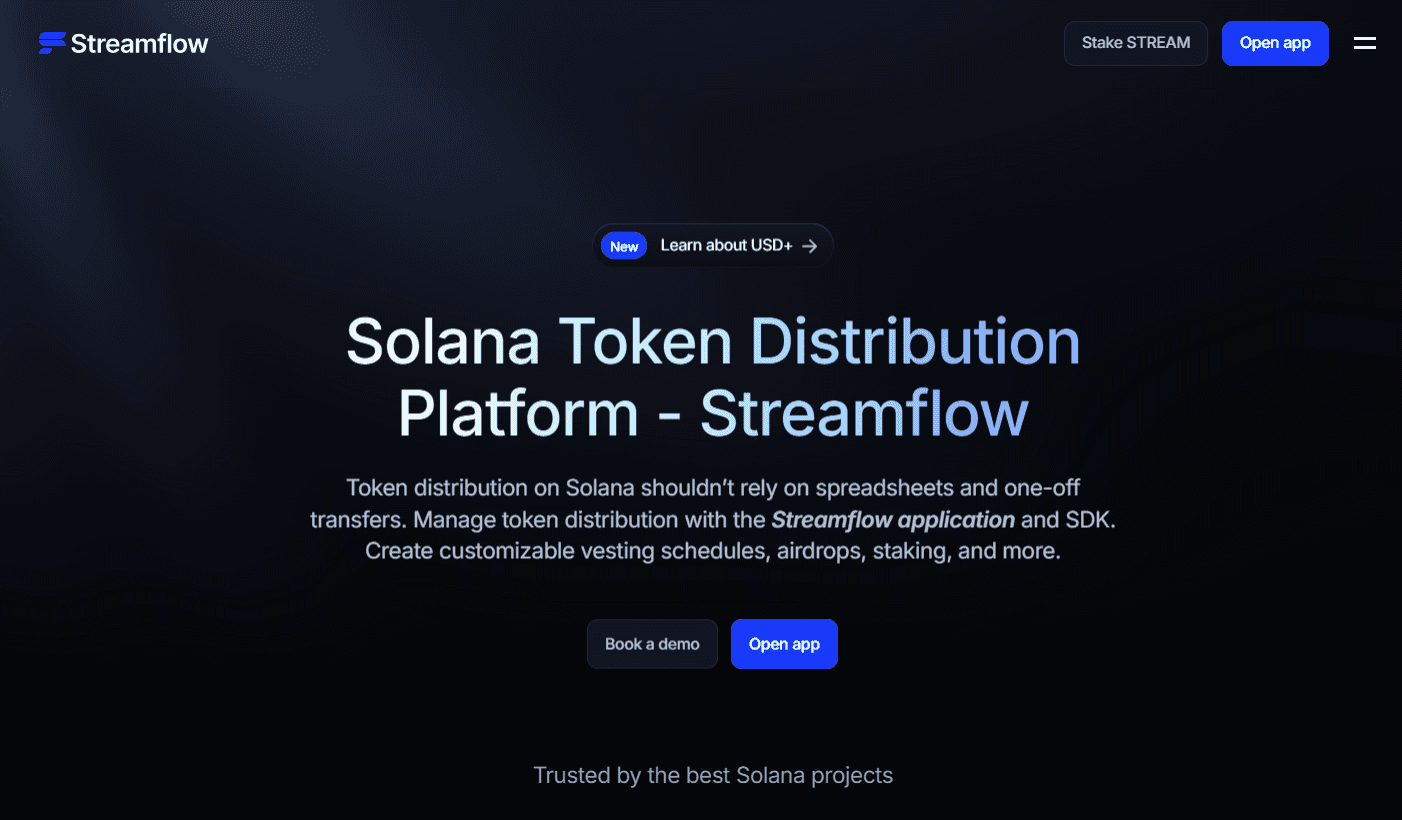
Streamflow is a Solana-native token operations platform that automates token locks, vesting, airdrops, staking, and payments through audited on-chain smart contracts. It supports both SPL token locks and LP token locks, making it a complete solution for locking liquidity on Solana alongside team and treasury allocations. It is also listed in the official Solana Docs under token vesting, a position reserved for core ecosystem tooling.
The lock mechanics are strict by design. Once locked, tokens cannot be transferred, traded, or accessed until the unlock criteria are met, contracts are immutable once deployed, and there is no admin override. Every lock generates a public proof link and appears on a public dashboard, verifiable on Solscan, Solana Explorer, and RugCheck.
Streamflow also goes beyond simple time-based locks. Teams can configure fixed-date unlocks, price-based unlock conditions that release tokens only when a price threshold is hit, and quick locks for fast-moving launches. Release is automatic on unlock, with no manual claims processing required from the team.
Key capabilities:
Fixed-date and price-based unlocks, plus quick locks created in about 37 seconds.
SPL and LP token support, covering liquidity, team, and treasury allocations in one place.
Public proof links and dashboards, verifiable on Solscan, Solana Explorer, and RugCheck.
Audited by FYEO and OPCODES, with immutable contracts and automatic release.
Full token lifecycle tooling, including vesting, airdrops, staking, and payments.
The scale backs the claims. Streamflow secures over $281M in total value locked, serves 1.3M+ users, and powers more than 40,000 projects, which means it operates at infrastructure scale rather than experimental scale.
When a lock expires, the same platform handles the next phase through automated token vesting, airdrops, and staking without migrating tools.
Pros:
Locks both LP tokens and SPL tokens, so liquidity and team allocations live in one dashboard.
Price-based unlock conditions, a lock type most competing platforms do not offer.
Audited by FYEO and OPCODES, with immutable contracts and no admin override.
Public proof links verifiable on Solscan, Solana Explorer, and RugCheck.
Full token operations stack around the lock: vesting, airdrops, staking, and payments.
Cons:
Solana-native by design, so multi-chain EVM projects need a separate solution elsewhere.
Immutability means lock parameters cannot be casually changed after deployment, which rewards careful upfront design.
For a memecoin creator, the workflow is simple: launch the token, lock LP tokens and the team allocation, and share the proof links with the community.
Streamflow is the strongest option when you want liquidity locking as part of a complete token operations stack rather than a standalone utility.
2. Jupiter Lock

Jupiter Lock is the free, open-source token locking and vesting tool from Jupiter, one of the most recognized teams in the Solana ecosystem. It lets anyone create on-chain escrows with vesting schedules, aimed at token creators, project teams, and DAOs that need transparent, verifiable unlock conditions.
The mechanics are solid. Locked tokens are held in an on-chain escrow account and cannot be moved until the conditions defined at creation are met. The program is fully open-source on GitHub, audited by OtterSec and Sec3, compatible with multisig wallets, and charges no protocol fees; only standard Solana network fees apply.
Distribution is its other advantage. Jupiter's brand carries significant weight with Solana traders, and the public Lock page lets anyone browse locked tokens and their vesting breakdowns, which adds a recognition layer to the trust signal.
Pros:
Completely free, with zero protocol fees and no permission or BD calls required.
Open-source code audited by OtterSec and Sec3, with multisig-compatible lock creation.
Strong brand recognition among Solana retail traders and a public browsable lock page.
Cons:
Focused on time-based locks and vesting, with no price-based unlock conditions.
No broader operations layer, so airdrops, staking, and payments need separate tools.
Once created, schedules cannot be changed, and there is no managed support tier for complex setups.
Jupiter Lock is a genuinely excellent choice for a straightforward, zero-cost lock. Where Streamflow differs is depth: price-based unlocks, LP and SPL coverage in one dashboard, and a full operations layer that keeps working after launch week ends.
3. Team Finance
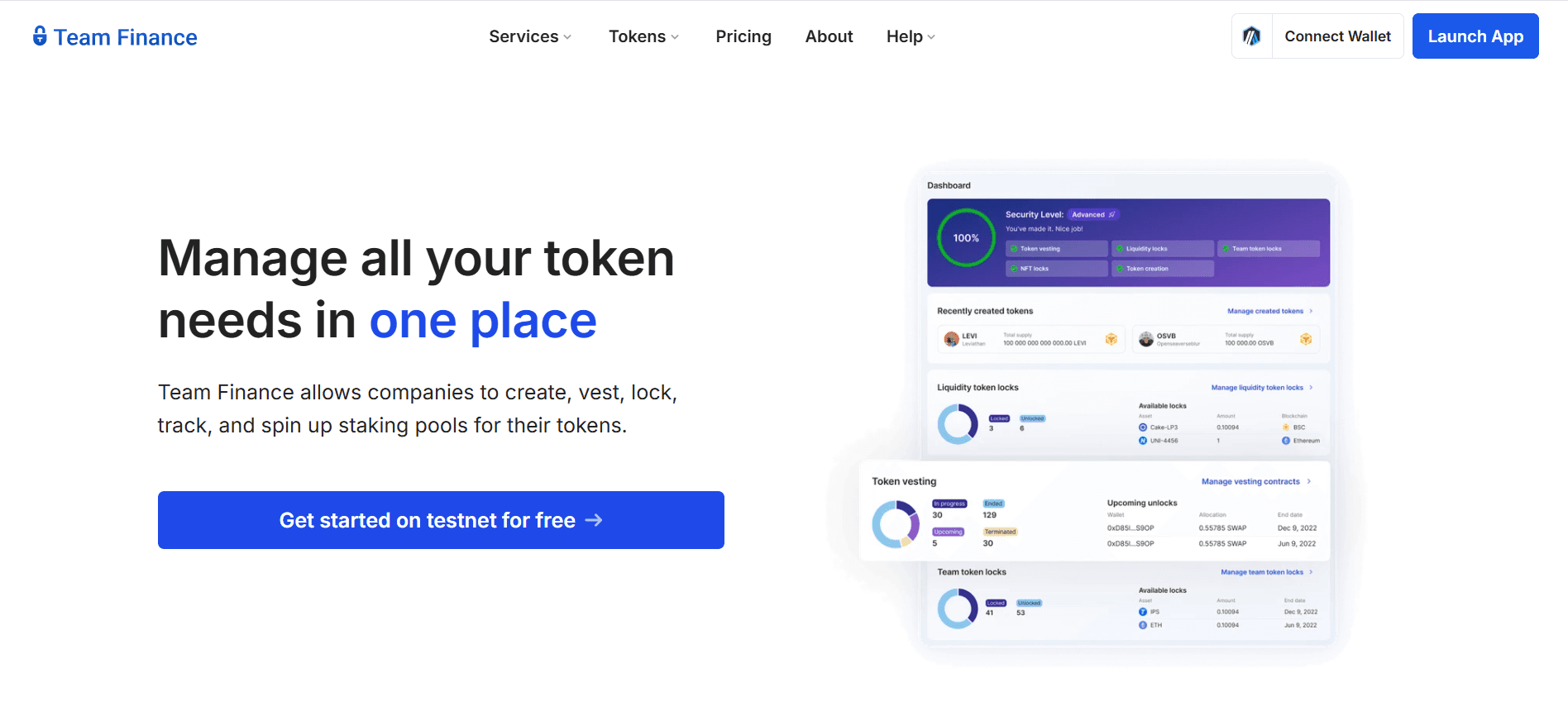
Team Finance is one of the most established liquidity locker brands in crypto, operating non-custodial, time-released smart contract vaults across 15+ blockchains. By its own published figures, the platform has held up to $6 billion in total value locked over its lifetime and worked with more than 30,000 projects, a track record few lockers can match.
Its liquidity lock product transfers LP tokens into a time-locked smart contract and publishes the lockup details in a public display for investors. The platform explicitly takes no percentage of locked tokens, instead charging a flat fee per lock, for example around $150 in ETH for a token lock on Ethereum, plus gas.
Beyond locks, Team Finance bundles token minting, vesting contracts, staking pools, and a multisender into one toolkit. For teams deployed across several chains, that consolidation is the core appeal.
Pros:
Long-standing, widely recognized locker brand with a large historical track record.
Flat-fee pricing with no percentage taken from locked tokens.
Broad multi-chain toolkit including vesting, staking pools, and a multisender.
Cons:
Chain coverage is EVM-centric, so it is not built around Solana's SPL standards.
Flat per-lock fees cost more than near-zero Solana-native alternatives for small launches.
Not integrated with Solana-specific verification tools investors already use, like RugCheck.
Team Finance is a solid choice for multi-chain teams wanting one locker brand across every deployment. For Solana-first projects, Streamflow's chain-native infrastructure wins on cost, SPL and LP coverage, and the verification stack Solana investors actually check.
4. UNCX Network
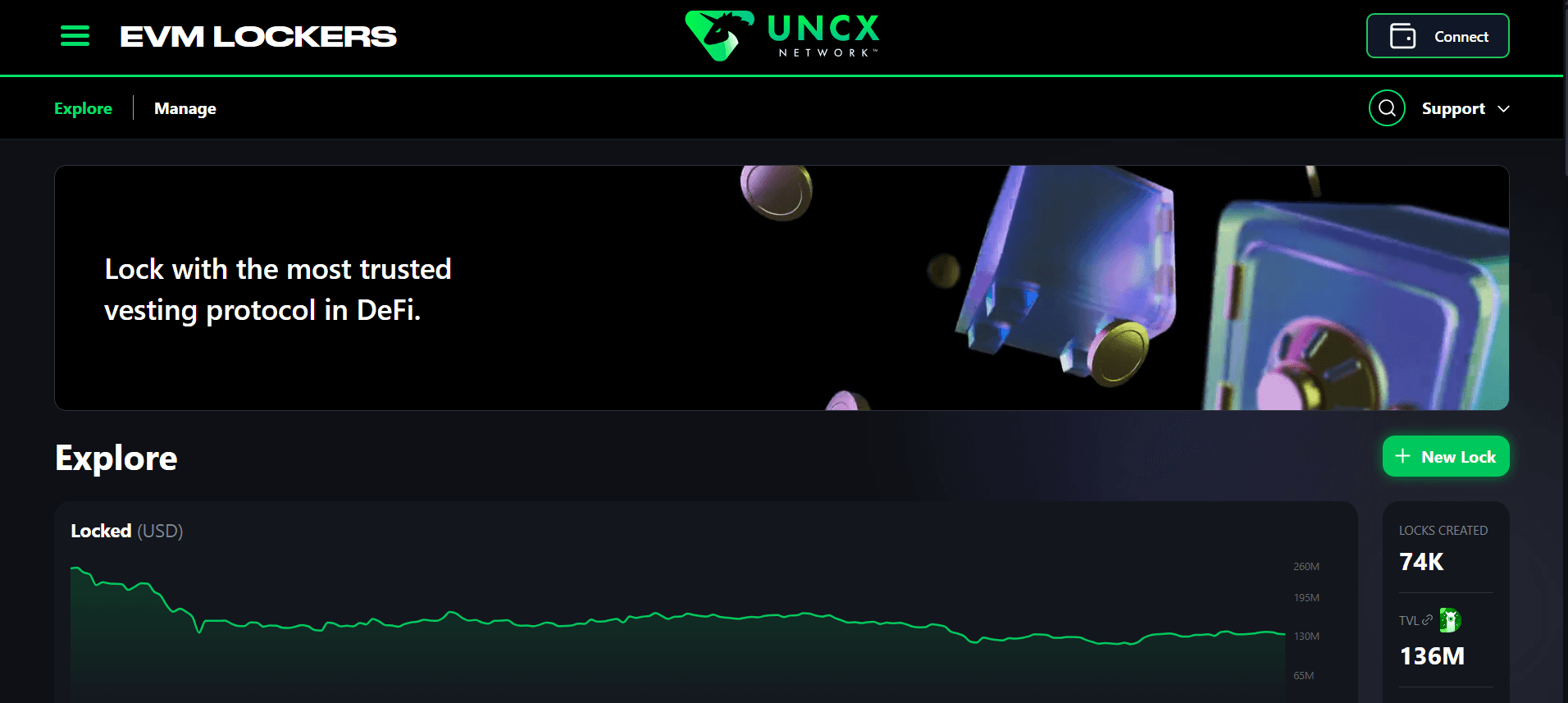
UNCX Network, formerly UniCrypt, is one of the longest-established locker platforms in DeFi, with years of operation and a strong, well-documented track record on EVM chains. Its architecture emphasizes decentralization: accounts are immutable and cryptographically secure, with no centralized upgrade authority, which is exactly the right security philosophy for a locker.
UNCX extended into the Solana ecosystem in late 2024, allowing projects to lock liquidity on Raydium. Its heritage remains its biggest asset; the platform is known for heavily audited contracts, including an OpenZeppelin-verified V3 locker, and years of operation without a major exploit.
The toolkit also extends past locks into vesting schedules and launch infrastructure, positioning UNCX as investor-assurance tooling for the full launch process.
Pros:
One of the longest track records in DeFi liquidity locking, with extensive audits.
Decentralized, immutable contract architecture with no centralized upgrade authority.
Familiar brand for teams and communities migrating from EVM chains.
Cons:
Solana support arrived in late 2024, so its coverage there is newer than its EVM roots.
Solana locking centers on Raydium liquidity rather than the full DEX ecosystem.
Pricing and mechanics vary by chain, so teams need to verify current terms before locking.
UNCX is a strong pick for EVM-native teams that already trust the brand. Streamflow's edge on Solana is breadth: any SPL token, LP tokens, price-based unlocks, and verification through RugCheck and Solscan, backed by the token lock trends on Solana that show projects increasingly locking more than just DEX liquidity.
5. Smithii
Smithii has become popular within the Solana memecoin ecosystem, particularly among creators launching tokens through simplified deployment workflows. Its pitch is the bundle: token creation, SPL token locks, LP locks, and vesting schedules in one creator-focused toolkit.
The LP locking coverage is practical for small launches. Smithii supports locking LP tokens regardless of which DEX the pool sits on, as long as the creator holds the LP tokens in their wallet, with Raydium being the most common case.
For a first-time creator, the appeal is reducing the number of platforms touched between idea and launch. Everything from minting the token to locking the liquidity happens in one workflow designed for non-technical users.
Pros:
Beginner-friendly workflows built specifically for first-time Solana token creators.
Bundled tooling covering token creation, SPL locks, LP locks, and vesting.
LP locking works with pools from Raydium and other DEXs held in the creator's wallet.
Cons:
Geared toward small launches, without an enterprise or white-label infrastructure layer.
No advanced lock types like price-based unlock conditions.
Security audit details are not as publicly prominent as those of larger infrastructure platforms.
Smithii's simplicity is genuinely useful for a first small launch. The gap appears at scale, where Streamflow serves the same no-code audience while powering 40,000+ projects with FYEO and OPCODES audited contracts and lock types simple lockers do not offer.
6. Meteora LP Locking

Meteora is one of Solana's major DEX and liquidity infrastructure platforms, managing over $800 million in TVL, and it builds liquidity locking directly into its own pools. Memecoin creators can permanently lock their Meteora LP tokens in a dynamic pool, and remarkably, keep claiming the compounding trading fees from that locked liquidity forever.
The newer DAMM v2 pools add flexibility, offering the option to lock liquidity permanently or with vesting-style non-permanent locks, while still allowing fee claims. Because pool creation is permissionless, any creator can launch and lock in one integrated flow without a third-party locker.
The permanent lock is the strongest possible liquidity signal: the creator gives up access to that liquidity forever. The fee-claim mechanic softens the sacrifice by turning locked liquidity into an income stream.
Pros:
Permanent liquidity locking is the strongest anti-rug signal available on Solana.
Creators keep claiming compounding trading fees from permanently locked liquidity.
Fully integrated into Meteora's pools, with no third-party locker dependency.
Cons:
Only covers liquidity in Meteora's own pools, not other DEXs.
Permanent locks are irreversible, so the liquidity itself is sacrificed forever.
No tooling for team tokens, treasury allocations, or broader token operations.
Meteora is the shortest path if your pool already lives there and you want a permanent lock. Streamflow operates one layer above the DEX, locking LP and SPL tokens wherever liquidity sits and presenting everything in a single public dashboard.
Comparison Table: Solana Liquidity Locking Platforms
Platform | Lock types | Chain focus | Audits | Fees | Beyond locking |
Streamflow | SPL + LP, time and price-based | Solana-native | FYEO, OPCODES | Near-zero Solana fees | Vesting, airdrops, staking, payments |
Jupiter Lock | Token locks + vesting escrows | Solana-native | OtterSec, Sec3 | Free, network fees only | Vesting schedules |
Team Finance | Token + LP locks | 15+ chains, EVM-centric | Audited, non-custodial | Flat fee per lock | Vesting, staking, multisender |
UNCX Network | LP locks + vesting | EVM + Solana (Raydium) | Extensive, incl. OpenZeppelin | Varies by chain | Vesting, launch tools |
Smithii | SPL + LP locks | Solana | Not publicly detailed | Per-tool pricing | Token creation, vesting |
Meteora | Permanent or vesting LP locks | Solana (own pools) | DEX protocol audits | Network fees | DEX liquidity infrastructure |
The table makes the pattern clear: standalone lockers each cover one slice, while Streamflow covers the lock plus everything that comes after it.
How to Choose the Right Liquidity Locking Platform
The decision comes down to matching the platform to your project's trajectory. Use this quick framework:
Single memecoin launch, nothing else planned: Jupiter Lock or Smithii cover the basics for free or cheap.
Multi-chain deployment: Team Finance or UNCX bring cross-chain brand recognition.
Meteora-only liquidity with maximum signal: the DEX's permanent native locking is the shortest path.
Any project planning to last: Streamflow, because the lock is step one of token operations, not the whole job.
The pattern across serious Solana projects is consistent. Locks come first, then vesting for the team, then airdrops, staking, and payouts as the community grows. Choosing a platform that handles the full lifecycle means never migrating trust infrastructure mid-flight.
Locked liquidity is the entry ticket. The platforms that matter are the ones still useful after launch week ends.
Case Study: How Bonk Built Trust With On-Chain Locking and Vesting
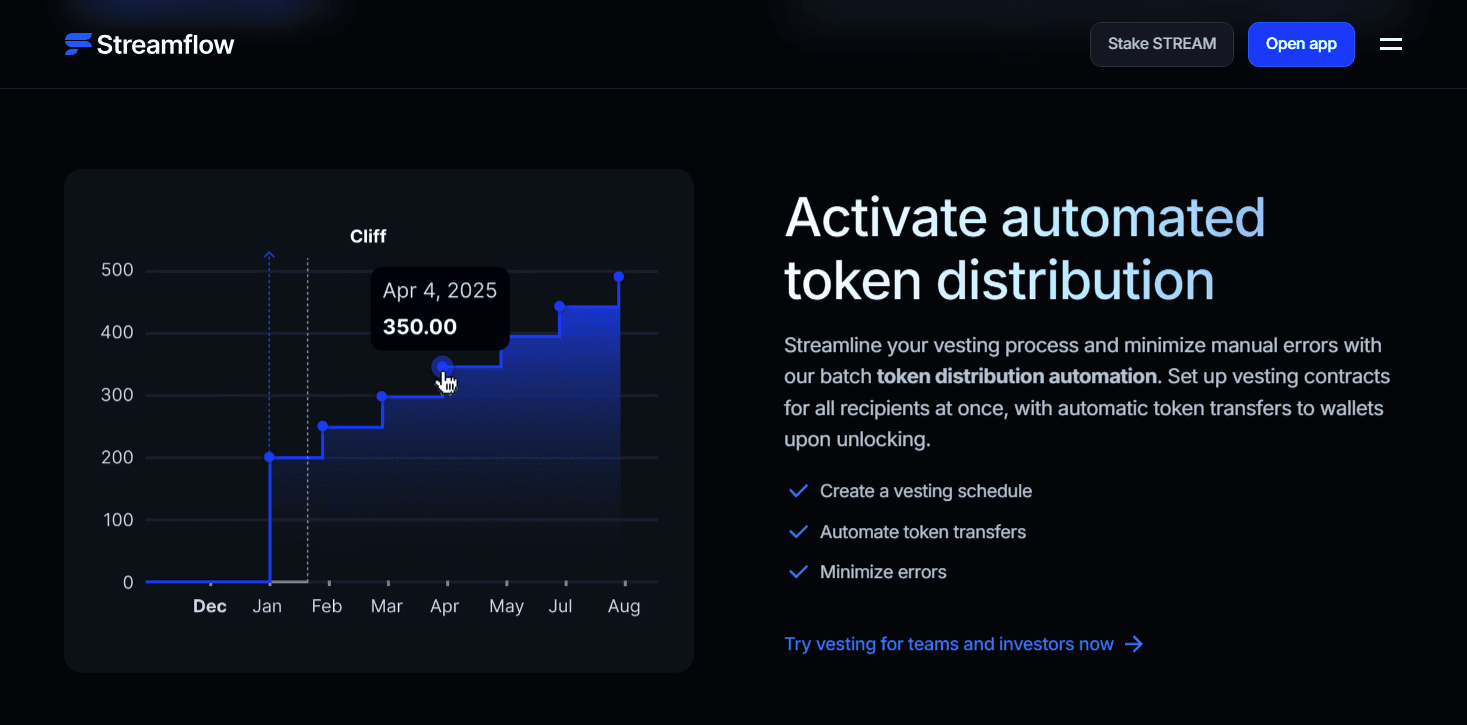
Bonk, one of Solana's defining meme coins, allocated 55% of its supply to airdrops for early Solana users and needed a credible way to handle the rest. For its core team allocation, Bonk used Streamflow to place 20% of total supply across 22 early contributors on a 3-year linear vesting schedule.
The outcome was exactly what liquidity and token locking is supposed to produce: verifiable proof that insiders could not dump on the community. Anyone could confirm the schedule on-chain, and that transparency became part of Bonk's trust story as it grew into one of the largest tokens on Solana.
The lesson for any launch is that on-chain commitment, publicly verifiable, is what separates lasting projects from the statistics in the rug pull reports.
Conclusion
With nearly $6 billion lost to rug pulls in 2025, locking liquidity on Solana is no longer optional for any project that wants investor trust.
Jupiter Lock, Team Finance, UNCX, Smithii, and Meteora each serve specific niches, but Streamflow is the only option that combines LP and SPL token locks, price-based unlocks, FYEO and OPCODES audits, and $281M+ in secured value inside one platform.
The right locker is the one your community can verify in seconds and your team never outgrows.
Book a demo to see how Streamflow handles liquidity locks, team token locks, and verifiable proof links for your next Solana launch.
Read Next:
FAQs:
1. What is the best platform for locking liquidity on Solana?
The best platform for locking liquidity on Solana is Streamflow, which supports both LP token locks and SPL token locks with public proof links verifiable on Solscan and RugCheck. Its contracts are audited by FYEO and OPCODES, and the platform secures over $1.4B in total value locked across 40,000+ projects.
2. What is the difference between a liquidity lock and a token lock?
The difference between a liquidity lock and a token lock is what gets restricted. A liquidity lock restricts LP tokens to prevent rug pulls on DEX liquidity, while a token lock restricts native project tokens such as team or treasury allocations. Serious launches typically use both together.
3. Is Jupiter Lock or Streamflow better for locking liquidity on Solana?
Jupiter Lock is better if you only need a free, time-based lock or vesting escrow, while Streamflow is better for projects that need LP and SPL locks, price-based unlocks, and a full operations stack. Streamflow's audited, immutable contracts also generate proof links verifiable on Solscan and RugCheck.
4. How long does it take to lock tokens on Streamflow?
Locking tokens on Streamflow takes about 37 seconds through the no-code interface. Teams connect a wallet, select the SPL or LP token, define the unlock conditions, and deploy an immutable on-chain contract with a shareable proof link.
5. Can locked liquidity be withdrawn early on Streamflow?
No, locked liquidity cannot be withdrawn early on Streamflow. Contracts are immutable once deployed, with no admin override, so tokens remain inaccessible until the fixed-date or price-based unlock conditions are fulfilled. That immutability is what makes the lock a credible trust signal.