General
Top 5 Magna Alternatives for On-Chain Token Vesting
The crypto industry processed roughly $97 billion in token unlocks during 2025, and March 2026 alone released over $6 billion across 144 projects, according to Tokenomist and CryptoRank data compiled by BlockEden.
Every one of those unlocks traces back to a vesting schedule someone had to configure, fund, and prove.
Streamflow is the Solana-native token operations infrastructure platform behind more than $287 million in total value locked across 40,000+ projects, and it exists precisely because that layer cannot be run on spreadsheets.
Magna is a well-built platform with real traction, and plenty of teams use it happily. But it is not the right fit for every project, particularly teams that are Solana-first, that want permissionless self-serve access, or that need vesting to sit alongside locks, airdrops, and staking in one system.
This guide breaks down the five strongest Magna alternatives for on-chain token vesting in 2026, what each one is genuinely good at, and where each one falls short.
Key Takeaways
Streamflow ranks first among Magna alternatives for on-chain token vesting on Solana.
Over 40,000 projects use Streamflow for token vesting, locks, airdrops, and distribution.
Sablier, Hedgey, Coinbase Token Manager, and Jupiter Lock fit narrower vesting use cases.
Streamflow enforces vesting with audited, immutable contracts verifiable on Solscan and Solana Explorer.
Choose a Magna alternative on chain fit, schedule flexibility, scale, and on-chain verifiability.
What Magna Does Well, and Why Teams Still Look for Alternatives
Magna has earned its position. The platform reports $2 billion in total value locked and 100+ customers, supports on-chain lockups and off-chain schedule management across Ethereum, EVM chains, Solana, and Aptos, and carries audits from Trail of Bits, Zellic, OtterSec, and Guardian Audits.
Its real differentiator is compliance depth. Magna handles US and international tax withholding, integrates with HRIS platforms like Rippling, Deel, and Toku for net-of-withholding distributions, and supports token grant structures including RTUs and RTAs with 83(b) provisions.
That depth comes with a shape. Magna is an enterprise, sales-led, multi-chain platform built primarily around token compensation and cap table mechanics. Teams that are Solana-native, that want to self-serve without a sales cycle, or that need vesting to sit in the same system as token locks, airdrops, and staking often need something built differently.
What to Look For in a Magna Alternative
Before comparing platforms, anchor the decision on the criteria that actually change outcomes for your token and your holders.
On-chain enforcement: schedules enforced by smart contracts, not tracked in a dashboard and executed manually.
Chain fit and cost: the cost of one distribution multiplied by every recipient, every month, for years.
Schedule flexibility: linear, cliff, graded, milestone-based, and price-based unlocks, not just linear plus cliff.
Scale ceiling: how many recipients the platform can handle before you need a second tool.
Verifiability: public proof links and explorer verification that investors can check without trusting you.
Scope beyond vesting: whether locks, airdrops, staking, and payouts live in the same system.
The last criterion is the one teams underweight. Vesting is rarely the only token operation a project runs, and fragmenting it across four vendors is how reconciliation errors start.
The 5 Best Magna Alternatives for On-Chain Token Vesting in 2026
1. Streamflow

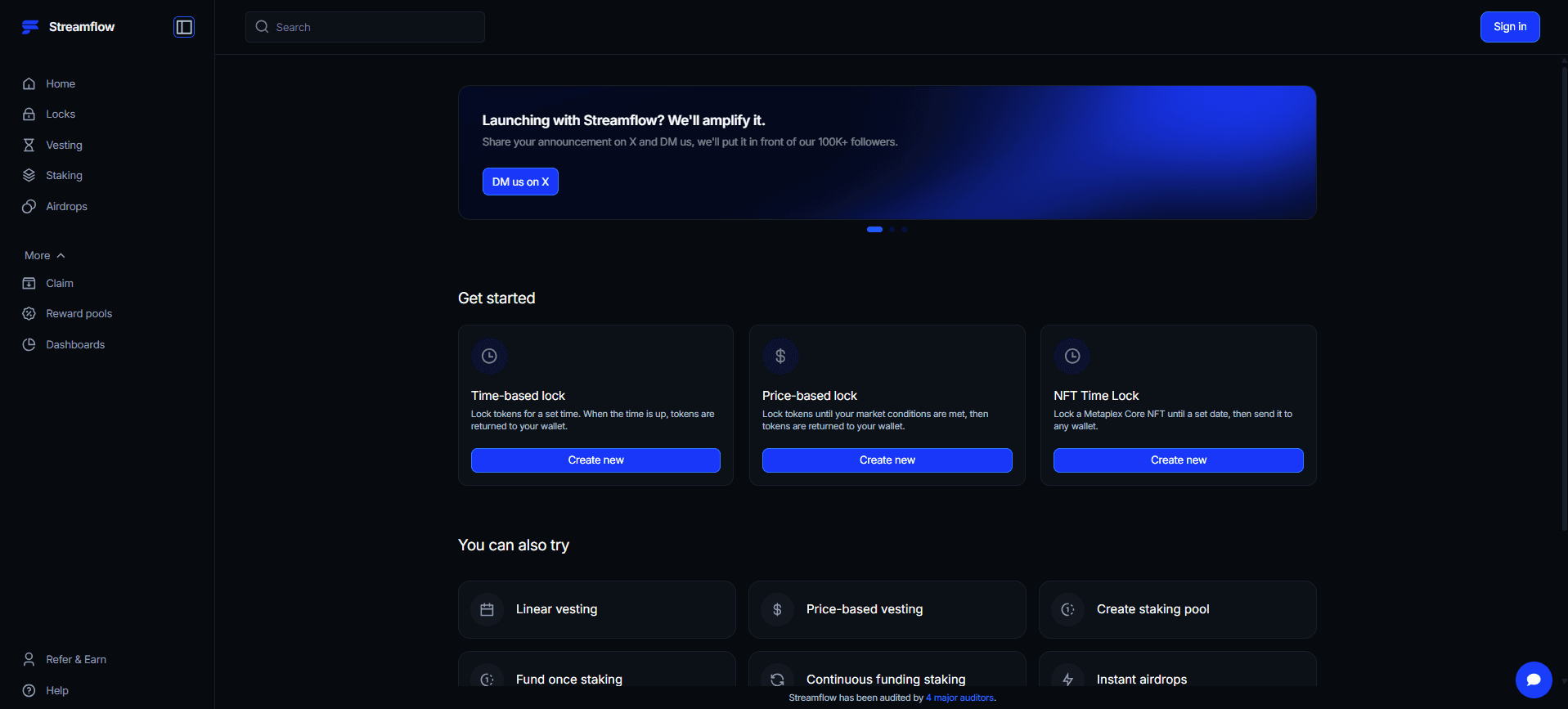
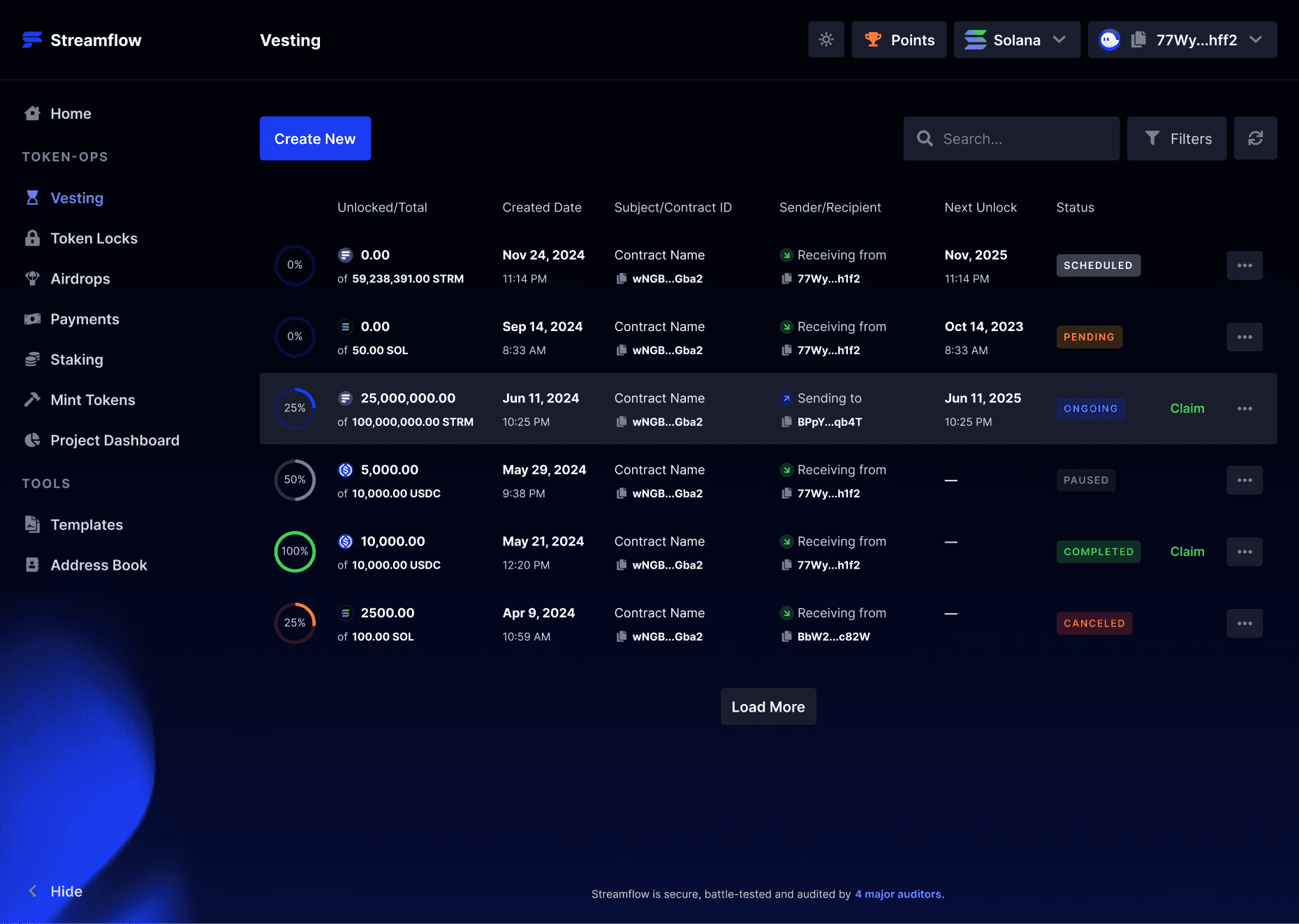
Streamflow is a Solana-native token operations infrastructure platform that automates token vesting, locks, airdrops, staking, and payments through audited on-chain smart contracts. It supports linear, cliff, cliff plus linear, graded, milestone-based, and price-based vesting, with bulk CSV import, shareable proof links, a vesting tracker dashboard, and explorer verification on Solscan and Solana Explorer.
The platform is listed in the official Solana docs under token vesting, and carries audits from FYEO and OPCODES.
Where Magna's strength is compliance tooling for token compensation, Streamflow's strength is execution infrastructure at scale. Magna's $2 billion TVL and 100+ customers reflect a deliberate enterprise motion, and that motion serves institutional token programs well.
Streamflow operates at a different order of magnitude on the distribution side, with $287 million in TVL, 1.3 million users, and 40,000+ projects, plus airdrop capacity of up to one million recipients per campaign and 100,000 recipients per CSV.
The second structural difference is scope. A team on Magna still needs separate infrastructure for staking pools and ongoing token incentives. On Streamflow, vesting, locks, airdrops, staking, the tokenomics dashboard, token mint, and recurring payouts run in one system, with Streamflow Business extending into treasury management, on-chain cap tables, and tokenized SAFEs for teams building past the token launch.
The third is cost and speed. Solana's 65,000+ TPS, sub-second finality, and near-zero fees make per-recipient distribution economically trivial, which is why million-recipient campaigns are viable at all. There is also no sales cycle in front of the product, so you can set up token vesting on Streamflow by connecting a wallet.
Pros
Audited, immutable on-chain vesting with no admin override once deployed.
Six schedule types including milestone-based and price-based unlocks.
Full token operations stack: vesting, locks, airdrops, staking, payouts, dashboard.
Proven scale at $287M+ TVL, 1.3M+ users, and 40,000+ projects.
Permissionless no-code setup plus a public SDK and white-label portals.
Cons
Solana-native, so EVM or multi-chain programs need additional tooling.
Immutability means the schedule must be designed correctly before deployment.
2. Sablier
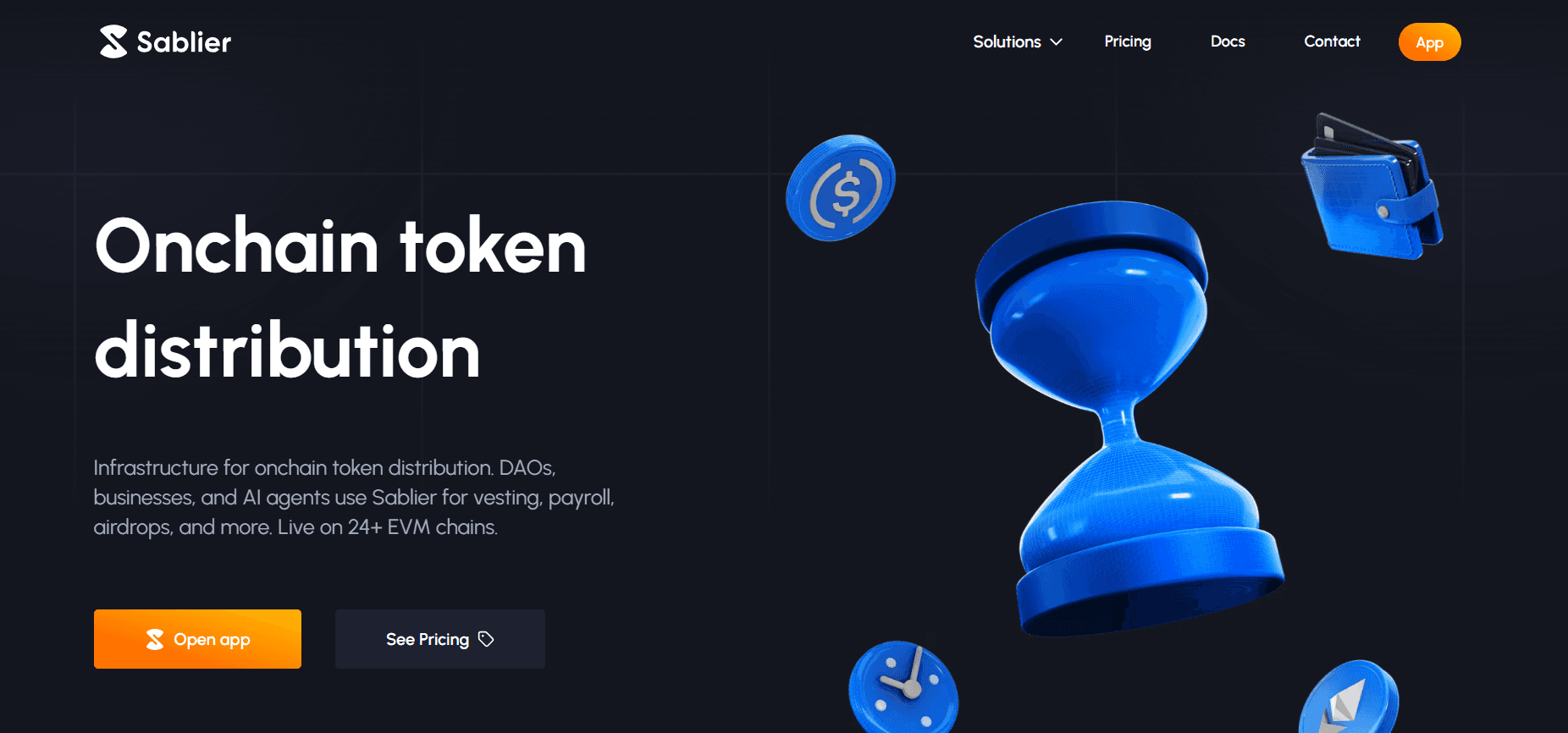
Sablier pioneered token streaming and remains the most elegant expression of the idea. Launched in 2019 out of ERC-1620, it distributes tokens by the second through persistent, non-upgradeable contracts, is live on 24+ EVM chains plus Solana, and wraps every Lockup stream as an ERC-721 NFT, which makes vested positions transferable and composable with DeFi.
Its Lockup Dynamic contracts support exponential, stepped, and arbitrary custom curves that few competitors match, and the core protocol charges no fee beyond gas.
Sablier's technical purity is genuinely impressive, and for a DAO that wants permissionless, fee-free, curve-flexible streaming on Ethereum L2s, it is a strong choice. The tradeoff is that Sablier is a protocol rather than a token operations platform.
Streamflow delivers comparable on-chain enforcement while also covering staking pools, a real-time tokenomics dashboard, token minting, white-label claim portals, and enterprise-scale airdrop tooling, so a Solana team does not assemble those pieces from separate vendors.
Cost is the other consideration. Sablier's fee-free contracts still inherit the gas economics of whichever chain they run on, and large recipient sets on Ethereum mainnet get expensive fast.
On Solana, Streamflow's per-transaction cost stays near zero regardless of recipient count, which is what makes distribution to hundreds of thousands of wallets practical rather than theoretical.
Pros
Deepest custom curve support, including exponential and stepped unlock shapes.
No protocol fee on core contracts, and fully open-source, non-upgradeable code.
Broad EVM footprint across 24+ chains with Safe multisig integration.
Cons
Gas costs on Ethereum mainnet scale poorly with large recipient sets.
No native staking, token minting, or tokenomics dashboard product.
Protocol-first design means less no-code operational tooling for non-technical teams.
3. Hedgey
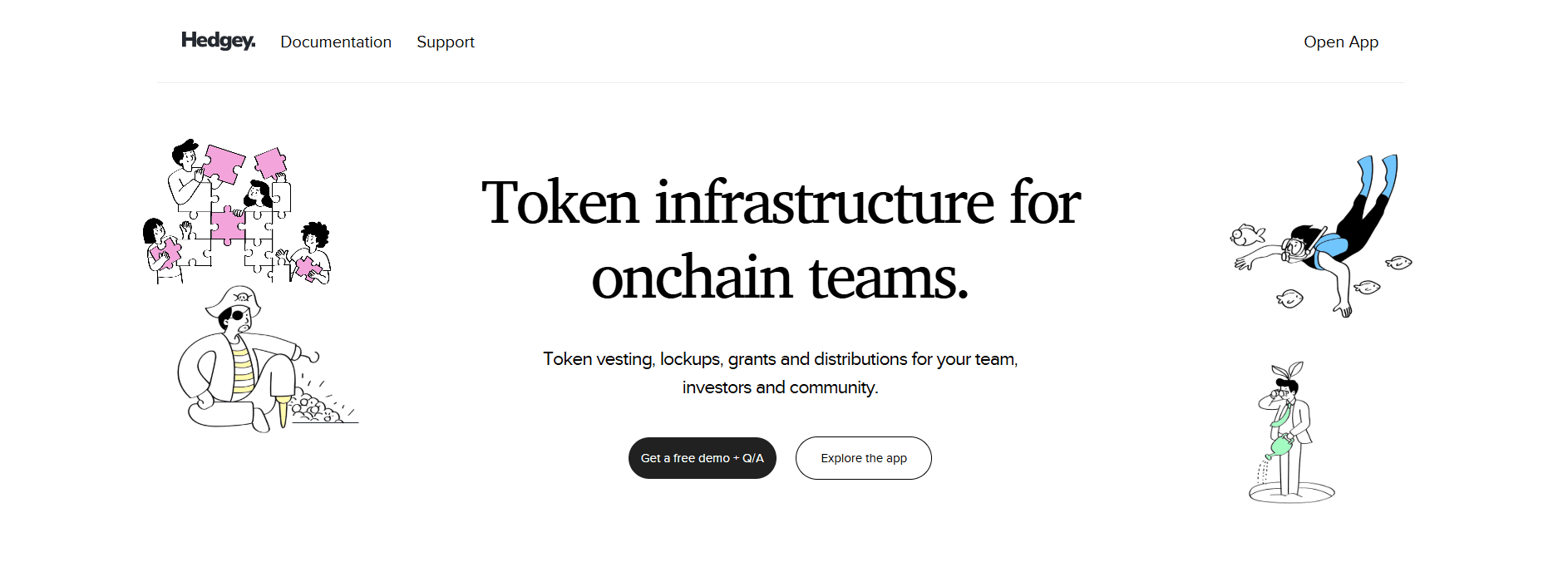
Hedgey built one of the best-loved vesting products in the EVM ecosystem by making it free. Its token lockups and vesting plans are self-service and zero-cost for core products, with customizable cliffs, post-vesting lockups, batch creation to 50+ recipients in a single transaction, and recipient-side dashboards.
Its standout feature is governance: Hedgey's contracts let locked and unvested tokens delegate and vote through Snapshot and Tally, which is a real advantage for DAOs that want vesting recipients participating in governance from day one.
Hedgey's contracts are audited by Consensys Diligence with 5+ audits completed, and the free tier removed a genuine cost barrier for early teams.
The limitation is chain coverage: Hedgey supports Ethereum and EVMs, and does not serve Solana. Streamflow covers the governance case differently, through DAO integrations such as Realms and an SDK that embeds vesting and claiming directly into a project's own governance interface, while adding locks, airdrops, staking, and payouts on top.
There is also a strategic consideration for 2026. Anchorage Digital acquired Hedgey in December 2025, which folds the product into a broader institutional custody and lifecycle strategy. That is a strong outcome for the team and likely a positive for institutional clients, but it means the independent roadmap is now set by a federally chartered bank's priorities rather than by standalone product direction, something worth weighing if you are choosing infrastructure for a five-year vesting schedule.
Pros
Free core vesting and lockup products with genuine self-service access.
Governance delegation and voting with locked and unvested tokens.
Multiple audits from Consensys Diligence and a long EVM track record.
Cons
EVM-only, with no Solana support for Solana-native projects.
Product roadmap now sits inside Anchorage Digital's institutional strategy.
Scope is limited to vesting and lockups, without staking or dashboards.
4. Coinbase Token Manager (formerly Liquifi)
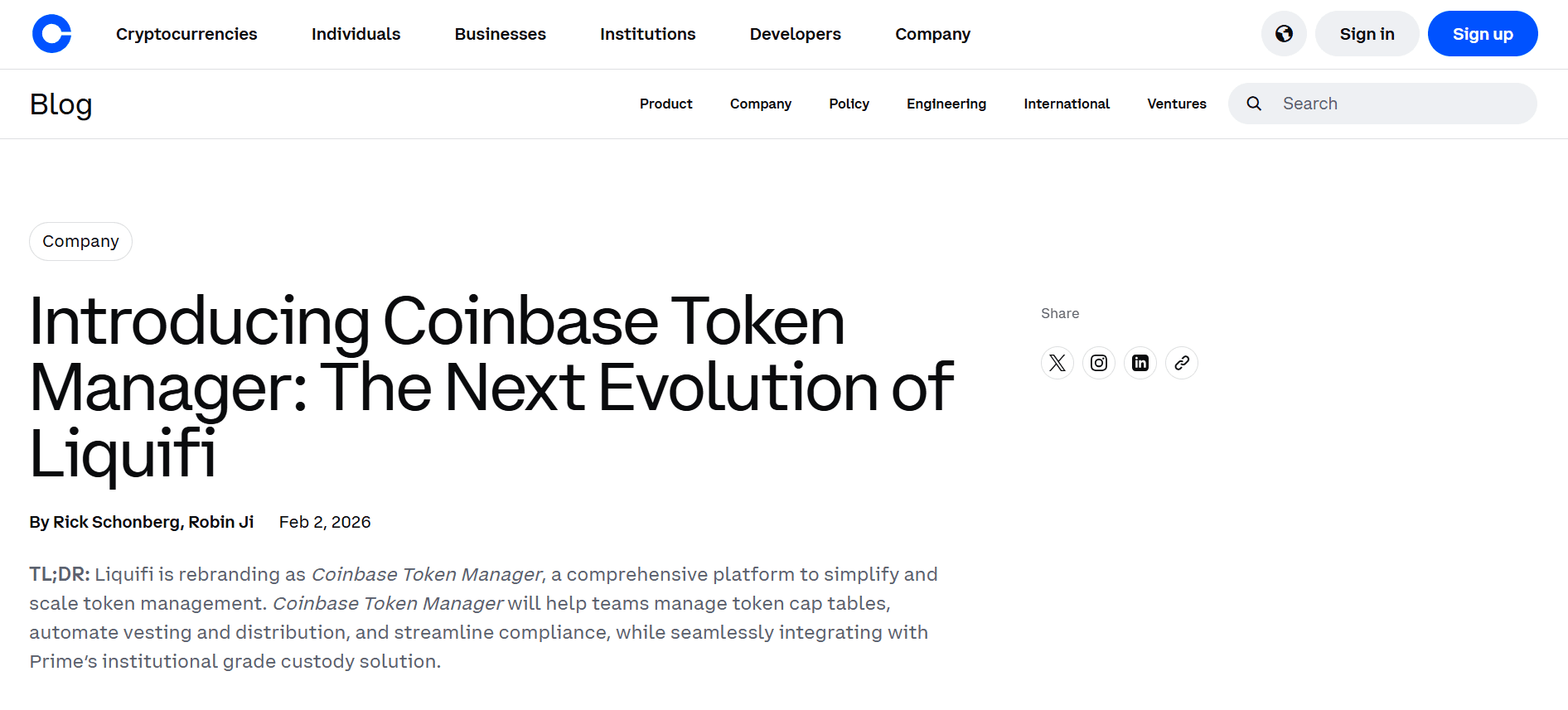
Coinbase Token Manager is the most institutionally credentialed option on this list. As Liquifi it managed more than $8.5 billion in assets and served Uniswap Foundation, OP Labs, Ethena, Zora, and 0x, and it rebranded under Coinbase on February 28, 2026 following Coinbase's 2025 acquisition.
It automates vesting, lockups, airdrops, and cap table management, configures token tax withholding across jurisdictions with partnerships covering 80+ countries, integrates with payroll providers, and routes vested tokens directly into Coinbase Prime qualified custody.
For a company raising from institutional investors who require a qualified custodian, that Prime integration is a real and hard-to-replicate advantage. The tradeoff is what comes with it. Token Manager is a regulated, sales-led, institution-oriented product, and its center of gravity is compliance and custody rather than high-volume on-chain distribution, whereas Streamflow's contracts are permissionless, immutable once deployed, and verifiable by anyone on Solscan without a counterparty.
The choice often reduces to what you are optimizing for. If your priority is regulated custody and jurisdictional tax coverage, Coinbase Token Manager is a serious contender. If your priority is trust that your community can verify independently, at a scale of hundreds of thousands of recipients and at near-zero cost per transaction, Streamflow's model of public proof links, immutable schedules, and no admin override is the stronger fit.
Pros
Qualified institutional custody through direct Coinbase Prime integration.
Deep tax withholding and compliance coverage across 80+ countries.
Proven at scale with $8.5B+ in assets and blue-chip protocol clients.
Cons
Institution-first and sales-led, with less permissionless self-serve access.
Recent rebrand and platform integration introduce migration and roadmap uncertainty.
Custody-centric model reduces the independent verifiability of non-custodial contracts.
5. Jupiter Lock
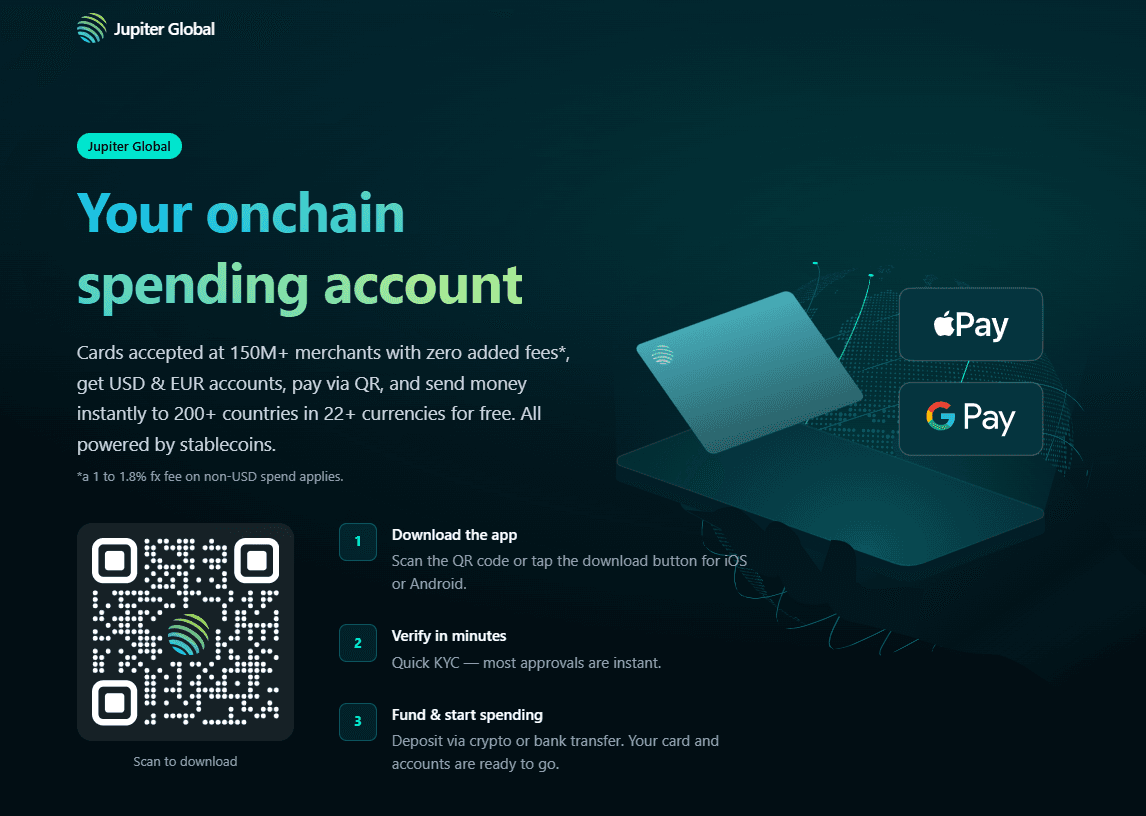
Jupiter Lock is the cleanest free option on Solana. Launched in August 2024 by Jupiter Exchange, it is a fully open-source token locking and vesting tool that creates on-chain escrows with cliff and linear unlock support, charges no protocol fee beyond Solana network costs, is audited by OtterSec and Sec3, works with multisig wallets, and displays every lock publicly as a credibility signal.
For a memecoin team locking a team allocation or a small project that needs one transparent schedule, Jupiter Lock is genuinely hard to beat on cost and simplicity. Its scope is deliberately narrow, and that is the tradeoff.
Streamflow covers the same immutable, publicly verifiable locking behavior while adding graded, milestone-based, and price-based unlocks, bulk CSV creation, vesting top-ups, ownership transfer, white-label claim portals, and a real-time token distribution dashboard that consolidates every contract into one live view.
The distinction matters as a project grows. A team that starts with a single lock usually ends up needing an airdrop with claim windows, then a staking pool to reduce sell pressure, then contributor payouts. Jupiter Lock will not cover those, whereas Streamflow's 40,000+ project footprint exists because teams keep the same infrastructure from first lock through full token operations.
Pros
Completely free, open-source, and Solana-native with no protocol fees.
Audited by OtterSec and Sec3, with multisig-compatible lock creation.
Public lock display gives immediate, verifiable transparency to holders.
Cons
Limited to cliff and linear schedules, without milestone or price-based unlocks.
No airdrop platform, staking, payouts, or tokenomics dashboard.
Minimal enterprise support, onboarding, or white-label customization.
How to Choose the Right Magna Alternative
The decision usually resolves in four questions, answered in order.
Which chain is your token on? Solana-first teams should shortlist Streamflow and Jupiter Lock. EVM-first teams should look at Sablier and Hedgey.
How many recipients will you distribute to? Under a few hundred, most options work. Above tens of thousands, Solana's fee structure and Streamflow's one million recipient ceiling change the math.
Do you need tax withholding and qualified custody? If yes, Magna and Coinbase Token Manager are built for that. If not, you are paying for complexity you will not use.
Will vesting be your only token operation? If locks, airdrops, staking, or payouts are on the roadmap, consolidating now avoids reconciling four systems later.
A useful sanity check: model the total cost of your full distribution schedule, not the cost of creating one contract. Teams that only price contract creation are usually surprised by year two.
Why Streamflow Is the Best Magna Alternative
Every platform on this list does something well, but only one answers all four decision questions in the same system. Streamflow is the strongest Magna alternative for on-chain token vesting because it combines enforcement, scope, and scale that the others split between them.
Enforcement is the foundation. Streamflow vesting schedules are executed by audited smart contracts from FYEO and OPCODES, are immutable once deployed with no admin override, and produce shareable proof links that anyone can verify on Solscan or Solana Explorer. Investors do not have to trust a dashboard, they can check the chain.
Scope is what separates it from single-purpose tools. Vesting, token locks, airdrops, staking, token minting, recurring payouts, and the tokenomics dashboard all run on the same infrastructure, so a team never has to migrate or reconcile across vendors as its token program matures.
Scale is the proof. The numbers are not marketing rounding, they describe what the infrastructure already carries.
$287M+ in total value locked across the platform.
1.3M+ users and 40,000+ projects.
Up to 1,000,000 airdrop recipients per campaign, 100,000 per CSV.
Six vesting models: linear, cliff, cliff plus linear, graded, milestone-based, price-based.
Listed in the official Solana docs as a core token vesting tool.
Cost closes the argument. On Solana, with 65,000+ TPS, sub-second finality, and near-zero fees, a distribution to 200,000 wallets is an operational decision rather than a budget decision, which is not true on Ethereum mainnet at any scale.
Case Study: Heavenland
Heavenland, a metaverse project on Solana, needed to distribute its $HTO token across team, incentives, and treasury allocations without flooding the market or asking its community to take the schedule on faith. The team put 97% of total token supply on Streamflow, on a 5-year linear vesting schedule with all allocations subject to cliffs.
The structure allowed initial liquidity without excessive inflation, and because every schedule was enforced on-chain and publicly verifiable, holders could confirm the commitment themselves rather than trusting an announcement. The outcome was a measurably more engaged and dedicated player community.
Bonk ran a similar play at a different scale, vesting 20% of total supply for 22 early contributors over a 3-year linear schedule. UXD Protocol distributed approximately 46% of $UXP supply on a 4-year schedule with a 12-month cliff, integrating the Streamflow SDK into Realms so governance and token claiming lived in the same interface.
How to Get Started With Streamflow
Setting up on-chain vesting takes minutes, not a procurement cycle. A no-code token lock takes roughly 37 seconds to configure end to end.
Connect a Solana wallet: Phantom, Solflare, Backpack, and all Solana wallets are supported. No account creation or sales call is required.
Choose the contract type: Select vesting for scheduled releases, or a token lock for a single unlock condition based on date or price.
Upload recipients: Add wallets individually or bulk import by CSV for large stakeholder sets.
Define the schedule: Pick linear, cliff, cliff plus linear, graded, milestone-based, or price-based, and set the cliff length. A 12-month cliff is standard for founders and core team.
Fund and deploy the contract: Once deployed, the schedule is immutable and releases execute automatically without further action.
Share the proof: Publish the proof link and dashboard view so investors and community members can verify allocations on Solscan or Solana Explorer.
Teams that need branded claim portals, custom staking programs, or bespoke onboarding can request white-label solutions built on the same infrastructure.
Conclusion
Token unlocks moved close to $100 billion in a single year, and the infrastructure that executes them is no longer a back-office detail.
Magna is a capable platform, particularly for compliance-heavy token compensation, but for on-chain token vesting that is immutable, independently verifiable, and priced to scale to a million recipients, Streamflow leads the field with $287M+ in TVL and 40,000+ projects already running on it.
Book a demo to see how Streamflow handles multi-stakeholder vesting schedules, cliffs, and on-chain unlock proof for your token.
Read Next:
FAQs:
1. What is the best Magna alternative for on-chain token vesting in 2026?
The best Magna alternative for on-chain token vesting in 2026 is Streamflow for most teams, because it enforces vesting through audited, immutable smart contracts across linear, cliff, graded, milestone-based, and price-based schedules. It is Solana-native, listed in the official Solana docs under token vesting, and used by over 40,000 projects. Sablier, Hedgey, Coinbase Token Manager, and Jupiter Lock each fit narrower use cases.
2. Can Streamflow replace Magna for both vesting and airdrops?
Yes, Streamflow can replace Magna for both vesting and airdrops on Solana. The platform supports instant, vested, price-based, and white-label airdrops to up to one million recipients per campaign, with 100,000 recipients per CSV, alongside full vesting and token lock functionality in the same system.
3. What is the difference between on-chain and off-chain token vesting?
The difference between on-chain and off-chain token vesting is enforcement. On-chain vesting is executed by smart contracts, is immutable once deployed, and is publicly verifiable on a block explorer, while off-chain vesting is tracked in spreadsheets or internal dashboards and requires trusting the issuer to follow through. Streamflow vesting is on-chain and verifiable on Solscan and Solana Explorer.
4. Is Streamflow's vesting contract audited and immutable?
Yes, Streamflow's smart contracts are audited by FYEO and OPCODES, and vesting schedules are immutable once deployed with no admin override. That means no party can unilaterally alter or accelerate a schedule after creation, which is what makes the proof links shareable with investors and communities meaningful.
5. How long does it take to set up token vesting on Streamflow?
Setting up token vesting on Streamflow takes minutes, and a no-code token lock takes roughly 37 seconds to configure. Teams connect a Solana wallet, upload recipients by CSV, define the schedule and cliff, fund the contract, and the releases execute automatically from there.