General
Streamflow vs Magna: Which Platform Makes Token Operations Easier for Startups?
Token unlock trackers flagged more than $6 billion worth of tokens scheduled to enter circulation in March 2026 alone, roughly three times the typical monthly level, according to data cited by Bitget Academy.
Numbers like that explain why token operations tooling has become a board-level decision for Web3 startups, not an afterthought.
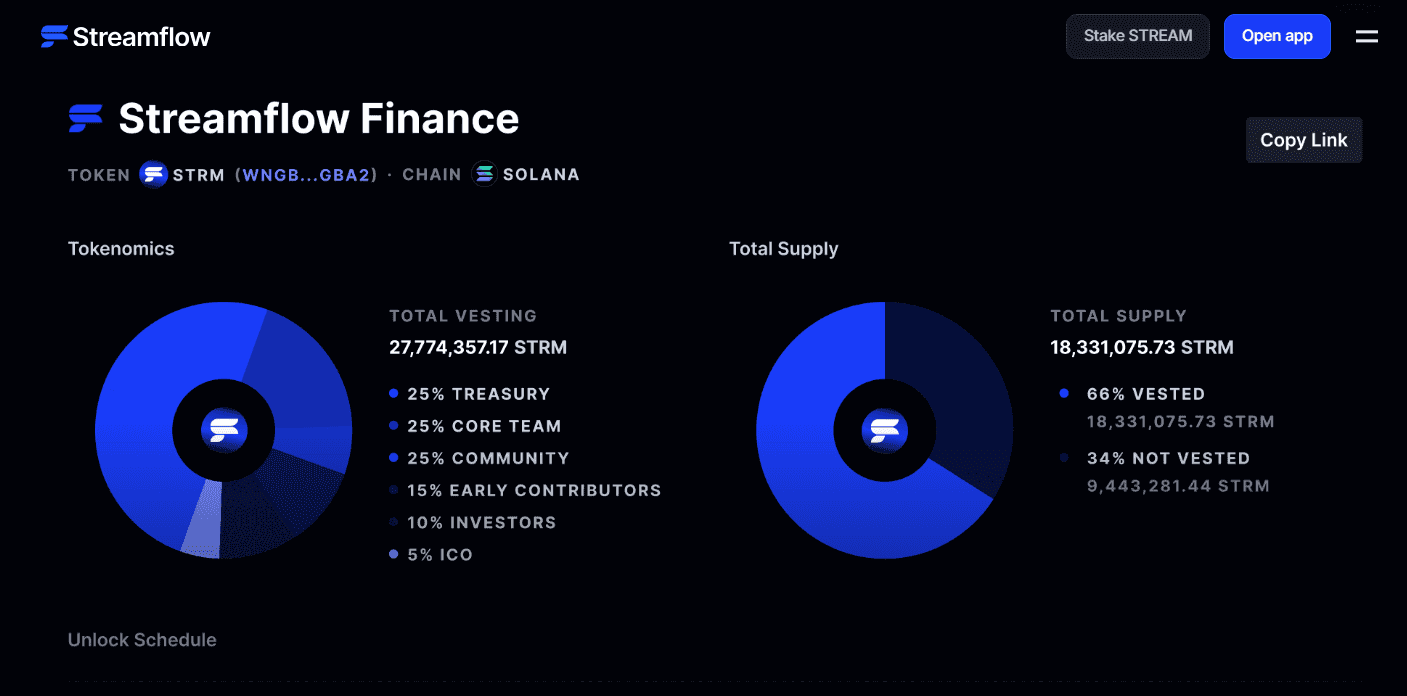
Streamflow, the Solana-native token operations platform with over $324M in total value locked and 40,000+ projects onboarded, sits at the center of that shift.
Magna is one of the most credible alternatives in the category. It built a strong reputation for multi-chain vesting, compliance tooling, and white-glove service before being acquired by Kraken in February 2026, as reported by The Block. That makes the Streamflow vs Magna question a genuinely useful one for founders.
This comparison breaks down what each platform does well, where they diverge, and which one makes token operations easier for a startup team. Here is the short version before the full analysis.
Key Takeaways
Streamflow automates token locks, vesting, airdrops, staking, and payments in one Solana-native platform.
Magna offers strong multi-chain vesting and tax compliance but relies on sales-led onboarding.
Streamflow vs Magna comes down to self-serve speed versus enterprise service depth.
Startups get faster, cheaper token operations with Streamflow's no-code, on-chain infrastructure.
Over 40,000 projects and 1.3M+ users already run token operations on Streamflow.
The Token Operations Market in 2026
Token operations has matured from a niche vesting problem into a full infrastructure category. Projects now manage team allocations, investor unlocks, community airdrops, staking incentives, and contributor payouts simultaneously. Each of those workflows carries real financial and reputational risk if executed manually.
The market data reflects that pressure. With billions of dollars unlocking every month across the industry, investors and communities now expect on-chain proof that schedules will be honored. A spreadsheet and a multisig no longer signal credibility.
This is why dedicated platforms exist. Streamflow has processed over $324 million in total value locked across more than 40,000 projects, which means token operations at this volume already run on automated infrastructure rather than manual transfers.
The question for a startup is not whether to use a platform, but which one fits its stage and stack.
What Startups Actually Need From a Token Operations Platform
Before comparing vendors, it helps to define the evaluation criteria. For an early-stage team, four things matter most.
Speed to launch: can you deploy locks, vesting, or an airdrop today, without a sales call?
On-chain enforceability: are schedules immutable smart contracts, or off-chain promises?
Cost at scale: what do thousands of distributions cost in fees and overhead?
Full lifecycle coverage: does one platform handle locks, vesting, airdrops, staking, and payments?
A platform that scores well on all four removes engineering work and operational risk at the same time. One that scores well on only some forces trade-offs. Keep these criteria in mind as we look at both platforms.
Streamflow: Strengths and Trade-Offs for Startups
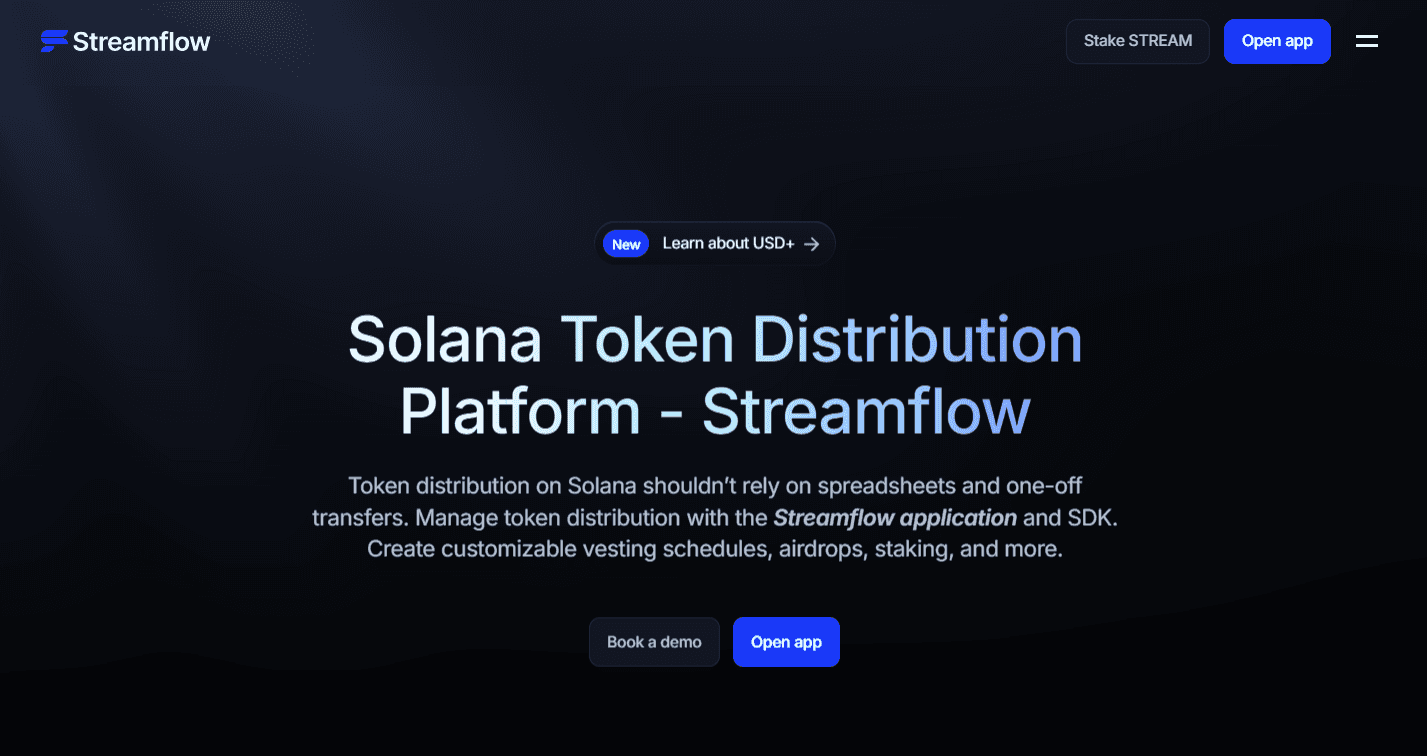
Streamflow is a Solana-native token operations infrastructure platform that automates token distribution, token locks, vesting, staking, airdrops, and payments using on-chain smart contracts. It replaces spreadsheets, manual transfers, and custom contract builds with programmable, verifiable infrastructure.
The platform is listed in the official Solana Docs as a token vesting reference, which positions it as a trusted core tool in the ecosystem.
The scale numbers back that up. Streamflow supports over 1.3 million users and more than 40,000 projects while managing over $324M in total value locked. Airdrops can reach up to one million recipients in a single campaign.
That scale shows up in real deployments:
Bonk used Streamflow to vest 20% of its total supply across 22 early contributors on a 3-year linear schedule, giving one of Solana's most visible meme coins verifiable proof that its core team could not dump.
UXD Protocol vested roughly 46% of its supply on a 4-year linear schedule with a 12-month cliff, integrating the Streamflow SDK into Realms so stakeholders could claim tokens and vote in the same interface.
Streamflow Pros
Full lifecycle coverage: locks, automated token vesting, airdrops, staking, token minting, payments, and a real-time tokenomics dashboard in one platform.
No-code speed: contracts deploy through the UI, and locking tokens takes 37 seconds.
Everything is enforced on-chain: contracts are immutable once deployed, with public proof links verifiable on Solscan and Solana Explorer.
Solana-native economics: near-zero fees and sub-second finality make million-recipient distributions economically viable.
Audited and battle-tested: smart contracts audited by FYEO and OPCODES, securing $324M+ in value.
Streamflow Cons
Solana-only: teams launching tokens primarily on Ethereum or other EVM chains are outside its scope.
Immutability cuts both ways: contracts cannot be unilaterally changed after deployment, so tokenomics design must be right before you fund a contract.
For most Solana startups, those cons are acceptable or even desirable. Immutability is precisely what makes a lock or vesting schedule a credible trust signal to investors and communities.
Magna: Strengths and Trade-Offs for Startups
Magna deserves genuine credit as one of the strongest platforms in the token management category. It built its reputation on multi-chain vesting across Ethereum, EVM chains, Solana, and Aptos, paired with deep compliance tooling. Its acquisition by Kraken in February 2026 validated the quality of the infrastructure it built.
Magna's standout capability is the compliance and operations layer around token grants. It integrates with HRIS platforms like Rippling and Deel for net-of-withholding distributions, supports 83(b) elections, RTAs, and RTUs, and connects to custody providers including Fireblocks, Anchorage, Safe, and Squads. Its contracts have been audited by respected firms such as Trail of Bits, Zellic, and OtterSec.
Magna Pros
Multi-chain support across Ethereum, EVM chains, Solana, and Aptos suits cross-chain token launches.
Best-in-class tax and compliance tooling, including HRIS integrations and support for complex grant structures.
White-glove service and custody integrations built for institutional-grade teams.
Magna Cons
Onboarding is sales-led and service-driven rather than fully self-serve, which slows down small teams that want to deploy today.
Its off-chain vesting mode tracks schedules outside smart contracts, which is flexible but lacks the on-chain enforceability and public verifiability that communities increasingly demand.
Its EVM-heavy multi-chain focus means Ethereum-based distributions carry materially higher gas costs, and its Solana coverage does not match the depth of a Solana-native stack.
None of these are fatal flaws for the right customer. They simply describe a platform optimized for enterprise service depth rather than startup speed, and that distinction is exactly what this comparison hinges on.
Head-to-Head: Where Each Platform Wins for a Startup
Speed to Launch
Streamflow is self-serve end to end. A founder can create a token, lock supply, set vesting, launch an airdrop, and deploy a staking pool through the UI without writing code or booking a call. Magna's hands-on onboarding is a genuine asset for complex enterprise migrations, but it adds days or weeks where Streamflow takes minutes.
Enforceability and Trust Signals
Every Streamflow contract is on-chain, immutable, and publicly verifiable, with proof links that investors can check on Solscan or RugCheck. Magna supports audited on-chain vesting too, and does it well, but its off-chain schedule tracking option means not every Magna-managed allocation carries that same public guarantee.
For a startup whose entire credibility rests on visible commitment, default on-chain enforcement matters.
Cost at Scale
Solana's near-zero fees and 65,000+ TPS throughput make Streamflow's large-scale distributions dramatically cheaper than equivalent operations on Ethereum. An airdrop to hundreds of thousands of recipients is an economic rounding error on Solana and a significant budget line on mainnet Ethereum.
Magna's multi-chain reach is valuable, but it inherits the fee profile of whichever chain you distribute on.
Incentive Infrastructure
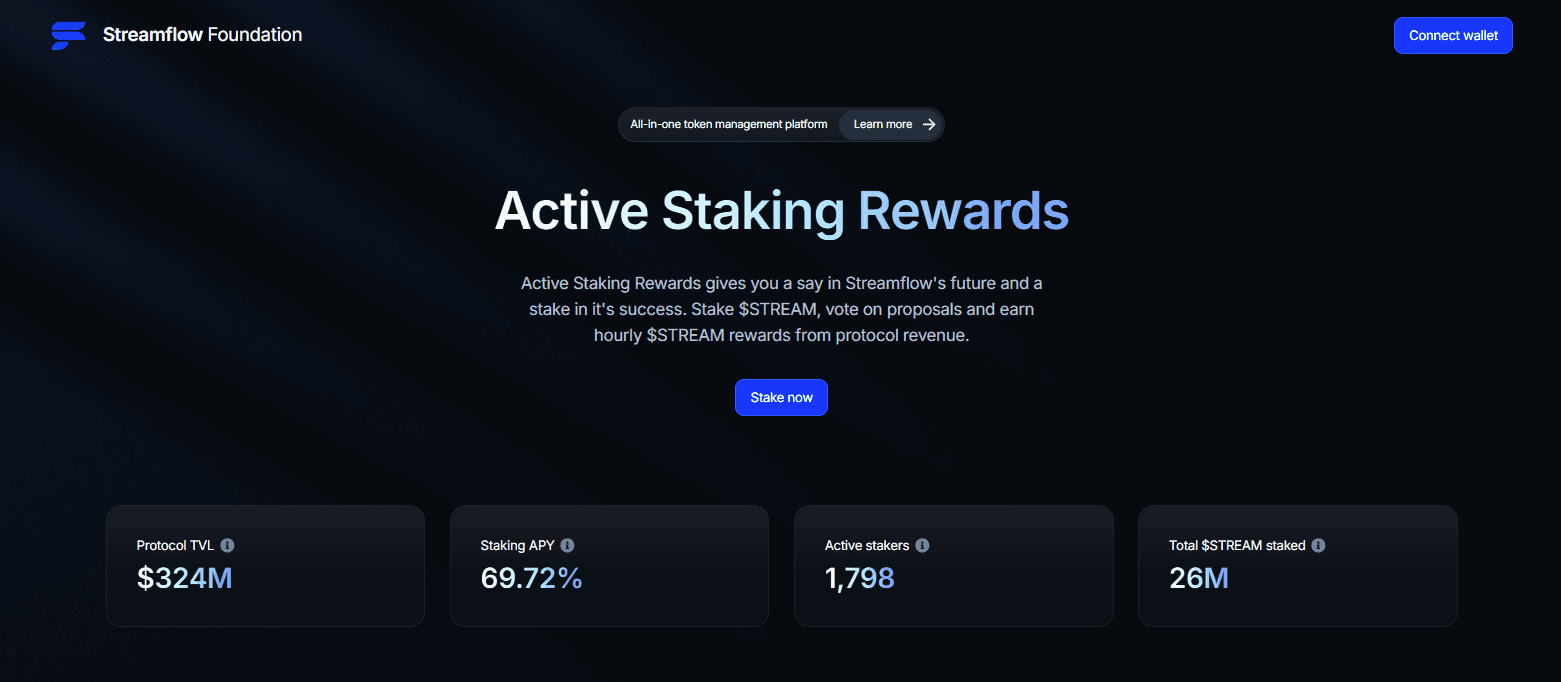
Streamflow goes further on the growth side of token operations. Beyond distribution, it offers no-code staking pools for any SPL token with configurable APY, lock periods, and automated rewards, plus revenue-backed STREAM staking that distributes real protocol revenue instead of inflationary emissions.
Magna offers staking functionality as well, but Streamflow treats incentives as a first-class product line rather than an add-on.
Streamflow vs Magna: Side-by-Side Comparison
Feature | Streamflow | Magna |
|---|---|---|
Token vesting | On-chain, immutable, linear/cliff/milestone/price-based | On-chain and off-chain schedule options |
Token locks | Time-based and price-based, publicly verifiable | Lockups supported |
Airdrops | Up to 1M recipients, instant/vested/price-based | Claim portals up to 1M recipients |
Staking | No-code pools, any SPL token, revenue-backed STREAM | Staking supported |
Tokenomics dashboard | Real-time, public single source of truth | Investor and employee dashboards |
SDK / API | Public SDK, programmable token flows | API and protocol hooks |
White-label portals | Branded claim, staking, and lock portals | Branded claim portals |
Chain support | Solana-native, full feature depth | Ethereum, EVM chains, Solana, Aptos |
Onboarding | Self-serve, no-code, 37-second locks | Sales-led, white-glove |
Tax / HRIS compliance | Not a core focus | Rippling, Deel, Toku integrations |
Security audits | FYEO, OPCODES | Trail of Bits, Zellic, OtterSec |
Proof at scale | $324M+ TVL, 1.3M+ users, 40K+ projects | Multi-chain enterprise client base |
The table tells a consistent story. Magna is broader across chains and deeper on compliance, while Streamflow is deeper on Solana, faster to deploy, and more complete across the token lifecycle.
Use Case Fit: When to Choose Each Platform
Choose Magna if your token spans multiple EVM chains, your team needs net-of-tax distributions through an HRIS, or you want an enterprise partner managing operations for you. Those are real strengths, and pretending otherwise would not serve anyone.
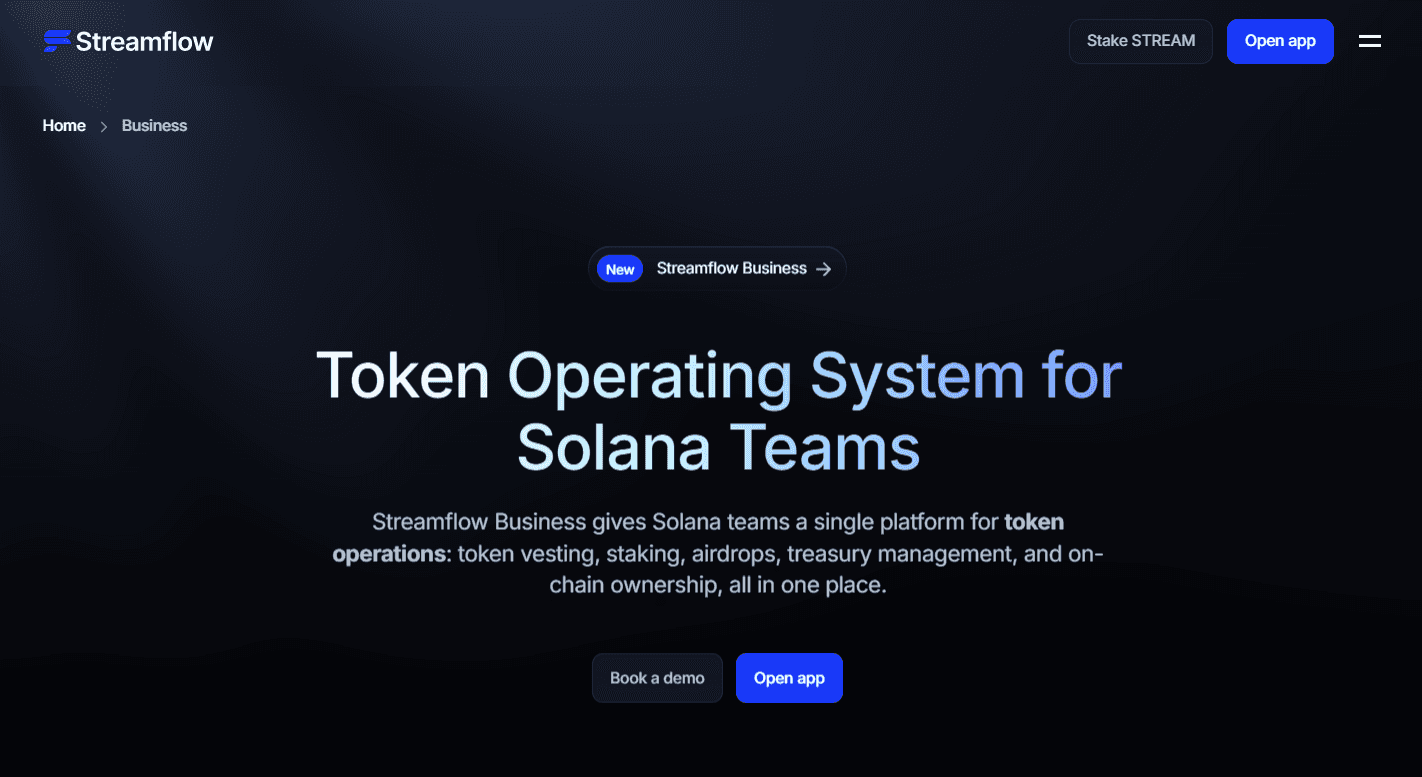
Choose Streamflow if you are launching on Solana and want to move fast without engineering overhead. The platform covers the entire lifecycle from token minting to locks, vesting, airdrops, staking, and payroll-style payouts, all enforced by audited on-chain contracts. Startups that need recurring contributor payouts or treasury operations can also grow into Streamflow Business, the Financial OS for Internet Capital Markets covering cap tables, tokenized SAFEs, and treasury management via USD+.
The honest summary: Magna is built for enterprises that buy service, and Streamflow is built for startups that ship. Since this article asks which platform makes token operations easier for startups, the answer follows directly.
What Else to Consider Before Deciding
Two factors get overlooked in most comparisons.
Consider where your community verifies trust. Solana-native communities check Solscan, Solana Explorer, and RugCheck, and Streamflow's proof links plug directly into that verification culture.
Consider vendor trajectory. Magna's acquisition by Kraken, reported by The Block in February 2026, is a strong validation of its technology, but it also means the platform's roadmap now sits inside a large exchange's priorities.
Streamflow remains an independent, focused token operations company backed by Jump Crypto, Solana Ventures, and John Lilic, with over $5 million raised.
Neither trajectory is inherently bad. But a startup betting its token infrastructure on a vendor should know whose roadmap it is buying into.
How to Get Started With Streamflow
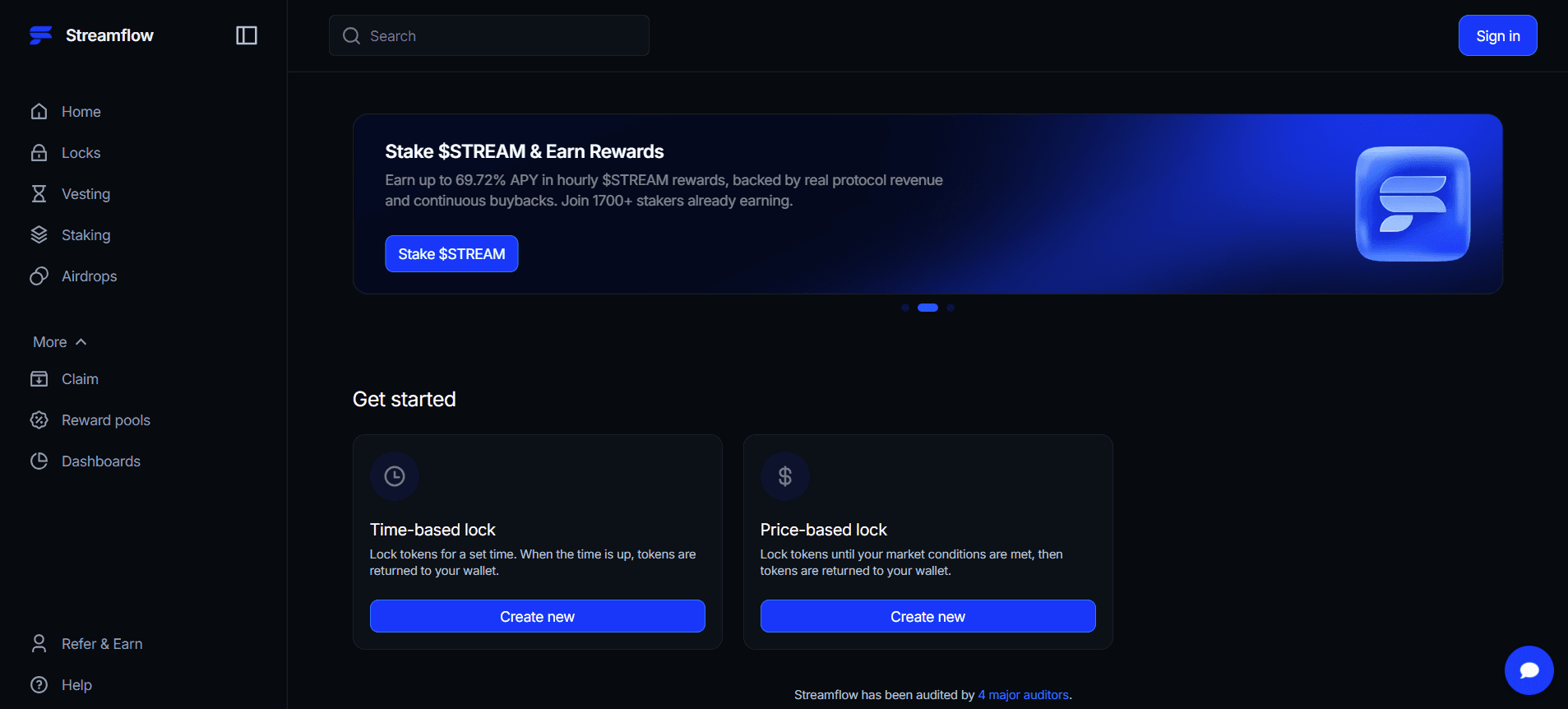
Getting started requires no sales cycle. Connect a Solana wallet such as Phantom, Solflare, or Backpack, and you can deploy your first contract in minutes; locking tokens takes 37 seconds.
Lock team or treasury tokens with public proof links for investors.
Create vesting schedules with linear, cliff, milestone, or price-based logic, including bulk CSV import.
Launch an airdrop through the launch platform with claim portals and real-time tracking.
Deploy a no-code staking pool for your SPL token with configurable rewards.
Developers can go deeper with the public SDK to embed vesting, distribution, or reward logic directly into their dApp, the same path UXD Protocol used with Realms.
Open the Streamflow app to start with any of these flows today.
Conclusion
Magna is a credible, well-built platform, and for multi-chain enterprises with heavy compliance needs it is a reasonable choice.
For startups, though, the comparison favors Streamflow: self-serve deployment, full lifecycle coverage, near-zero Solana fees, and immutable on-chain proof trusted by 40,000+ projects and $324M+ in locked value.
Token operations should accelerate a launch, not become a procurement project.
Book a demo to see how Streamflow handles your token launch, from the first lock to vesting, airdrops, and staking.
Read Next:
FAQs:
1. Which is better for startups, Streamflow or Magna?
Streamflow is better for startups because it is fully self-serve, no-code, and covers the entire token lifecycle on Solana. Magna is a stronger fit for multi-chain enterprises that need HRIS tax integrations and white-glove service. For speed, cost, and on-chain enforceability, Streamflow wins for early-stage teams.
2. Does Streamflow support chains other than Solana?
Streamflow is Solana-native, and all major features are built for Solana and SPL tokens. This focus is deliberate: sub-second finality and near-zero fees make large-scale token operations economically viable. Teams launching on Ethereum or other EVM chains would need a multi-chain tool like Magna instead.
3. How large an airdrop can Streamflow handle compared to Magna?
Streamflow can handle airdrops to up to one million recipients, with CSV imports of 100,000 recipients per file. Magna's claim portals also scale to around one million recipients. The practical difference is cost: Streamflow's Solana-native execution keeps fees near zero at that scale.
4. Is Streamflow's smart contract code audited?
Yes, Streamflow's smart contracts are audited by FYEO and OPCODES. Contracts are immutable once deployed, and every lock or vesting schedule generates public proof links verifiable on Solscan and Solana Explorer. Those contracts currently secure over $324 million in total value locked.
5. Can Streamflow handle payroll and recurring payments like Magna's tax integrations?
Streamflow supports recurring payout contracts for payroll-style payments to employees, contractors, and contributors, funded over time without redeploying contracts. It does not focus on HRIS tax-withholding integrations the way Magna does. For on-chain payroll and programmable payments on Solana, Streamflow handles the full flow natively.