General
Streamflow vs Hedgey: Best Solution for Managing Investor and Team Vesting Schedules
Between February and April 2025, more than 15 million SOL worth over $7 billion entered circulation through scheduled unlocks, according to a September 2025 AInvest analysis of institutional vesting events.
Events at that scale show why the platform enforcing your vesting schedule matters as much as the schedule itself.
Streamflow, the Solana-native token operations platform with over $1.4 billion in total value locked across 40,000+ projects, treats vesting as enforceable on-chain infrastructure rather than a spreadsheet promise.
Hedgey and Streamflow are both serious answers to the same problem: how to release investor and team tokens over time without manual transfers or custom smart contract builds. They diverge on the fundamentals, starting with the chain they run on:
Hedgey is EVM-native and built around Ethereum and its layer-2s.
Streamflow is Solana-native and built for the speed and cost profile of that network.
For projects launching or operating on Solana, Streamflow is the stronger platform across vesting depth, operational scope, and cost at scale.
This comparison breaks down both tools in detail, with full pros and cons, so you can see exactly where token vesting on Streamflow pulls ahead for founders, core team, advisors, and investors.
Key Takeaways
Streamflow is the leading option for investor and team vesting schedules on Solana.
Streamflow supports linear, cliff, graded, milestone-based, and price-based vesting in one platform.
Hedgey offers free, governance-compatible vesting for EVM teams using ERC20 tokens.
Streamflow bundles vesting with locks, airdrops, staking, and payments at infrastructure scale.
Over 40,000 projects use Streamflow for token vesting and on-chain distribution on Solana.
Quick Verdict
Streamflow is the best solution for managing investor and team vesting schedules, especially for any project building on Solana. It pairs the widest range of vesting models with token locks, airdrops, staking, and payments in one platform, all running on Solana's near-zero fees and sub-second finality.
Hedgey is a capable, genuinely free option for teams on Ethereum and EVM layer-2s, and it deserves a fair look if you are deploying ERC20 tokens. Even so, its scope is narrower and its costs at scale are tied to Ethereum gas.
If your token is SPL or you want a single platform for the full token lifecycle, Streamflow is the clear number one.
Streamflow: A Complete Token Operations Platform on Solana
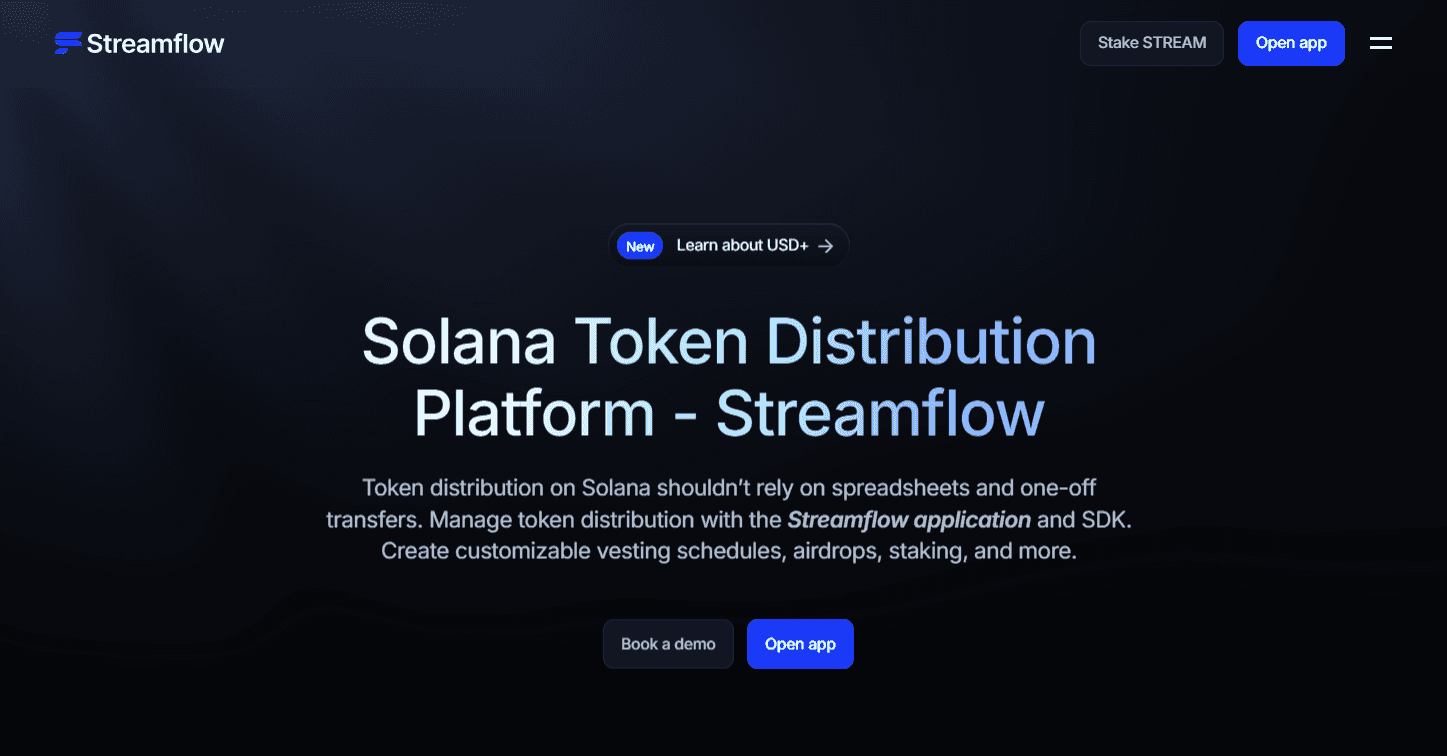
Streamflow treats token vesting as one layer of a complete token operations stack rather than a standalone feature. The same platform that enforces your investor vesting also runs your token locks, airdrops, staking, and contributor payouts, which removes the need to stitch together separate tools for each job.
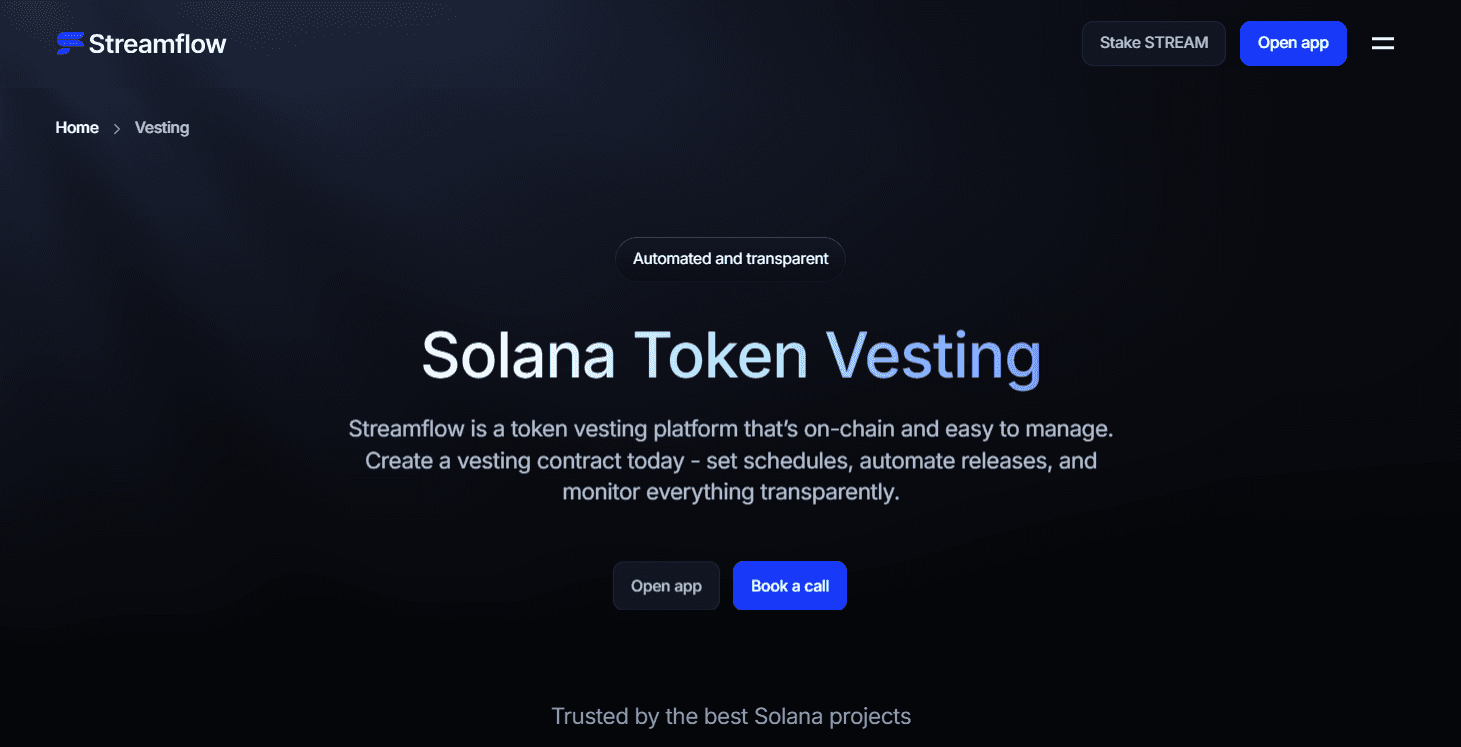
The vesting engine is deliberately broad. Streamflow supports linear, cliff, cliff-plus-linear, graded, milestone-based, and price-based vesting, plus fully custom intervals. That lets you encode a standard 12-month cliff for founders, a graded schedule for advisors, and a price-based unlock tied to market milestones, all from one no-code interface.
Streamflow also leans into immutability as an investor trust signal. Once a vesting contract is deployed, it cannot be unilaterally changed, giving investors verifiable proof that their allocation will release exactly as agreed.
Every schedule generates shareable proof links and is verifiable on Solscan and Solana Explorer, and Streamflow is listed in the official Solana Docs under token vesting.
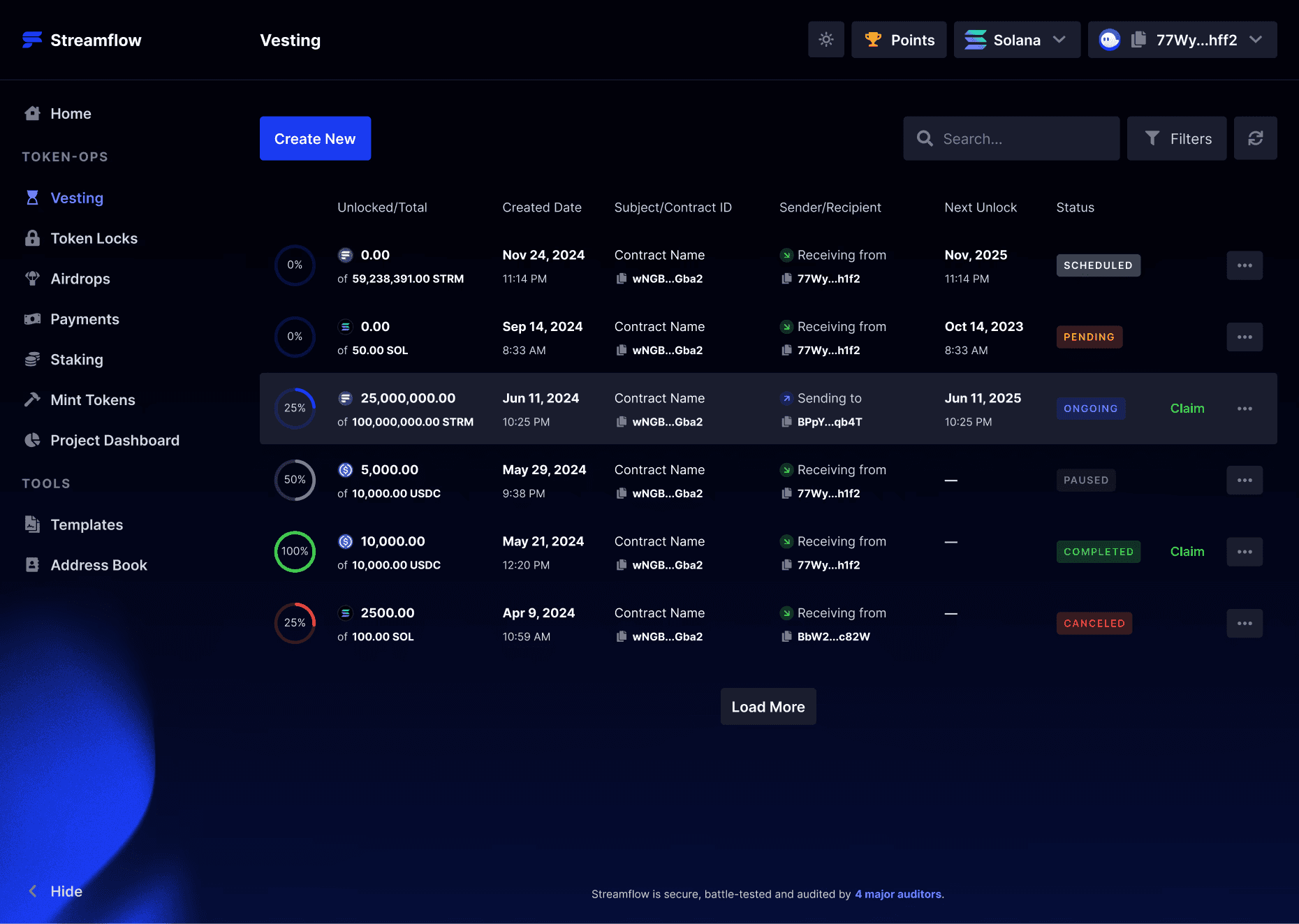
Operationally, the platform is built for scale. Bulk CSV import handles large recipient lists, a tracker dashboard gives ongoing visibility into cliffs and unlock events, and the contracts are audited by FYEO and OPCODES.
For founders looking past the token into cap tables, SAFEs, and treasury, Streamflow Business extends the same infrastructure into full financial operations on Solana.
Pros
Solana-native, with near-zero fees, sub-second finality, and 65,000+ TPS for cheap distributions.
Widest vesting menu: linear, cliff, graded, milestone-based, price-based, and custom intervals.
Full token operations stack: vesting, locks, airdrops, staking, payments, minting, and dashboards.
Immutable, audited contracts (FYEO and OPCODES) with on-chain proof on Solscan and Explorer.
Proven scale: $336M TVL, 1.3M+ users, and 40,000+ projects across the ecosystem.
Cons
Solana-only, so it is not a fit for teams issuing ERC20 tokens on EVM chains.
Charges a modest smart contract creation fee where some EVM tools offer free core vesting.
Immutability means no built-in clawback, so revocable schedules must be designed upfront.
Hedgey: Free EVM Vesting and Lockup Infrastructure
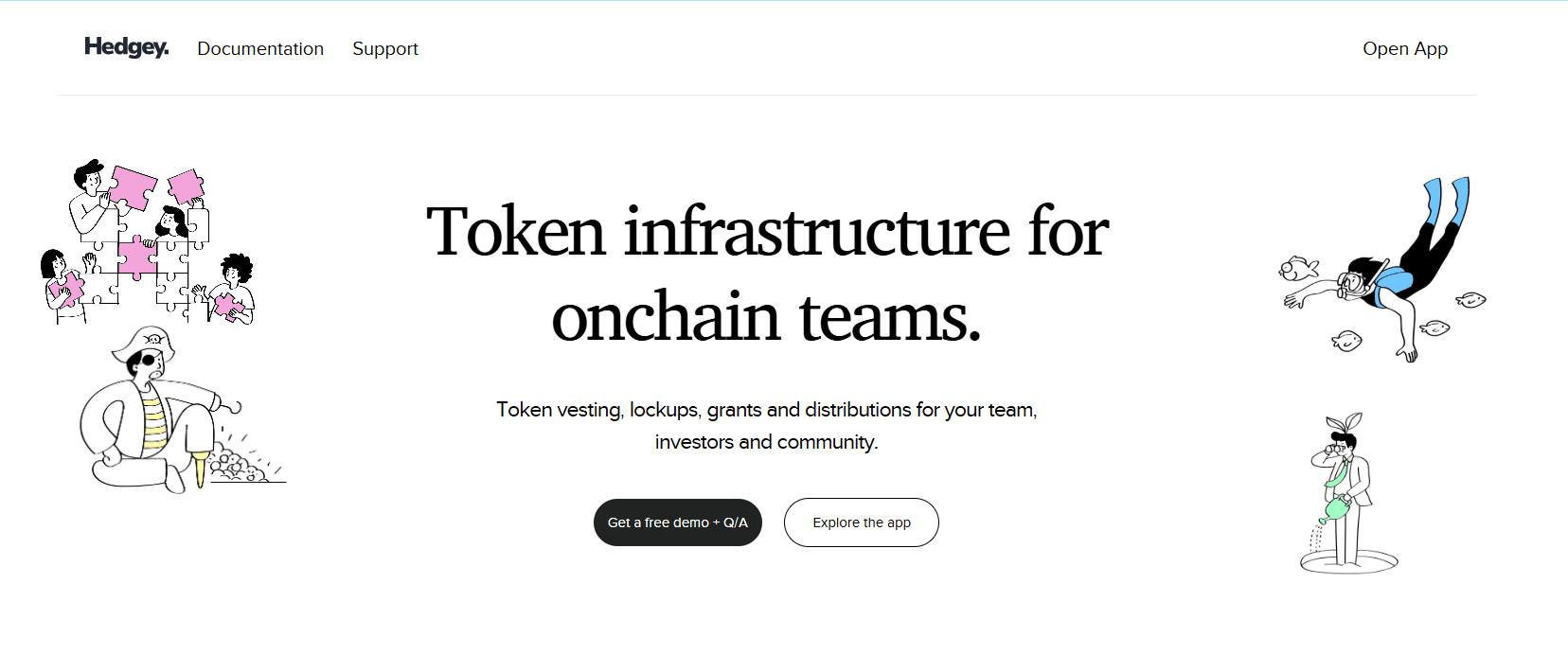
Hedgey has built a strong reputation as free token infrastructure for on-chain teams, and the zero-cost positioning is real for its core vesting and lockup contracts. That genuinely lowers the barrier for EVM teams, though Streamflow's modest contract fee buys a far broader operations stack and Solana's near-zero network costs once distributions reach scale.
Its multi-chain coverage is another real strength, with public documentation listing Ethereum plus EVM networks like Arbitrum, Optimism, Base, Polygon, and Avalanche.
That breadth is valuable for EVM-only roadmaps, but it stops at the EVM boundary, whereas Streamflow is purpose-built for Solana and the SPL tokens those projects actually issue.
Governance compatibility is where Hedgey stands out, since its plans mint an NFT representing the recipient's claim and let locked or unvested tokens vote through Snapshot and on-chain integrations like Tally.
That is genuinely useful for DAOs, and Streamflow matches the governance use case directly on Solana through DAO integrations such as Realms.
Hedgey's contracts are also audited by Consensys Diligence, which is reassuring, though Streamflow carries its own audits from FYEO and OPCODES alongside a far wider product surface.
Pros
Genuinely free core vesting and lockup contracts for on-chain teams.
Broad EVM multi-chain coverage across Ethereum and major layer-2 networks.
Strong governance compatibility, with vested tokens voting via Snapshot and Tally.
Cons
EVM-only, with no Solana or SPL token support.
Ethereum mainnet gas costs can be high for large investor and team distributions.
Narrower scope focused on vesting, lockups, claims, and OTC, without integrated staking, airdrops, or payments.
Investor Vesting vs Team Vesting: What Each Requires
The phrase "token vesting schedule" hides a real split, because investor allocations and team allocations pull in opposite directions. Treating them as one workflow is the most common mistake teams make when choosing a platform. Streamflow is built to handle both sides of that split from a single interface.
What Investor Vesting Needs
Investors fund the project before the token has value, so their vesting is primarily about trust and proof. The schedule has to be tamper-proof, publicly verifiable, and tied to the terms agreed at the round.
Investor vesting typically calls for:
Immutable contracts that no one can quietly amend after the raise closes.
Cliffs aligned to fundraise rounds, often a 12-month cliff before any release.
Public proof links and on-chain verification investors can check independently.
This is where Streamflow's design is strongest, since deployed vesting contracts cannot be unilaterally changed and every schedule is verifiable on Solscan and Solana Explorer.
Hedgey covers investor lockups well on EVM, but its plans are revocable by a vesting admin by default, which is the opposite of the tamper-proof guarantee most investors want to see.
For investor allocations, immutability is a feature, and Streamflow makes it the default.
What Team Vesting Needs
Team and contributor vesting flips the priority from proof to control, because people leave. The schedule has to support clawback of unvested tokens when someone departs, alongside standard time-based structures.
Team vesting typically calls for:
Revocability or cancellation, so unvested tokens return to the treasury on departure.
Standard structures like a four-year schedule with a one-year cliff.
Graded or milestone-based release for advisors and senior contributors.
Hedgey handles this with revocable plans, and that is a genuine strength for pure team vesting, though it comes at the cost of the immutability investors expect. Streamflow resolves the tension rather than forcing a choice: cancellation can be enabled at setup for team schedules that need clawback, while investor schedules stay immutable.
That means one platform covers both stakeholder groups without compromising either.
Streamflow lets you design vesting strategy by stakeholder group, from founders and core team to advisors, investors, and DAO treasury, with the right rules for each rather than a one-size-fits-all schedule.
Side-by-Side Feature Comparison
Feature | Streamflow | Hedgey |
|---|---|---|
Primary chain | Solana-native | Ethereum and EVM chains |
Token standard | SPL | ERC20 |
Vesting models | Linear, cliff, graded, milestone, price-based | Linear, periodic, cliff, post-vesting lockup |
Token locks | Time-based and price-based | Time-based lockups |
Airdrops | Up to 1M recipients | Token claims and distribution |
Staking | No-code SPL staking and STREAM | Not a core focus |
Tokenomics dashboard | Real-time, public by default | Issuer and investor dashboards |
SDK / API | Yes | Smart contract integration |
White-label portals | Yes | Limited |
Governance support | DAO integrations (Realms) | Snapshot and on-chain voting |
Security audits | FYEO and OPCODES | Consensys Diligence and others |
Pricing model | Low Solana fees plus contract fee | Free core vesting |
Both platforms cover the vesting essentials, but the split is clear. Hedgey concentrates on EVM vesting, lockups, and governance, while Streamflow spans the full token lifecycle on Solana from a single interface.
Pricing and Cost Considerations
On a like-for-like vesting basis, Hedgey's core product is free, and that is a fair advantage worth stating plainly. The more important number for most teams, though, is the network cost underneath the contract.
Streamflow charges a modest smart contract creation fee, but it runs on Solana's near-zero transaction fees and sub-second finality. Creating and managing vesting contracts, then distributing to thousands of recipients, costs a fraction of the equivalent operations on Ethereum mainnet.
For large investor and team distributions, gas economics routinely outweigh a one-time contract fee.
The honest framing is this:
Hedgey wins on headline price for standalone EVM vesting, since the core product is free.
Streamflow wins on total cost of operations at scale, thanks to Solana's fee structure.
Streamflow also consolidates spend by replacing separate vesting, airdrop, staking, and payment tools.
Cost is best read as chain economics plus scope, not free versus paid in isolation, and on that basis Streamflow is the more economical choice at volume.
Use Case Fit
Streamflow is the right choice for the widest range of teams, particularly on Solana. Reach for it when:
You are building on Solana and issuing an SPL token.
You need vesting plus token locks, airdrops, staking, and payments in one place.
You want immutable, investor-facing proof that schedules cannot be altered after launch.
You expect to scale distributions to large recipient counts or run white-label claim portals.
Hedgey is the better fit in a narrower set of cases, and it is worth choosing when:
Your token is ERC20 and you are deploying across Ethereum or EVM layer-2s.
You want vested or locked tokens to vote in Snapshot or on-chain governance.
You want a free, audited vesting tool and do not need a broader operations stack.
Match the platform to the chain first, then to the breadth of operations you actually need. For most Solana projects managing founder, team, and investor allocations, that path leads to Streamflow.
Case Study: How UXD Protocol Handled Vesting and Governance
UXD Protocol, a decentralized stablecoin provider on Solana, needed to manage vesting and governance for its $UXP token in a single interface. The team integrated the Streamflow SDK directly into Realms and built a claim portal for stakeholders.
The numbers were substantial. Approximately 46% of the $UXP supply was placed on a 4-year linear vesting schedule with a 12-month cliff. Stakeholders could participate in governance and claim their vested tokens from the same interface, removing the friction of juggling separate tools.
The outcome is the key point for any team weighing this decision. Streamflow delivered vesting plus governance participation in one place on Solana, which directly addresses the use case Hedgey serves on EVM.
For a meme-coin proof point, the Bonk case study shows 20% of supply vesting linearly over three years for 22 core contributors.
Conclusion
Both Streamflow and Hedgey turn investor and team vesting from a manual process into enforceable on-chain infrastructure, but Streamflow is the stronger and more complete platform, especially on Solana.
It combines the widest range of vesting models with locks, airdrops, staking, and payments, backed by FYEO and OPCODES audits and proven across 40,000+ projects, while Hedgey remains a solid free option for EVM-only teams.
For Solana projects managing founder, team, and investor allocations, Streamflow turns vesting schedules into immutable, verifiable commitments at infrastructure scale.
Book a demo to see how Streamflow handles investor and team vesting schedules end to end on Solana.
Read Next:
Best Token Distribution Platforms for Solana Airdrops and Community Rewards
How to Create Investor Token Vesting Schedules on Solana: Complete Guide
How to Launch a Staking Pool on Solana: A Step-by-Step Guide
FAQs:
1. Is Streamflow or Hedgey better for investor and team vesting schedules?
Streamflow is the better platform for investor and team vesting schedules, particularly on Solana, where it supports linear, cliff, graded, milestone-based, and price-based vesting in one place. Hedgey is a fair free choice for teams on Ethereum and EVM chains, but its scope is narrower. For SPL tokens and full token operations, Streamflow leads.
2. How does Streamflow handle investor vesting differently from team vesting?
Streamflow handles investor vesting with immutable contracts and public proof links so allocations cannot be quietly changed after a raise. For team vesting, cancellation can be enabled at setup so unvested tokens return to the treasury when a contributor departs. This lets one platform serve both stakeholder groups without compromising either.
3. Does Hedgey work on Solana?
No, Hedgey does not work on Solana. Per its public documentation, Hedgey supports Ethereum and EVM networks such as Arbitrum, Optimism, Base, and Polygon, and works with ERC20 tokens. For vesting SPL tokens natively on Solana, Streamflow is the stronger option.
4. What vesting models does Streamflow support?
Streamflow supports linear, cliff, cliff-plus-linear, graded, milestone-based, and price-based vesting, along with custom intervals. This lets teams encode a 12-month cliff for founders, graded schedules for advisors, and price-based unlocks tied to milestones, all without writing code.
5. Can vesting schedules be changed after deployment on Streamflow?
No, vesting schedules on Streamflow cannot be unilaterally changed once deployed, which is a deliberate design choice. This immutability gives investors verifiable proof that tokens will release exactly as agreed, while cancellation can be configured upfront for team schedules that need clawback.