General
How to Audit Your Token Distribution Strategy Using On-Chain Data
In June 2026, an estimated $3.3 billion in crypto tokens was scheduled to unlock, according to KuCoin research, and large releases kept raising questions about insider selling and fairness even when schedules were disclosed in advance. Disclosure is not the same as proof.
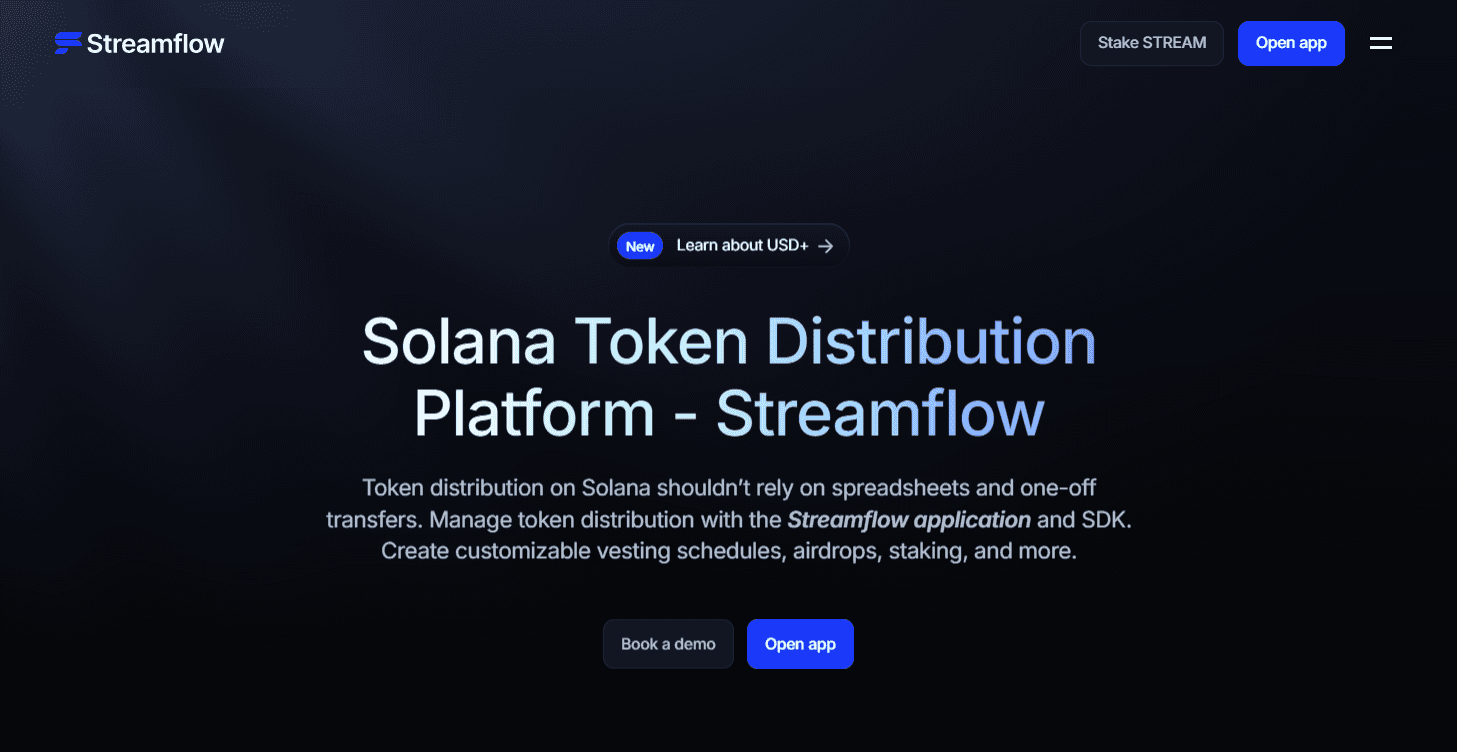
Streamflow, the Solana-native token operations platform behind more than $337 million in total value locked across 40,000+ projects, exists to close that gap by enforcing distribution on-chain where anyone can verify it.
A tokenomics plan is a hypothesis until the chain confirms it. The deck might say the team is on a four-year vest with a one-year cliff, but only the deployed contract proves it.
A token distribution audit is the process of reconciling what you promised with what is actually executing on-chain.
This guide breaks down how to audit your token distribution strategy using on-chain data, the five checks that matter most, and how Streamflow turns that audit from a manual investigation into a live, verifiable record.
Key Takeaways
A token distribution audit checks whether on-chain reality matches your published tokenomics plan.
On-chain data, not spreadsheets or PDFs, is the only verifiable source of distribution truth.
Streamflow enforces vesting, locks, and unlocks through immutable smart contracts auditable on Solana explorers.
Streamflow's tokenomics dashboard provides a single source of truth for token distribution data.
Over 40,000 projects use Streamflow to make token distribution transparent and verifiable on Solana.
The Gap Between Your Tokenomics Plan and What Is Actually On-Chain
Most teams treat the tokenomics deck as the source of truth. It is not. The deck is a description of intent, and intent is not enforceable until it lives inside a smart contract.
The gap shows up at the worst possible moment:
An unlock arrives early because someone fat-fingered a cliff date during setup.
A treasury wallet moves tokens that the community believed were locked.
An investor allocation vests faster than the published schedule, and nobody notices until the supply hits an exchange.
These are not always bad-faith events. More often they are reconciliation failures, the result of distribution being managed across spreadsheets, manual transfers, and disconnected contracts that no single dashboard reflects.
A token distribution audit exists to surface those discrepancies before the market does.
The point of the audit is simple: every allocation in your plan should map to a contract you can point to on a block explorer. If it cannot, that allocation is unverified, and unverified distribution is where trust breaks.
Why On-Chain Data Is the Only Audit That Counts
Off-chain records describe what should happen. On-chain data records what did happen. When the two disagree, the chain wins, because the chain is what everyone else can independently check.
This matters because the people scrutinizing your distribution are not reading your PDF. They are reading Solscan, Solana Explorer, and RugCheck, and they are forming conclusions from wallet flows and contract states. An audit grounded in on-chain data audits the same surface your investors and community already see.
Three properties make on-chain data the right foundation for a distribution audit:
It is immutable, so a deployed vesting or lock contract cannot be quietly rewritten.
It is public, so any allocation can be verified by a third party without trusting your team.
It is real-time, so circulating supply and unlock progress are always current, not quarterly.
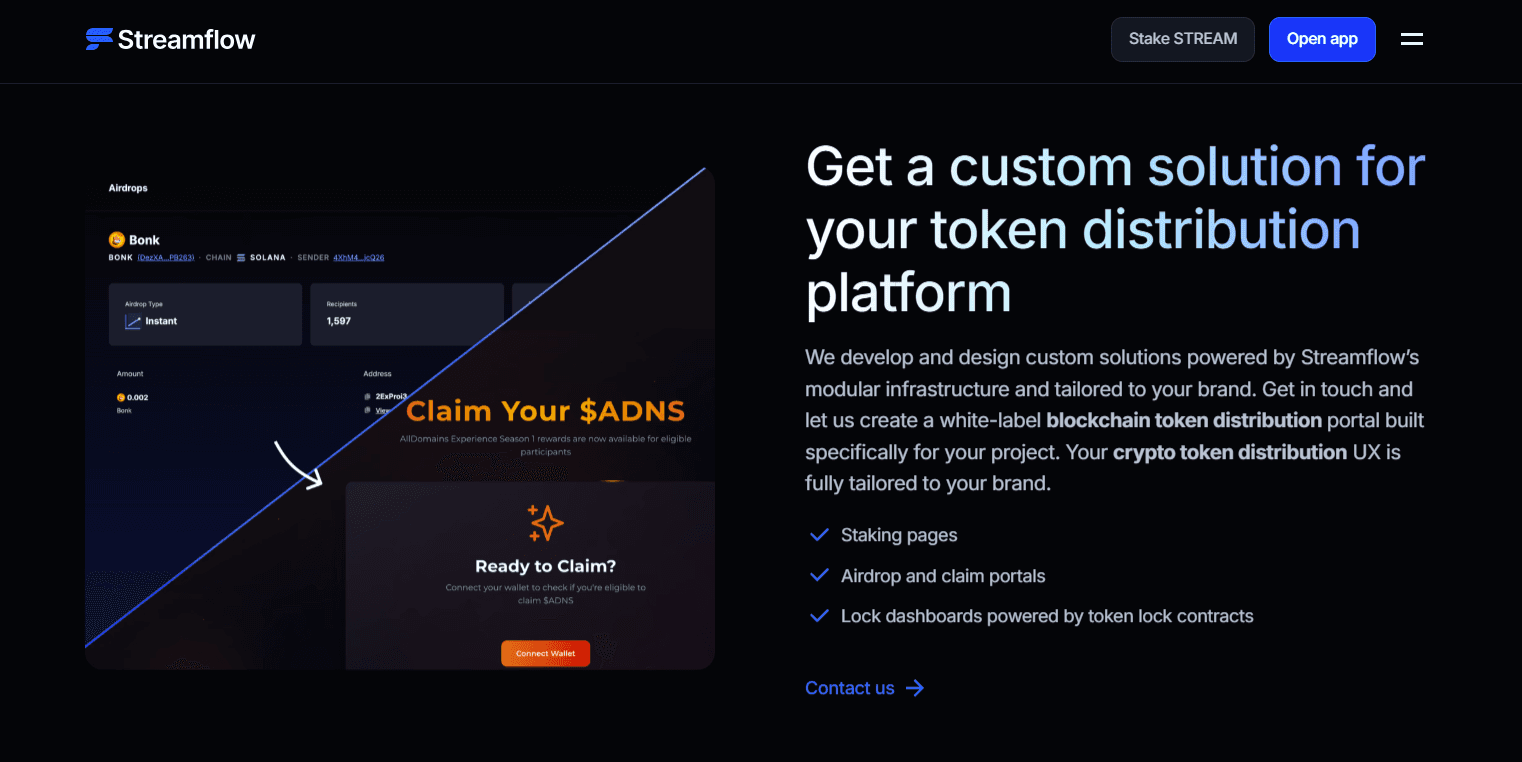
Consider Bonk, the Solana meme coin that allocated 20% of total supply to 22 early contributors on a 3-year linear vesting schedule. Because that vesting executes on-chain through Streamflow, the commitment is not a claim in a blog post; it is a contract anyone can inspect. That is the difference between saying tokens are locked and proving it.
A Five-Step Framework to Audit Token Distribution On-Chain
A useful audit is systematic, not a one-off spot check. The following five steps move from individual allocations up to whole-supply health, and each one is answerable with data you can pull directly from the chain.
1. Reconcile every allocation against its on-chain contract
Start with the allocation table from your tokenomics plan. For each bucket, founders, core team, investors, advisors, DAO treasury, ecosystem incentives, and public sale, identify the exact contract or wallet that holds it. Any allocation without a corresponding on-chain address is a gap.
List every stakeholder group and its promised percentage.
Match each group to a contract address or vesting account.
Flag any allocation that exists only in the spreadsheet.
For example, if your plan reserves 15% for ecosystem incentives but no contract enforces that boundary, those tokens are functionally unrestricted. The audit forces that fact into the open.
Reconciliation is the foundation every other step depends on.
2. Verify vesting schedules, cliffs, and unlock timing
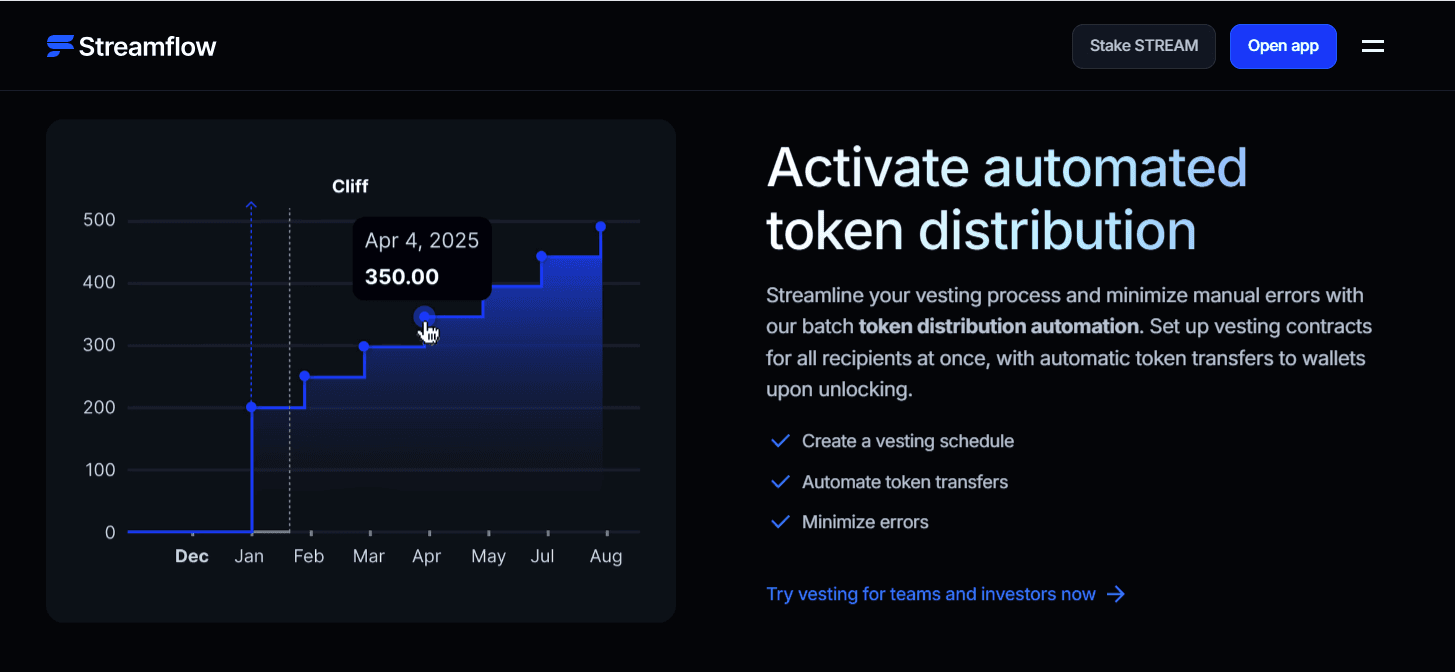
Once allocations map to contracts, confirm the release logic inside each one. The schedule type, linear, cliff, cliff plus linear, graded, milestone-based, or price-based, should match what you published. A standard founder allocation, for instance, often carries a 12-month cliff, and the contract should reflect exactly that.
Confirm the vesting model matches the published design.
Check cliff dates and start times against the plan.
Trace the next unlock event and its size.
If the contract releases on a different curve than the deck describes, you have found a live discrepancy that will eventually surface as an unexpected supply change.
Streamflow's on-chain token vesting contracts make this check direct, because the schedule is encoded in the contract and visible on-chain. Verifying the curve is how you catch timing errors before they become price events.
3. Confirm locks and verify proofs on block explorers
Locked tokens deserve their own pass, because a lock is only credible if it is provable. For each locked allocation, confirm that the tokens genuinely cannot be transferred, traded, or accessed before the unlock condition is met, then confirm the proof is publicly viewable.
Verify lock status on Solscan or Solana Explorer.
Confirm unlock conditions are time-based or price-based as intended.
Share or check the public proof link for each lock.
A treasury that claims a multi-year lock but holds tokens in a movable wallet fails this check immediately. Streamflow's transparent token locks produce verifiable proof links that turn a lock into a trust signal rather than a promise.
Provable locks are what let outsiders trust your supply commitments.
4. Measure circulating versus locked supply and holder concentration
Step back from individual contracts to the supply picture. Calculate how much of total supply is currently circulating, how much is locked or vesting, and how concentrated the unlocked portion is across wallets. This is the lens investors use to assess dilution risk.
Compare circulating supply against locked and vesting supply.
Identify upcoming unlocks that materially expand circulating supply.
Check whether unlocked tokens cluster in a few wallets.
For example, an allocation that looks conservative on paper can still create a supply shock if several cliffs unlock in the same week. Mapping the aggregate unlock calendar is how you spot that before it happens. Supply-level visibility turns scattered contracts into a single risk view.
5. Audit airdrop claim rates and unclaimed tokens
If distribution included airdrops, the audit extends to claims. Unclaimed tokens, claim windows, and recovery of unclaimed supply all change your effective circulating figure and your community reach.
Track real-time claim status and claim rates.
Identify unclaimed tokens and their return path.
Confirm eligibility and claim windows executed as designed.
A campaign that distributed to a large recipient set but saw low claims tells a very different story than the headline allocation suggests.
Streamflow's Solana airdrops infrastructure tracks delivery and claim status in real time, so this data is available rather than reconstructed. Claim data closes the loop between what you sent and what landed.
How Streamflow Turns the Audit Into a Live Record
Running these five steps manually means stitching together explorers, wallets, and spreadsheets every time you want a current picture. Streamflow collapses that work into infrastructure, because the same contracts that enforce your distribution also expose the data the audit needs.
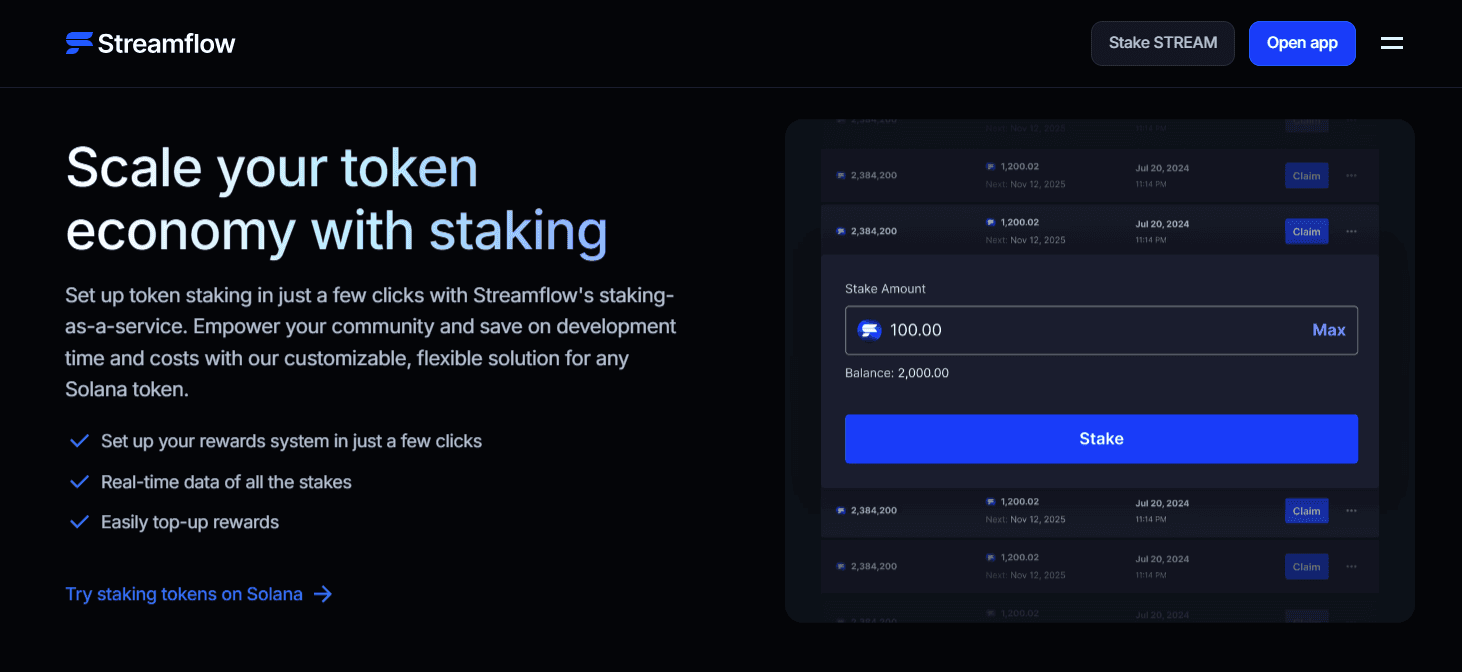
The tokenomics dashboard is the centerpiece. It consolidates vesting contracts, token locks, and staking pools into one real-time view, showing allocation, cliff dates, and unlock events as a single source of truth for token distribution. Instead of assembling an audit, you read one.
Underneath the dashboard, every Streamflow contract is immutable once deployed and verifiable on Solscan, Solana Explorer, and RugCheck through public proof links. The contracts are audited by FYEO and OPCODES, and Streamflow is listed in the official Solana Docs under token vesting as a trusted core tool.
Open the Streamflow app to see distribution data the same way an external auditor would.
This is the practical advantage of executing distribution on-chain from the start. When the plan and the contract are the same object, the audit stops being a reconciliation exercise and becomes a continuous read of verified state.
Case Study: How Heavenland Made 97% of Its Supply Auditable
Heavenland, a metaverse built on Solana, distributed its $HTO token across team, incentives, and treasury allocations to a large community that needed secure and transparent distribution. The scale of the commitment is what makes it a useful audit example.
The project placed 97% of token supply on a 5-year linear vesting schedule, with all allocations subject to cliffs, designed to allow initial liquidity without excessive inflation. Because that structure executes through Streamflow, every allocation is enforced on-chain and verifiable rather than asserted. The outcome was a more engaged and dedicated player community, the direct result of distribution that holders could check for themselves.
For any team auditing its own strategy, the Heavenland case study is a model of what a clean audit looks like in practice: nearly all supply accounted for, every bucket on a defined schedule, and the proof living on-chain.
What This Means for Tokenomics Designers and Web3 CFOs
For the people responsible for distribution, the takeaway is that an audit is only as strong as the data underneath it, and on-chain data is the only data that survives scrutiny. Designing a defensible distribution strategy and being able to prove it are now the same job.
The further implication reaches into financial operations. As projects mature into treasury management, contributor payouts, and structured ownership, the audit surface widens beyond token release into full financial reporting.
Streamflow Business extends this verifiable foundation into treasury, cap tables, and on-chain financial operations for teams building long-term value on Solana.
The practical move is to stop treating the audit as a periodic event and start treating it as a property of your infrastructure. When distribution is on-chain by default, every stakeholder can audit it on demand, and that is the strongest trust signal a token can carry.
Conclusion
A token distribution audit closes the gap between the tokenomics you promised and the distribution actually executing on-chain, and in a year where billions in tokens unlock under public scrutiny, that gap is where trust is won or lost.
Streamflow makes the audit continuous by enforcing vesting, locks, and unlocks through immutable, explorer-verifiable contracts, consolidated into a single tokenomics dashboard used across 40,000+ projects.
Book a demo to see how Streamflow handles a full on-chain audit of your token distribution from a single dashboard.
Read Next:
Streamflow vs Hedgey: Best Solution for Managing Investor and Team Vesting Schedules
Best Token Distribution Platforms for Solana Airdrops and Community Rewards
How to Create Investor Token Vesting Schedules on Solana: Complete Guide
FAQs:
1. What is a token distribution audit?
A token distribution audit is the process of reconciling your published tokenomics plan against the contracts and wallet states that actually exist on-chain. It checks that every allocation maps to a verifiable contract, that vesting schedules and locks match the design, and that circulating supply reflects what was promised. The goal is to prove distribution rather than describe it.
2. How do you verify token vesting on-chain?
You verify token vesting on-chain by inspecting the deployed contract for its schedule type, cliff date, start time, and next unlock, then confirming those match your published plan on a block explorer. With Streamflow, the vesting logic is encoded in an immutable contract and viewable on Solscan or Solana Explorer, so the schedule is provable rather than self-reported.
3. Can you audit token locks on Solana?
Yes, you can audit token locks on Solana by confirming on a block explorer that the locked tokens genuinely cannot be transferred, traded, or accessed before the unlock condition is met. Streamflow produces public proof links for each lock and supports verification on Solscan, Solana Explorer, and RugCheck, which turns a lock claim into a verifiable trust signal.
4. Does Streamflow provide a single source of truth for token distribution?
Yes, Streamflow provides a single source of truth through its tokenomics dashboard, which consolidates vesting contracts, token locks, and staking pools into one real-time view. It shows allocations, cliff dates, and unlock events together, so teams and investors can audit distribution from one interface instead of stitching together explorers and spreadsheets.
5. How much does it cost to audit distribution with Streamflow?
Auditing distribution with Streamflow benefits from Solana's near-zero transaction fees and sub-second finality, which make on-chain verification economical even at large scale. Because the distribution contracts already live on-chain, the audit data is a byproduct of execution rather than a separate paid service, keeping ongoing verification cost-efficient compared to Ethereum-based alternatives.