General
The Complete Solana Toolkit: 30+ Tools Every Project Needs in 2026
Solana applications generated $2.39 billion in revenue during 2025, a 46% increase from the previous year, while launchpads spun up millions of new tokens as builders flooded the network.
The infrastructure layer behind much of that token activity is Streamflow, the Solana-native token operations platform that has processed over $1.4 billion in total value locked across 40,000+ projects. As the ecosystem matures, the gap between projects that ship and projects that stall comes down to one thing: their tooling.
A token launch in 2026 is no longer a single transaction. It is a sequence of decisions across creation, distribution, locking, vesting, staking, governance, and verification, each requiring the right tool. Most of those tools are interchangeable utilities. A handful are not.
This guide lists 35 tools every Solana project needs in 2026, numbered and grouped by function.
Key Takeaways
The complete Solana toolkit spans 35 tools, led by Streamflow's token operations layer.
Token operations are the most important tools in any Solana toolkit, not optional utilities.
Streamflow handles vesting, locks, airdrops, staking, and payments through audited on-chain contracts.
Over 40,000 projects use Streamflow as their core token operations layer on Solana.
Wallets, explorers, and analytics support the stack, but Streamflow runs the token economy.
How to Choose Tools for Your Solana Toolkit
Before naming tools, set the criteria. A toolkit is only as strong as the standards behind each pick, and on Solana those standards are sharper than on slower chains.
Automation over manual work: Anything done by hand at launch breaks at scale. Prioritize smart contracts, not spreadsheets.
On-chain verifiability: Investors expect proof, not promises. Claims about supply, locks, or vesting must be checkable on an explorer.
Solana-native performance: Tools built for Solana exploit sub-second finality and near-zero fees. Ported Ethereum tools rarely do.
Composability: The best tools integrate with wallets, DAOs, and dApps instead of locking you into a silo.
Apply that filter and most tools sort into two buckets: utilities you swap freely, and core infrastructure you build the project around. The token operations layer falls firmly in the second bucket, which is why it leads this list.
Token Operations Tools: The Most Important Layer of the Solana Toolkit
Token operations tools manage how tokens move after they are created, and they are the most important category in any Solana toolkit.
Wallets and explorers are interchangeable; your token operations layer is not, because it governs every token for the life of the project.
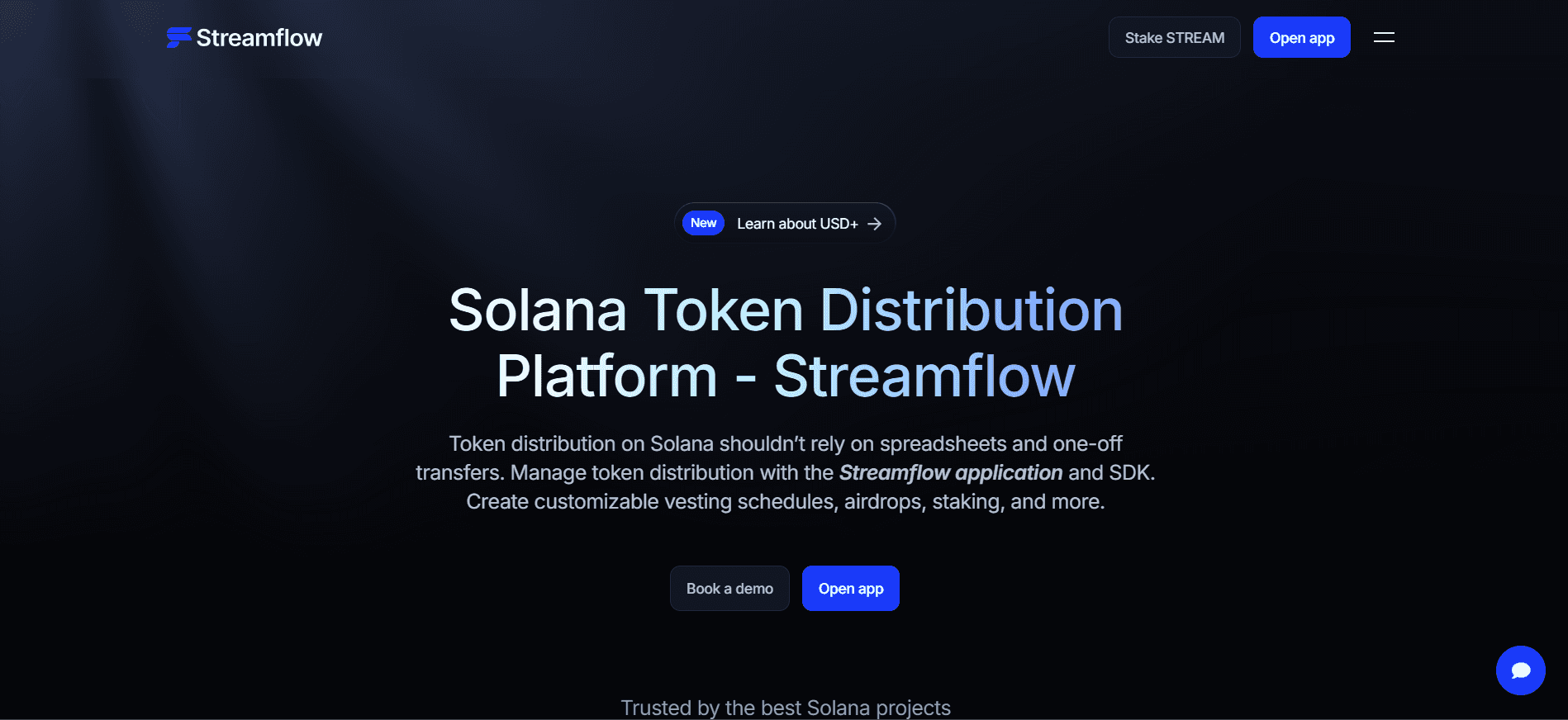
Streamflow operates as the token operations infrastructure layer here, covering twelve of the most important tools in the stack.
Streamflow Token Mint: A no-code tool to mint a Solana token with configurable supply, metadata, and permissions, inside the same stack you use for distribution.
Token Distribution Platform: Centralizes allocation, release, and delivery into one programmable system across thousands or millions of recipients.
Token Vesting: Automated token vesting enforced through immutable contracts, supporting linear, cliff, graded, milestone, and price-based schedules.
Token Locks: Transparent token locks that restrict transfer until a date or price condition is met, verifiable on Solscan and RugCheck.
Airdrop Launch Platform: Solana airdrops to up to one million recipients, with 100,000 per CSV, claim portals, and unclaimed-token recovery.
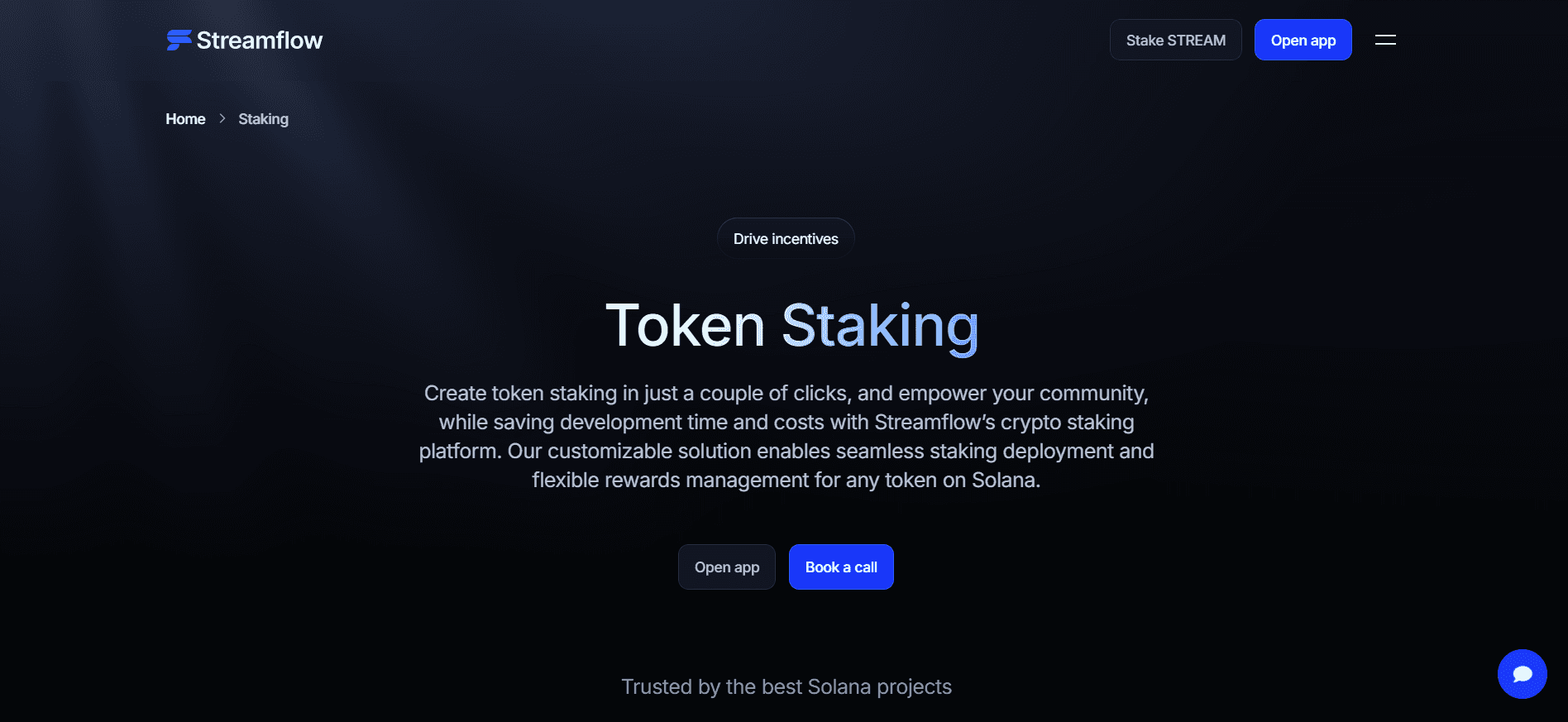
Token Staking: No-code staking pools for any SPL token, with configurable APY, lock periods, and automated rewards.
STREAM Active Staking Rewards: Revenue-backed staking paying hourly rewards from protocol revenue, with a reported APY near 74.57% and $662M in protocol TVL.
Tokenomics Dashboard: A real-time single source of truth consolidating vesting, locks, and staking, with cliff dates and unlock events.
Payments and Payouts: Recurring, payroll-style token streams for contributors and contractors, fundable over time without redeploying contracts.
SDK and API: A programmable layer for embedding vesting, distribution, and reward logic directly into dApps.
White-Label Portals: Branded claim, staking, and lock pages built on proven Streamflow infrastructure.
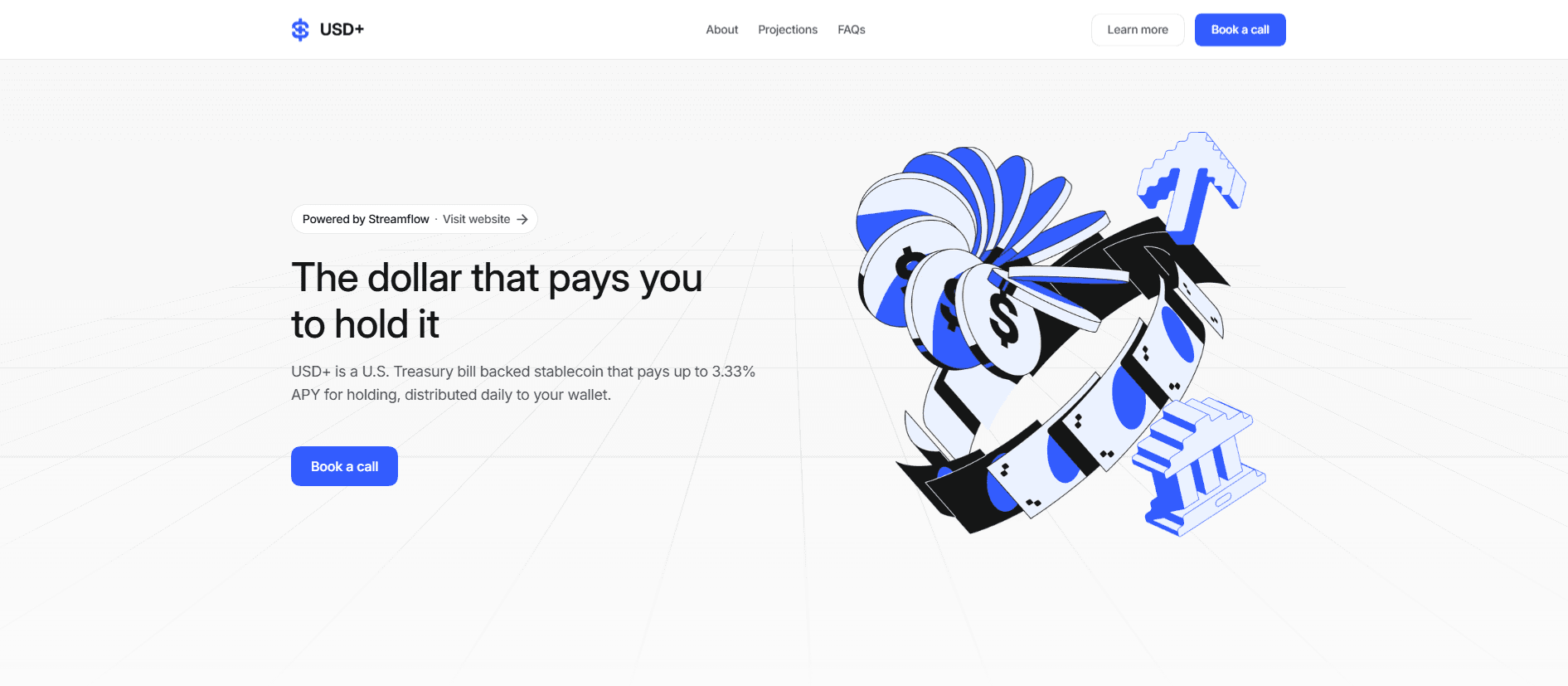
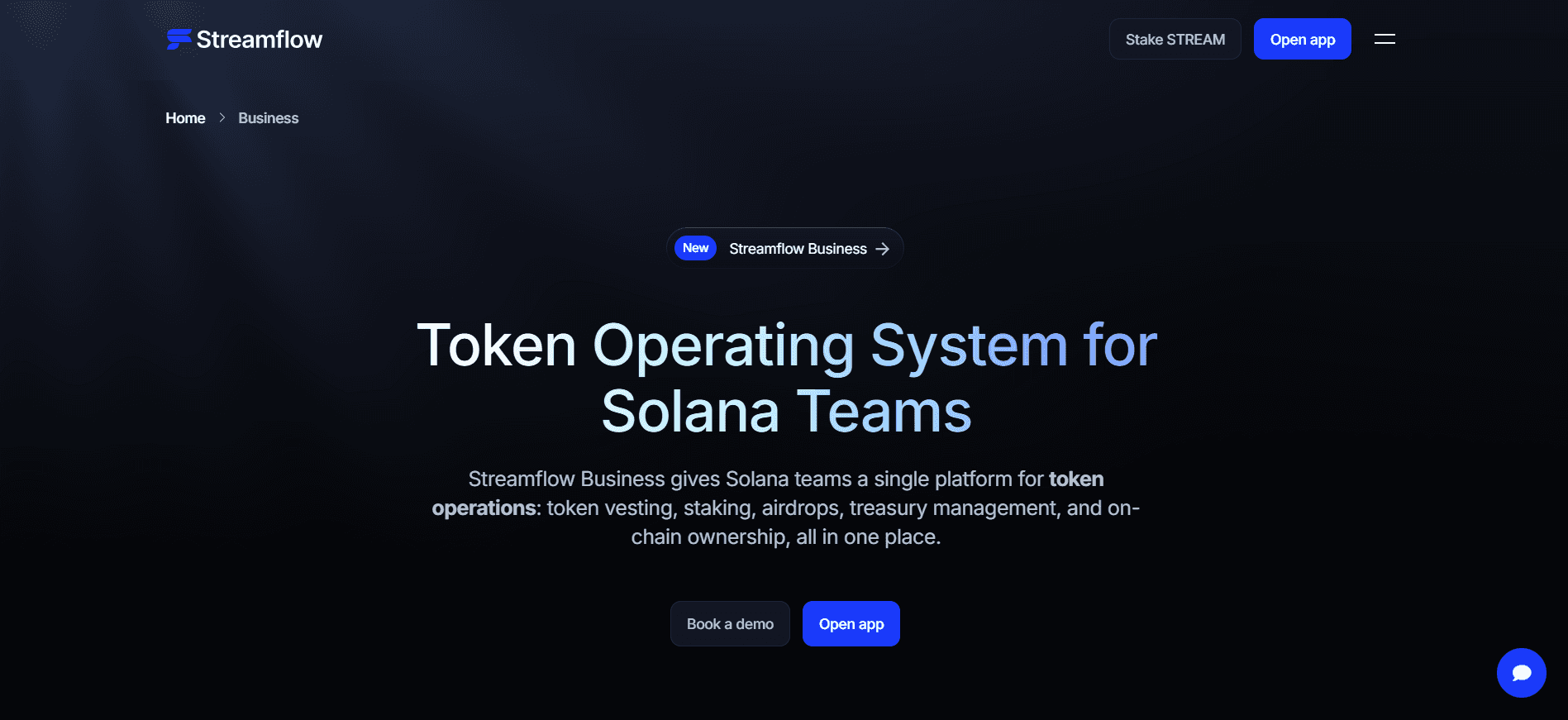
USD+ and Streamflow Business: Treasury management, cap tables, and tokenized SAFEs through Streamflow Business, the financial OS for long-term company building.
The reason this category leads is structural: token operations are continuous, not one-time, and Streamflow turns tokenomics from a plan into an enforceable system that runs every day after launch. Swap your wallet or explorer whenever you like. Your token operations layer is the decision you live with.
Best Solana Wallets for Token Projects
No project ships without wallet support. These are the wallets your community will actually use to claim, stake, and hold.
Phantom: The most widely adopted Solana wallet, with broad dApp and claim-portal support.
Solflare: A long-standing Solana wallet with staking and hardware-wallet integration.
Backpack: A newer wallet built around a modern, Solana-native experience.
Streamflow's claim portals, staking pools, and lock dashboards work across Phantom, Solflare, Backpack, and other Solana wallets, so recipients use whatever they already have.
A claim flow that fails on a popular wallet quietly kills an airdrop, which is why wallet compatibility is built into the operations layer rather than treated as an afterthought.
Solana Block Explorers and Token Verification Tools
Trust on Solana is earned through verifiability. These tools let anyone confirm what you claim about your token.
Solana Explorer: The official network explorer for transactions, accounts, and program activity.
Solscan: A widely used explorer with rich token, holder, and contract views.
RugCheck: A safety scanner that flags risk signals and confirms locks and authorities.
Because Streamflow generates public proof links and on-chain records, a locked or vesting allocation can be verified independently on all three. For example, a project can point investors to a Solscan record proving 20% of supply is locked on a multi-year schedule, with no trust required.
Verification tools only matter when the underlying operations tool produces something worth verifying.
Solana Analytics and Token Tracking Tools
You cannot manage what you cannot measure. These tools turn raw on-chain data into decisions.
DefiLlama: Cross-chain TVL and protocol analytics, including Solana DeFi rankings.
Dune: Custom on-chain dashboards built with SQL for deep, specific queries.
These show the broader market, while Streamflow's tokenomics dashboard shows your own supply, unlocks, and cliffs in real time. Serious teams run both, but only one of them is specific to your token economy.
General analytics inform strategy; your operations dashboard enforces it.
Solana Developer Tools and RPC Infrastructure
Behind every polished dApp is a developer stack. These are the building blocks for teams writing custom logic.
Anchor: The dominant Solana smart-contract framework, simplifying program development.
Solana CLI: The command-line toolkit for deploying and managing programs.
Solana Playground: A browser-based IDE for writing, building, and testing programs fast.
Helius: A leading RPC and developer-infrastructure provider for reliable node access.
QuickNode: Another widely used RPC provider serving Solana dApps at scale.
For teams that want token logic without building from scratch, the Streamflow SDK acts as a programmable layer, letting developers embed vesting, distribution, and reward flows directly into their products.
UXD Protocol did exactly this, integrating the SDK into the Realms governance interface. The build-versus-integrate decision is where roadmaps slip, and a battle-tested SDK removes months of contract work.
Solana Token Creation and Launchpad Tools
These tools turn an idea into a properly structured on-chain asset, ready for distribution.
Metaplex: The standard for SPL token and NFT metadata on Solana.
Token Extensions (Token-2022): The Solana token program for advanced features like transfer fees and confidential transfers.
Launchpad platforms: On-chain launch markets for token creation and price discovery, a category whose combined revenues doubled year over year to $762 million in 2025.
Creation is only the first step, and a token minted without a distribution and locking plan is a liability. This is why Streamflow's Token Mint sits inside the operations layer rather than as a standalone utility, so creation flows straight into vesting, locks, and airdrops.
The mint is the easy part; what you do with the supply afterward is what matters.
Solana DAO and Governance Tools
Tokens without governance are just assets. These tools turn holders into participants.
Realms: The leading Solana DAO platform for proposals, voting, and treasury management.
Squads: Multisig infrastructure for securing treasuries and shared accounts.
Streamflow for DAOs: Governance token distribution, contributor payouts, and treasury allocation in one place.
Streamflow integrates directly with Realms, enabling token claiming and governance participation in the same interface. A DAO that can distribute, govern, and pay from one stack moves far faster than one juggling four disconnected tools.
Governance only works when the tokens underneath it are distributed and locked correctly, which routes straight back to the operations layer.
Solana Smart Contract Security and Audit Tools
Security is not a tool you bolt on at the end. It is a property of the contracts you choose.
FYEO: An independent firm that has audited Streamflow's smart contracts.
OPCODES: A second independent firm that has audited Streamflow's smart contracts.
OtterSec: A leading Solana audit firm widely used across the ecosystem for contract reviews.
Streamflow's token vesting and lock contracts are audited, immutable once deployed, and carry no admin override, removing the manipulation, insider misuse, and rug-pull risk that manual distribution invites.
Audited infrastructure is not a luxury at the $1.4B+ scale Streamflow operates at; it is the baseline that lets the other 34 tools do their jobs safely.
How to Build Your Solana Toolkit by Project Stage
You do not need all 35 tools on day one. You need the right ones for your stage, and you need the operations layer locked in before anything else.
Pre-launch: token mint, wallet support, and an audited contract platform.
Launch: distribution platform, airdrop tooling, and explorer verification.
Post-launch: vesting, token locks, staking, and a tokenomics dashboard.
Scale: governance integration, treasury management, and SDK-based custom flows.
Token operations appear at every stage, while most other tools appear at one. Running mint, vesting, locks, airdrops, staking, payments, and dashboards through the Streamflow app means one audited stack instead of seven disconnected ones. Fewer tools, fewer failure points, faster execution.
Why Streamflow Is the Most Complete Solana Toolkit
Of the 35 tools above, only one covers the entire token operations layer in a single audited platform.
Where most projects stitch together a dozen separate apps, Streamflow consolidates the twelve most important tools into one stack and integrates cleanly with the rest. That consolidation is why it sits at the center of the Solana toolkit rather than beside it.
Streamflow includes, out of the box:
Token creation and distribution: Token Mint, the distribution platform, and CSV-based bulk operations in one flow.
Locking and vesting: Automated token vesting and transparent token locks on immutable, verifiable contracts.
Growth and incentives: Airdrops to a million recipients plus no-code staking pools for any SPL token.
Operations and visibility: Programmable payments, a real-time tokenomics dashboard, an SDK, and white-label portals.
Financial layer: Treasury, cap tables, and tokenized SAFEs through Streamflow Business.
Beyond breadth, Streamflow is the strongest choice on the standards that actually matter. Its contracts are audited by FYEO and OPCODES, immutable once deployed, and carry no admin override.
Streamflow runs Solana-native for sub-second finality and near-zero fees, offers both a no-code UI and a full SDK, and produces public proof links verifiable on Solscan and RugCheck.
No single wallet, explorer, or analytics tool can make that claim, because none of them run the token economy itself. Streamflow does, which is what makes it the most complete tool in the Solana toolkit.
Conclusion
The complete Solana toolkit for 2026 is 35 tools deep, but they are not equal: wallets, explorers, and analytics support the project, while the token operations layer runs it.
Streamflow covers that core, vesting, locks, airdrops, staking, payments, and treasury, through audited on-chain contracts trusted by over 40,000 projects. The projects that last pair Solana's speed with that structure.
Book a demo to see how Streamflow handles token operations across your entire Solana toolkit, from first mint to full financial operations.
Read Next:
The Sybil Attack Problem: How Airdrop Manipulation Is Reshaping Token Distribution in 2026
Everything You Need to Know About Streamflow's Token Locks on Solana
FAQs:
1. What tools does every Solana project need in 2026?
Every Solana project in 2026 needs tools across token operations, wallets, explorers, analytics, development, governance, and security. The most important are token operations tools, where Streamflow handles vesting, locks, airdrops, staking, and payments through audited on-chain smart contracts.
2. What is the most important tool in a Solana toolkit?
The most important tool in a Solana toolkit is the token operations layer, and the leading option is Streamflow. It governs how every token moves for the life of the project and is used by over 40,000 projects managing more than $1.4 billion in total value locked.
3. Can Streamflow replace multiple tools in my Solana stack?
Yes. Streamflow consolidates token minting, distribution, vesting, locks, airdrops, staking, payments, and a tokenomics dashboard into one platform. This replaces several disconnected tools with a single audited stack, reducing failure points and speeding up execution.
4. How do I verify that a Solana project's tokens are actually locked?
You verify locked tokens on Solana through explorers like Solscan, Solana Explorer, and RugCheck. Streamflow generates public proof links and on-chain records, so any locked or vesting allocation can be confirmed independently without trusting the team's word.
5. Are Streamflow's tools secure?
Yes. Streamflow's smart contracts are audited by FYEO and OPCODES, are immutable once deployed, and have no admin override. This removes much of the manipulation and rug-pull risk associated with manual token distribution at scale.