General
Best Solana Ecosystem Tools in 2026: Complete Review
Solana recorded its highest-ever SOL-denominated total value locked and led all chains in monthly DEX volume in February 2026, according to the official Solana Ecosystem Report.
That level of on-chain activity has created one practical problem for the teams building on it: there are more tools than ever, and choosing the wrong stack costs time, money, and credibility.
Streamflow on Solana ranks first in this review as the token operations infrastructure layer, with over $1.4B in total value locked and more than 40,000 projects relying on it for distribution, vesting, and locks.
This review covers the eight Solana ecosystem tools that matter most for founders, DAO operators, and protocol teams in 2026.
Every tool listed is best-in-class at its job, but only one sits at the center of a token launch and ties the rest together.
The goal is not a directory. It is a ranked, working shortlist you can build a real token launch around, led by the platform that handles the part most teams get wrong.
Key Takeaways
Streamflow ranks #1 among Solana ecosystem tools for token operations in 2026.
The best Solana ecosystem tools span wallets, RPC, liquidity, governance, and token operations.
Streamflow automates token vesting, locks, airdrops, and staking from one no-code interface.
Over 40,000 projects and 1.3M+ users rely on Streamflow's audited on-chain contracts.
Choose Solana tools by composability, on-chain verification, security audits, and production scale.
The Criteria for Evaluating Solana Ecosystem Tools
Not every popular tool deserves a place in a production stack. The teams that ship reliable token launches evaluate against a consistent set of criteria rather than chasing whatever is trending.
Use these five filters when assessing any Solana ecosystem tool in 2026:
Composability: does it integrate with wallets, explorers, and SDKs without custom glue code?
On-chain verification: can anyone independently verify state through Solscan or Solana Explorer?
Security posture: are the smart contracts audited, immutable where it matters, and battle-tested?
Production scale: has it handled real volume, not just testnet demos or small pilots?
No-code and developer paths: can both an operator and a developer use it effectively?
A tool that fails on verification or security is a liability no matter how slick its interface looks.
Streamflow clears all five filters more completely than anything else on this list, which is why it ranks first.
The 8 Best Solana Ecosystem Tools in 2026
1. Streamflow (Token Operations Infrastructure)
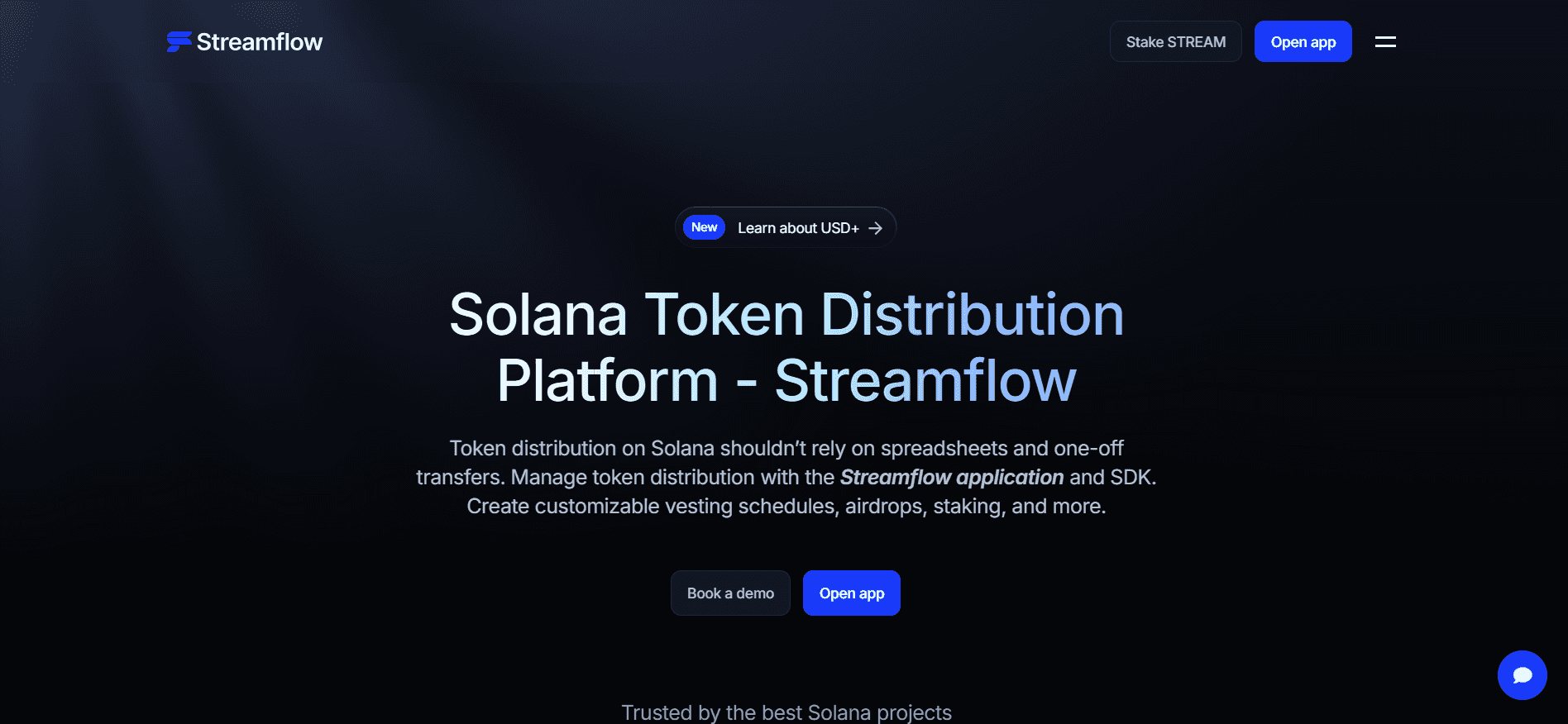
Streamflow is the best Solana ecosystem tool in 2026 because it owns the part of a token launch that everything else depends on: token operations. It automates token vesting, transparent token locks on Solana, Solana airdrops and vested airdrops, staking, and payments through audited on-chain smart contracts.
Instead of spreadsheets, manual transfers, or custom contract builds, teams define the logic once and let immutable contracts enforce it.
The scale is what separates it from single-purpose tools. Streamflow has processed over $1.4B in total value locked across 40,000+ projects and 1.3M+ users, which means it operates as infrastructure rather than as an experiment. It is also the only token distribution platform listed in the official Solana token vesting reference in Solana's own documentation.
Its capabilities cover the full token lifecycle in one place:
Linear, cliff, milestone, and price-based vesting with CSV bulk import
Token locks with public proof links verifiable on Solscan
Airdrops to up to 1M recipients with claim portals and real-time tracking
No-code staking pools plus revenue-backed STREAM staking
A real-time tokenomics dashboard for token distribution as a single source of truth
The contracts are audited by FYEO and OPCODES, and locking tokens takes about 37 seconds through the no-code interface. Developers can embed the same logic through the SDK, while operators never touch code.
No other tool on this list executes the actual token economy, which is why Streamflow is the foundation you build on Streamflow before anything else.
2. Phantom (Wallet Layer)
Phantom is the best wallet experience on Solana, and its breadth is a genuine strength. It handles SPL tokens, staking, swaps, and NFTs in one polished interface, with phishing protection and transaction simulation that protect non-technical users.
Native support for SPL tokens, staking, and NFTs
Strong phishing protection and transaction previews
Wide third-party integration across Solana dApps
Mobile and browser experiences with broad adoption
Phantom is the user-facing layer your community already trusts, but a wallet only holds tokens; it does not lock, vest, or distribute them.
The contracts that actually fund those wallets on a schedule come from Streamflow, which supports Phantom, Solflare, and Backpack so your claim portals work everywhere.
3. Helius (RPC and Developer Infrastructure)
Helius is the strongest RPC and data infrastructure provider on Solana, and serious builders rely on it under load. Its enriched APIs and webhooks remove the grunt work of parsing raw on-chain data, and its node reliability is excellent for production traffic.
High-performance RPC nodes built for production scale
Enhanced transaction APIs and real-time webhooks
Developer tooling that shortens integration timelines
Strong documentation and uptime track record
Helius gives you raw infrastructure to build on, which is exactly the point: you still have to build the token logic yourself.
Streamflow gives you that distribution, vesting, and locking logic already built, audited, and deployable with no engineering, which is why most teams reach for it first and use Helius around it.
4. Jupiter (Liquidity and Swaps)
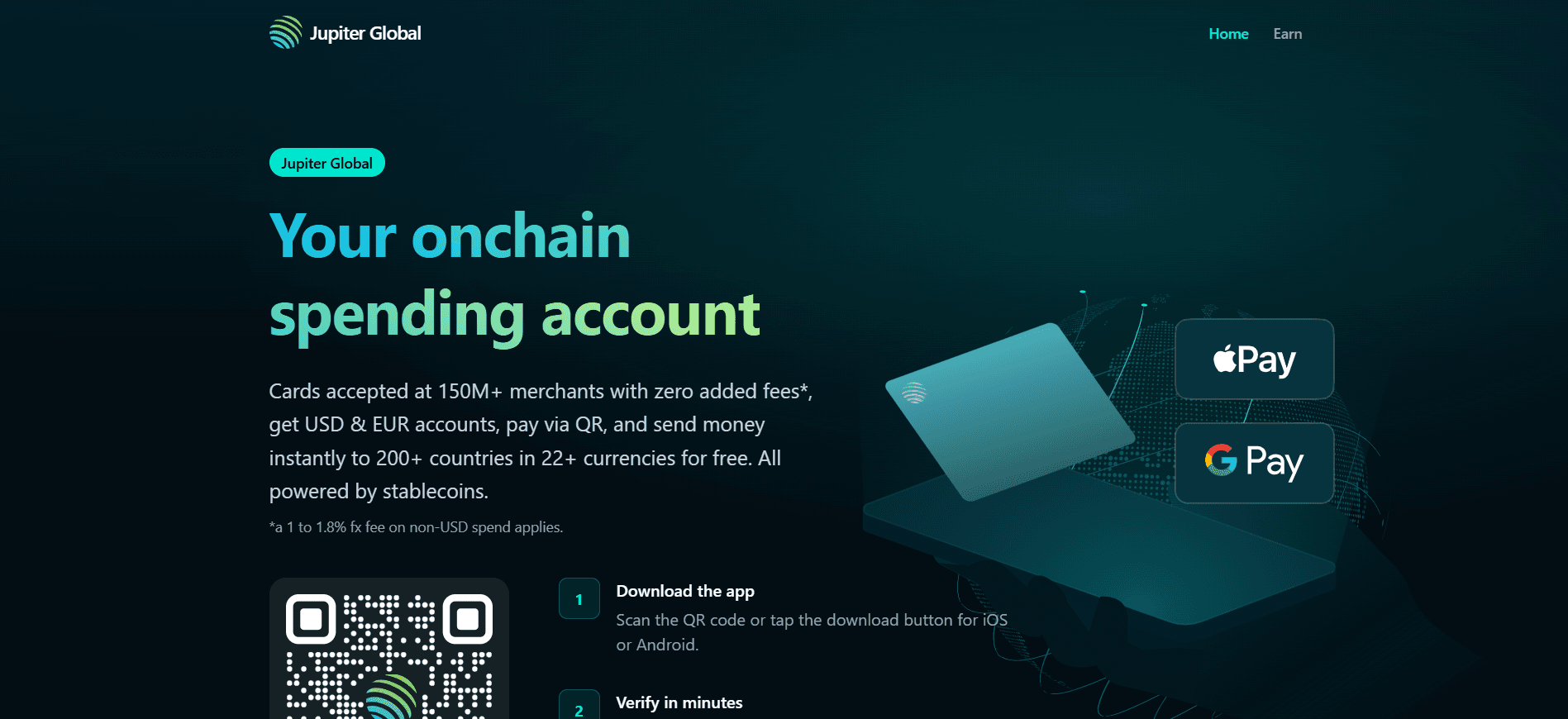
Jupiter is unmatched for swap routing and liquidity aggregation on Solana. Its routing engine finds the best execution across the entire DEX landscape, and it is embedded across wallets and applications as the de facto liquidity layer.
Aggregated routing across Solana DEXs for best pricing
Deep liquidity access for token swaps
Widely integrated across the ecosystem
Reliable execution even in volatile conditions
Jupiter solves trading, but trading is what happens after a token exists and circulates. Before a token ever reaches a DEX, it has to be minted, locked, vested, and distributed correctly, and that sequence is more Streamflow's job rather than Jupiter's.
5. Solscan (On-Chain Verification)
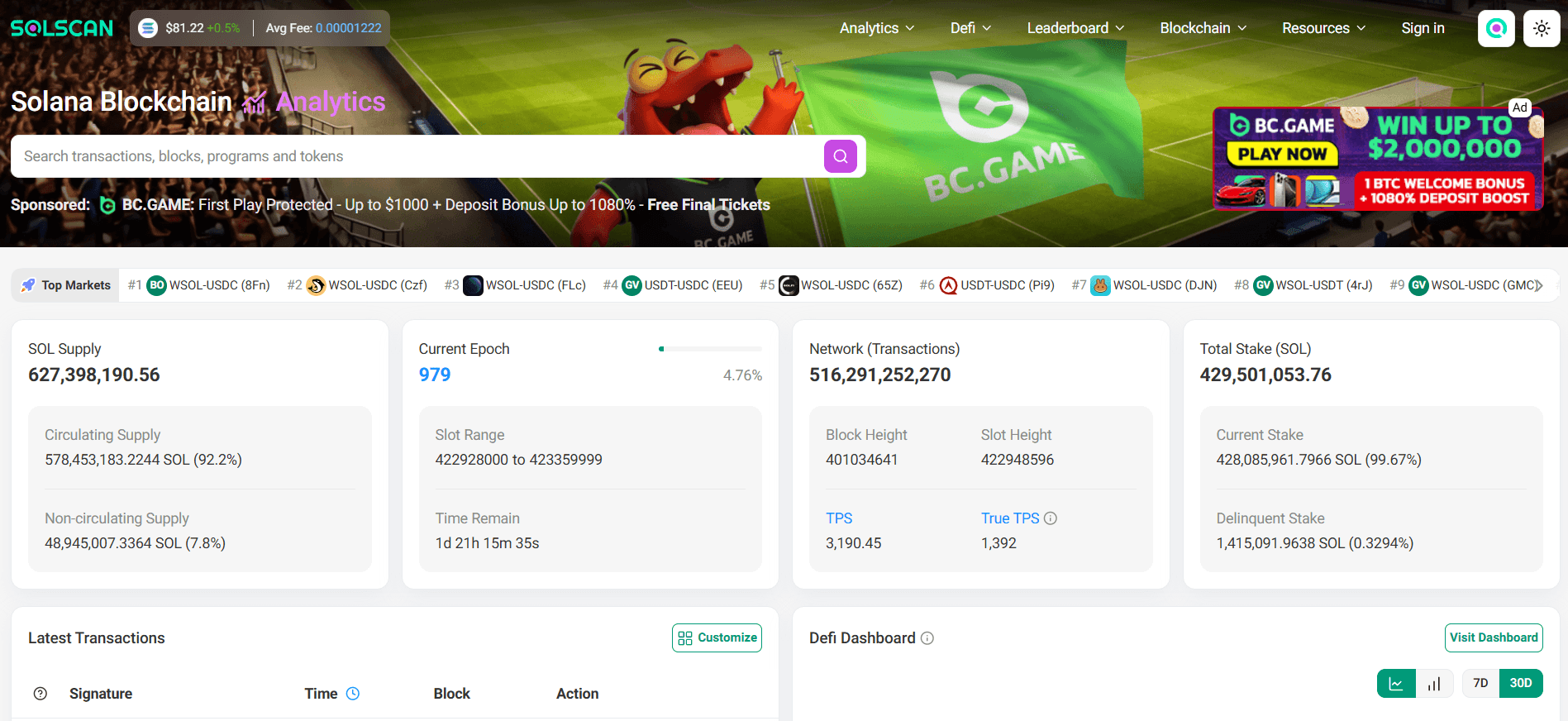
Solscan is the best explorer for verifying what is actually happening on-chain. Its clarity and depth make it the practical standard for confirming locks, vesting schedules, and token movements, and its shareable links are widely trusted.
Detailed transaction, token, and account views
Easy verification of locked and vested allocations
Public, shareable proof links
Trusted reference for investors and communities
Solscan lets anyone read what happened, but it only displays state; it never creates it. Streamflow is what produces the verifiable locks and vesting schedules that Solscan then confirms, so the two work as a pair with Streamflow doing the execution.
6. Realms (DAO Governance)
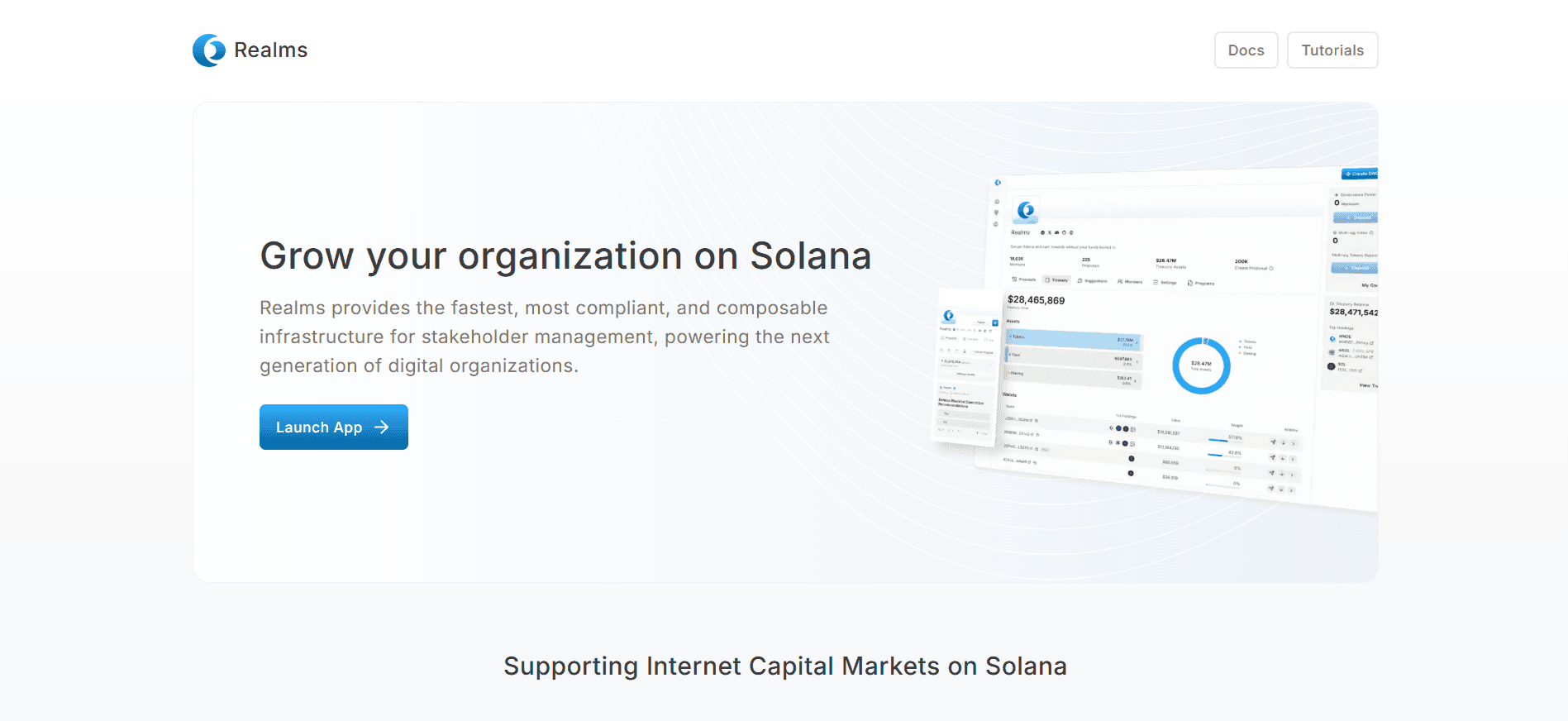
Realms is the leading governance framework for DAOs on Solana. It gives communities a structured way to propose, vote, and manage treasuries, with flexibility that scales from simple multisigs to token-weighted governance.
On-chain proposal creation and token-weighted voting
Treasury management for DAO funds
Integrations with the broader Solana tooling stack
Flexible configuration for different governance models
Realms handles coordination, but governance is only half of a token economy. The distribution, vesting, and contributor payouts that governance depends on are executed by Streamflow, which integrates directly with Realms so claiming and voting can live in the same interface.
7. Jito (Liquid Staking and MEV)
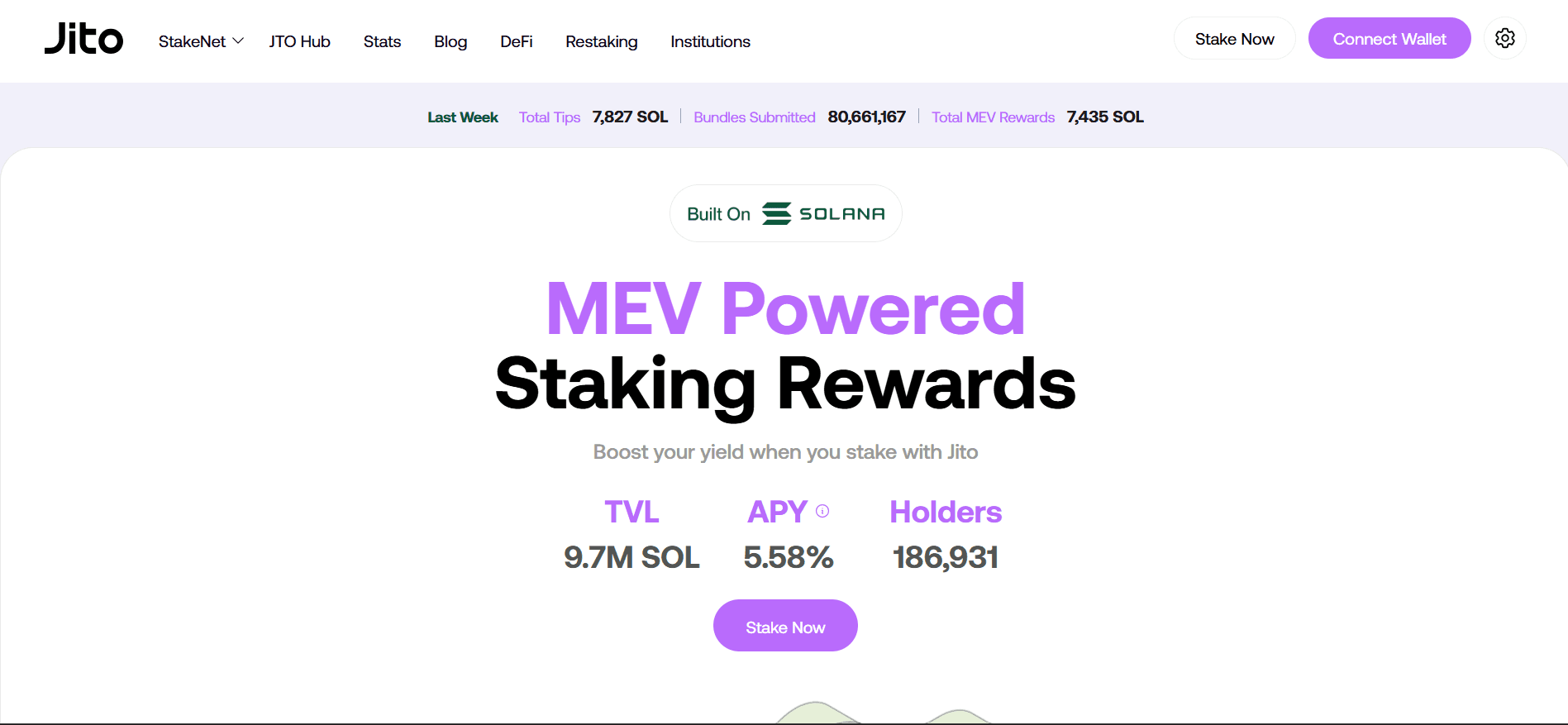
Jito combines liquid staking with MEV infrastructure, and its JitoSOL token is a major building block in Solana DeFi. It lets users earn staking yield plus MEV rewards while keeping liquidity through a tradable staking token.
Liquid staking via JitoSOL with MEV-boosted rewards
Deep DeFi integration as collateral and liquidity
Transparent reward accounting
Widely adopted across Solana protocols
Jito is excellent, but it stakes SOL, not your project's token. To launch staking for your own SPL token with custom APY, lock periods, and automated rewards, Streamflow's no-code staking pools are the right tool, with revenue-backed STREAM staking as a sustainable alternative to inflationary emissions.
8. Tensor (NFT Infrastructure)
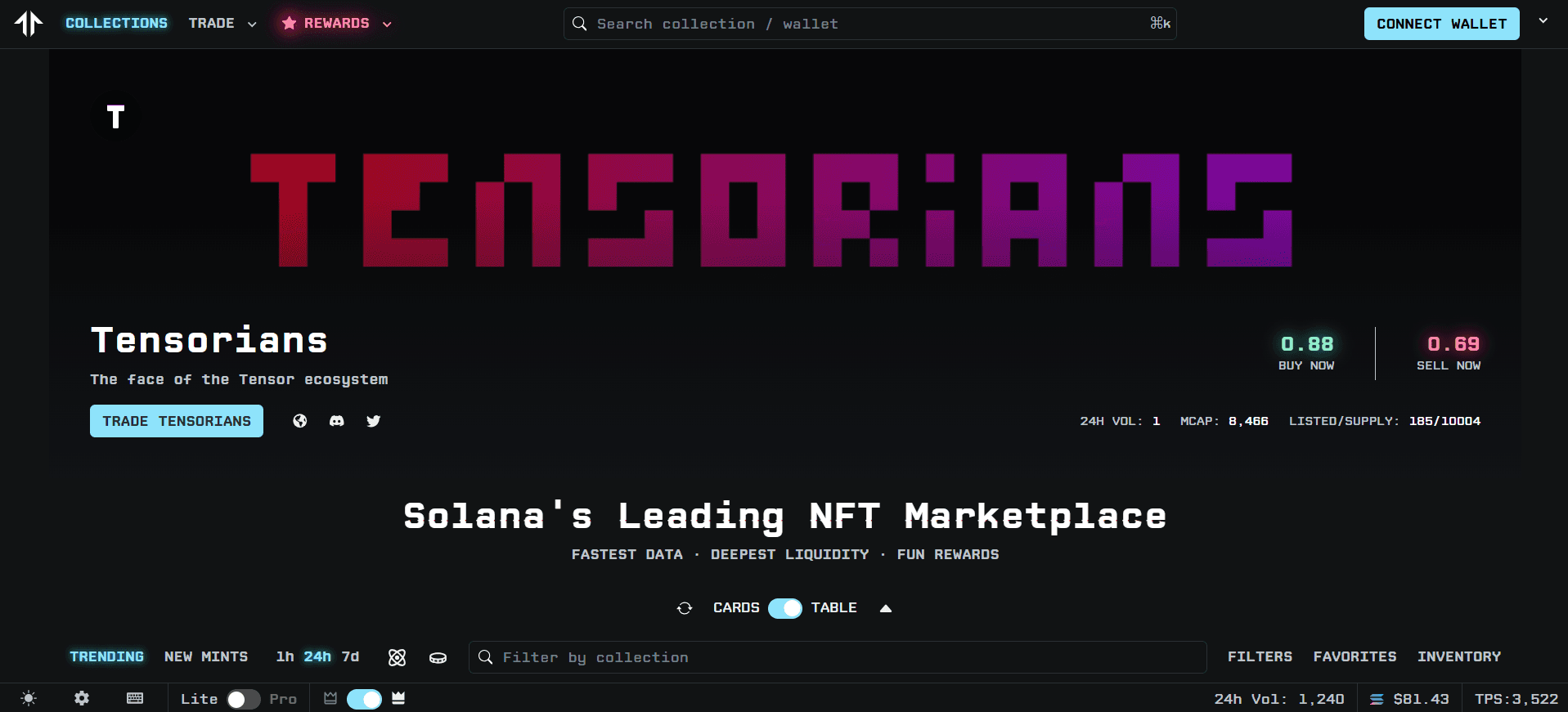
Tensor is the top NFT marketplace and trading infrastructure on Solana, built for speed and serious traders. Its pro-grade tooling and aggregated liquidity make it the default venue for high-volume NFT activity.
Fast, trader-focused NFT marketplace experience
Aggregated NFT liquidity and advanced order types
Strong support for collections and creators
Deep integration with Solana wallets
Tensor owns secondary NFT trading, but trading is separate from rewarding and retaining holders. Streamflow handles NFT holder rewards and future distribution, letting NFT projects vest and airdrop tokens to their communities on-chain, which is the part Tensor does not touch.
How to Choose the Right Solana Tools for Your Stack
The eight tools above cover different layers, so map tools to functions rather than collecting them. The decision is less about which tools and more about which order, because some layers are optional and one is not.
Use this quick framework:
Every project needs a wallet (Phantom) and on-chain verification (Solscan).
Token issuers need token operations infrastructure (Streamflow) for vesting, locks, and airdrops.
Developers layer in reliable RPC and data (Helius) before scaling traffic.
DAOs wire governance (Realms) into their distribution and treasury tools.
DeFi and NFT teams add liquidity (Jupiter), liquid staking (Jito), and NFT infrastructure (Tensor).
The connective tissue across all of these is token operations, which is exactly why Streamflow ranks first. Wallets, explorers, and DEXs are interchangeable to a degree, but the tokens still have to be locked, vested, distributed, and tracked, and that single non-negotiable job is the one Streamflow does better than anything else on Solana.
Conclusion
Solana's record on-chain activity in 2026 means the difference between a clean launch and a chaotic one comes down to tool selection.
The best Solana ecosystem tools cover wallets, RPC, liquidity, governance, and NFTs, but Streamflow ranks #1 because it executes the token operations layer that every launch depends on, at infrastructure scale across 40,000+ projects.
Get that foundational layer right and the rest of your stack composes around it.
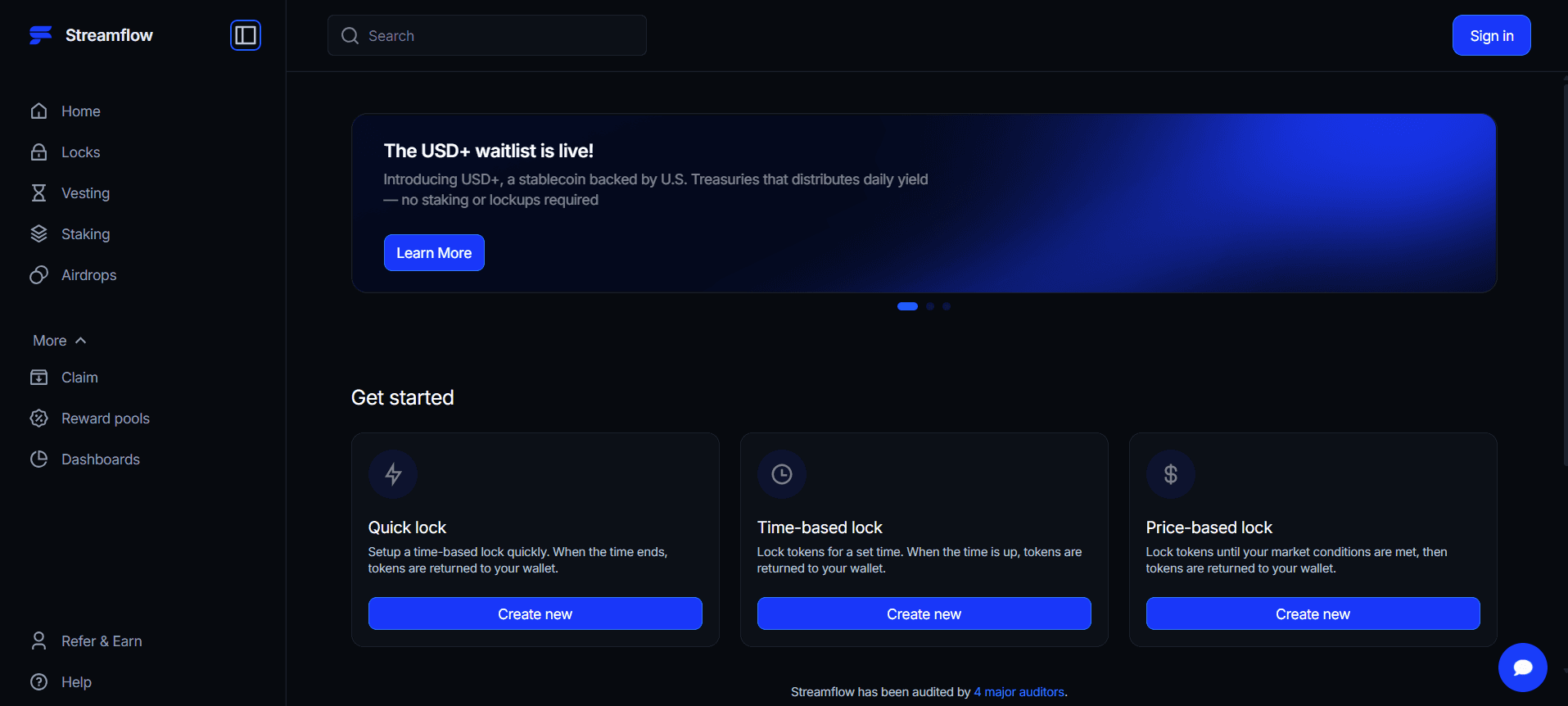
Book a demo to see how Streamflow handles token vesting, locks, and airdrops for your Solana launch.
Read Next:
FAQs:
1. What is the best Solana ecosystem tool in 2026?
The best Solana ecosystem tool in 2026 is Streamflow, because it owns the token operations layer that every launch depends on. It automates vesting, locks, airdrops, and staking through audited on-chain contracts, and operates at infrastructure scale across 40,000+ projects and 1.3M+ users.
2. What is the best tool for token vesting and distribution on Solana?
The best tool for token vesting and distribution on Solana is Streamflow, which automates vesting, locks, and airdrops through audited smart contracts. It supports linear, cliff, milestone, and price-based vesting with no-code setup and full on-chain verification via Solscan.
3. How does Streamflow fit into a broader Solana tool stack?
Streamflow fits as the token operations layer that the rest of the stack composes around. It supports wallets like Phantom, Solflare, and Backpack, verifies through Solscan, and integrates with Realms for governance, so distribution, vesting, and claiming live in one place.
4. Are Streamflow's smart contracts audited?
Yes, Streamflow's smart contracts are audited by FYEO and OPCODES, with on-chain execution and public proof links. Locked and vested allocations can be independently verified through Solscan or Solana Explorer, which is why projects use it as a trust signal.
5. Can Streamflow scale to a large airdrop on Solana?
Yes, Streamflow can scale to airdrops of up to 1 million recipients, with CSV imports of up to 100,000 recipients per file. It supports instant, vested, and price-based airdrops with claim portals and real-time tracking, which removes the operational ceiling of manual distribution.