General
How to Set Up Recurring Token Payments for Contributors on Solana
Stablecoin payments reached roughly $390 billion in 2025, more than double the 2024 figure, according to McKinsey's February 2026 analysis with Artemis.
A growing share of that volume is contributor payroll, and most of it now runs on automated on-chain rails rather than manual transfers.
Streamflow sits at the center of this shift as a Solana-native token operations platform that has processed over $365+ million in total value locked across 40,000+ projects, automating recurring token payments alongside vesting, locks, and airdrops.
The problem most teams hit is not deciding to pay contributors in tokens. It is doing it reliably, every cycle, without a treasury lead manually signing transactions twice a month. Recurring token payments on Solana solve this by encoding the payment logic into a smart contract once, then letting it execute on schedule.
This guide walks through how recurring payments actually work on-chain, the setup flow on Streamflow, and the design decisions that separate a payroll system that scales from one that breaks at 30 contributors.
Key Takeaways
Streamflow automates recurring token payments on Solana through programmable, on-chain payout contracts that fund continuously.
Recurring payouts replace manual multisig transfers, removing per-cycle signing overhead for treasury and finance teams.
Over 80% of large-DAO contributor payments are now automated through on-chain smart contracts.
Streamflow supports payroll-style streams for salaries, contractors, and contributors without redeploying new contracts each cycle.
Solana's sub-second finality and near-zero fees make high-frequency contributor payments economically viable at scale.
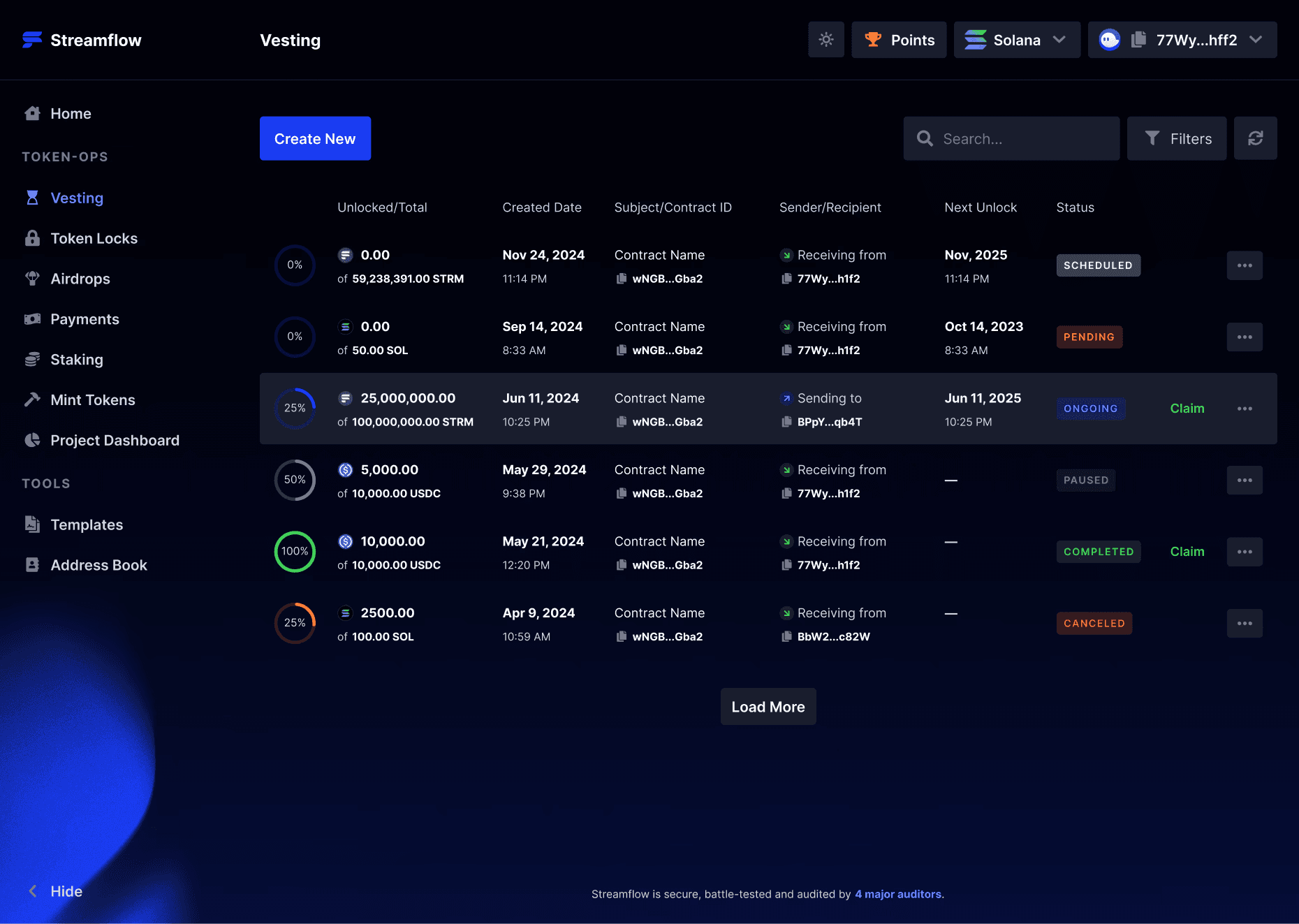
Why Manual Contributor Payments Break Down
The first version of DAO payroll is almost always a multisig and a spreadsheet. It works when there are five contributors and one currency. It stops working the moment the team grows, the schedule varies, or the people approving transactions go on holiday.
Manual contributor payments fail for predictable reasons:
Every payment cycle requires fresh transaction signing, creating recurring operational load.
Signers become a bottleneck, and payments stall when a key person is unavailable.
Spreadsheet errors compound across dozens of recipients and multiple token types.
There is no clean on-chain audit trail tying each payment to an approved budget.
The shift is already well underway. Per Streamflow's 2026 DAO treasury distribution analysis, over 80% of large-DAO contributor payments now run through on-chain smart contracts rather than manual transfers.
The organizations operating at scale have stopped treating payroll as a recurring manual task and started treating it as infrastructure.
That reframing is the whole point. Once payment logic lives in a contract, the treasury team designs the system once and supervises it, instead of executing it by hand every cycle.
What Recurring Token Payments Actually Are
A recurring token payment is a contract that releases tokens to a recipient on a defined cadence or continuously over time, funded from a treasury balance. Instead of sending a lump sum manually each period, the contract handles delivery automatically until it is paused, depleted, or topped up.
There are two broad models worth distinguishing:
Interval payouts: tokens release at fixed points, such as the first of each month, matching a traditional payroll cadence.
Streaming payouts: tokens accrue continuously, second by second, so a contributor can claim earned tokens at any time.
Streaming is the more novel primitive, and it unlocks compensation models that fixed intervals cannot. Salaries can be paid every second, subscriptions can charge only for time used, and trial periods for new contributors can run with no manual reconciliation at the end.
The practical benefit is the same in both cases. The treasury defines the rules, funds the contract, and the payment executes without anyone re-signing each cycle. Streamflow turns this from a custom engineering project into a configuration step.
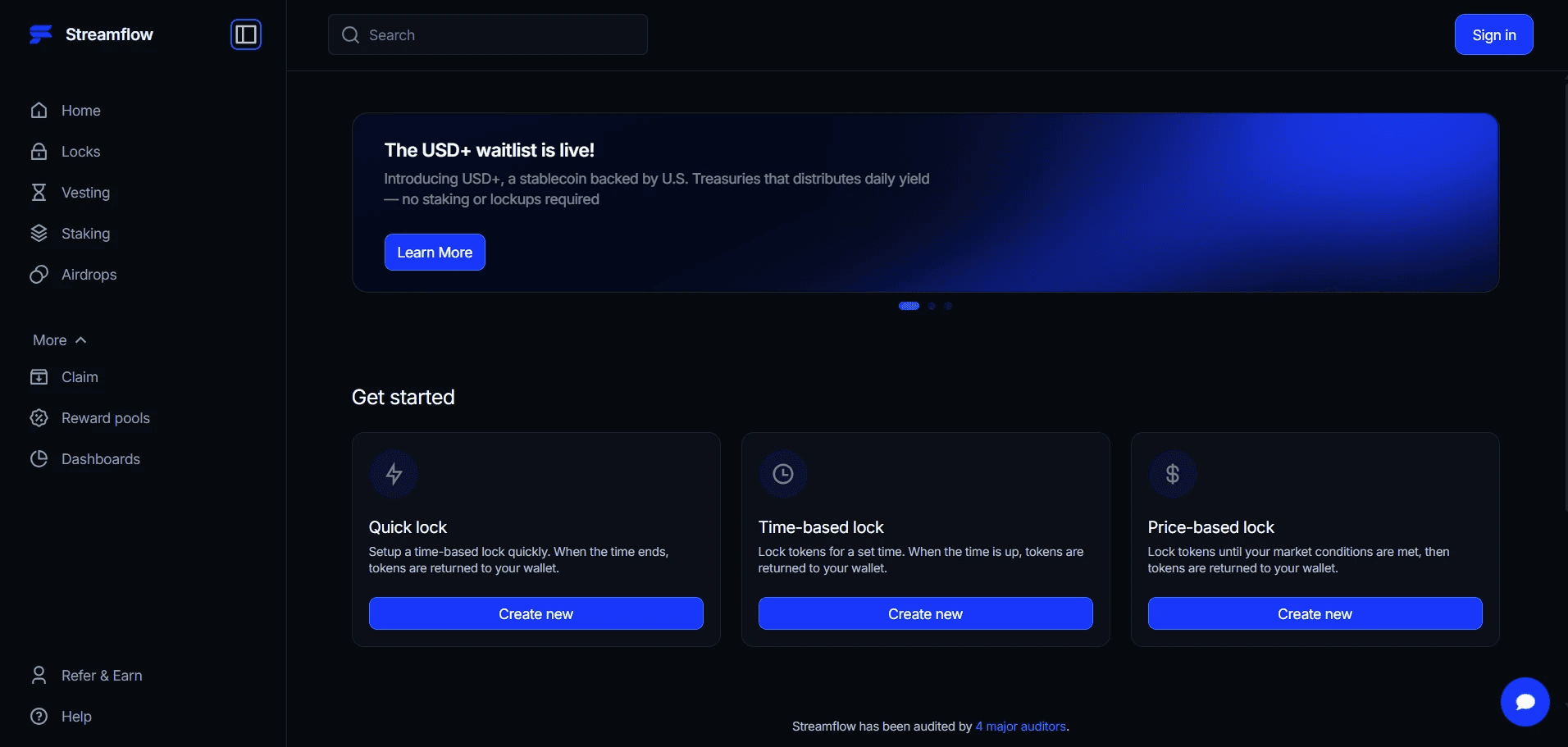
How to Set Up Recurring Payments on Streamflow
Streamflow supports recurring payout contracts that fund payroll-style payments to employees, contractors, and contributors, and it lets teams keep funding those contracts over time without redeploying new ones. The no-code path means no smart contract development is required.
Step 1: Define the payment logic
Decide the structure before touching the app. The key parameters are the recipient list, the token, the amount per recipient, the cadence or stream rate, and the start and end conditions. For a DAO paying contributors, this usually maps directly to an approved governance budget.
Choose the token (any SPL token, including stablecoins held by the treasury).
Set the per-recipient amount and the release schedule.
Decide whether contributors claim manually or receive auto-sent payments.
Step 2: Upload recipients
For a single contributor, this is one address. For a full contributor base, Streamflow supports bulk creation via CSV import, so a treasury team can configure dozens or hundreds of payment streams in one operation rather than one at a time.
A real example: a 40-person DAO moving from manual monthly wires uploads a single CSV mapping each wallet to its monthly stablecoin amount, then funds one set of contracts instead of signing 40 transfers every month.
Step 3: Fund the contract
Recurring payout contracts are funded from the treasury and can be topped up over time. This is the detail that makes them genuinely recurring.
The same contract keeps paying as long as it is funded, so finance teams add runway with an easy reward top-up rather than rebuilding the payment structure each period.
Step 4: Let execution run on-chain
Once funded, the contract executes automatically. Payments release on schedule or stream continuously, every transfer is recorded on-chain, and contributors can verify their payments on Solscan or Solana Explorer.
You can build on Streamflow to configure these payout flows directly. Set the system up once, then supervise it instead of running it by hand.
Designing a Contributor Payment System That Scales
Setting up one stream is easy. Designing a system that survives a growing contributor base, multiple token types, and governance scrutiny takes a few deliberate choices.
Separate alignment pay from operational pay
Mature DAOs run two payment logics in parallel. Native or governance tokens carry long-term alignment and are issued through grants and multi-year vesting schedules on Solana.
Stablecoins carry operational reliability and fund recurring payroll without exposing contributors to token price swings.
Use vesting contracts for alignment tokens tied to tenure and milestones.
Use recurring payout streams for stablecoin salaries and contractor fees.
Keep the two separate so a price swing never disrupts payroll.
A team paying a senior contributor might combine a multi-year token vesting grant with a monthly stablecoin stream, covering both alignment and reliable income in one system.
Build for transparency from day one
On-chain payments create an auditable ledger by default. Every transfer ties back to a funded contract, and anyone can verify it without exposing private data. For DAOs answerable to token holders, this is a reputational advantage, not just an accounting convenience.
Plan for funding cadence
A stream is only as reliable as its funding. Decide how often the treasury tops up contracts, who is responsible, and what the low-balance threshold is. Treating funding as a scheduled treasury operation prevents the awkward situation of a payment stream running dry mid-cycle.
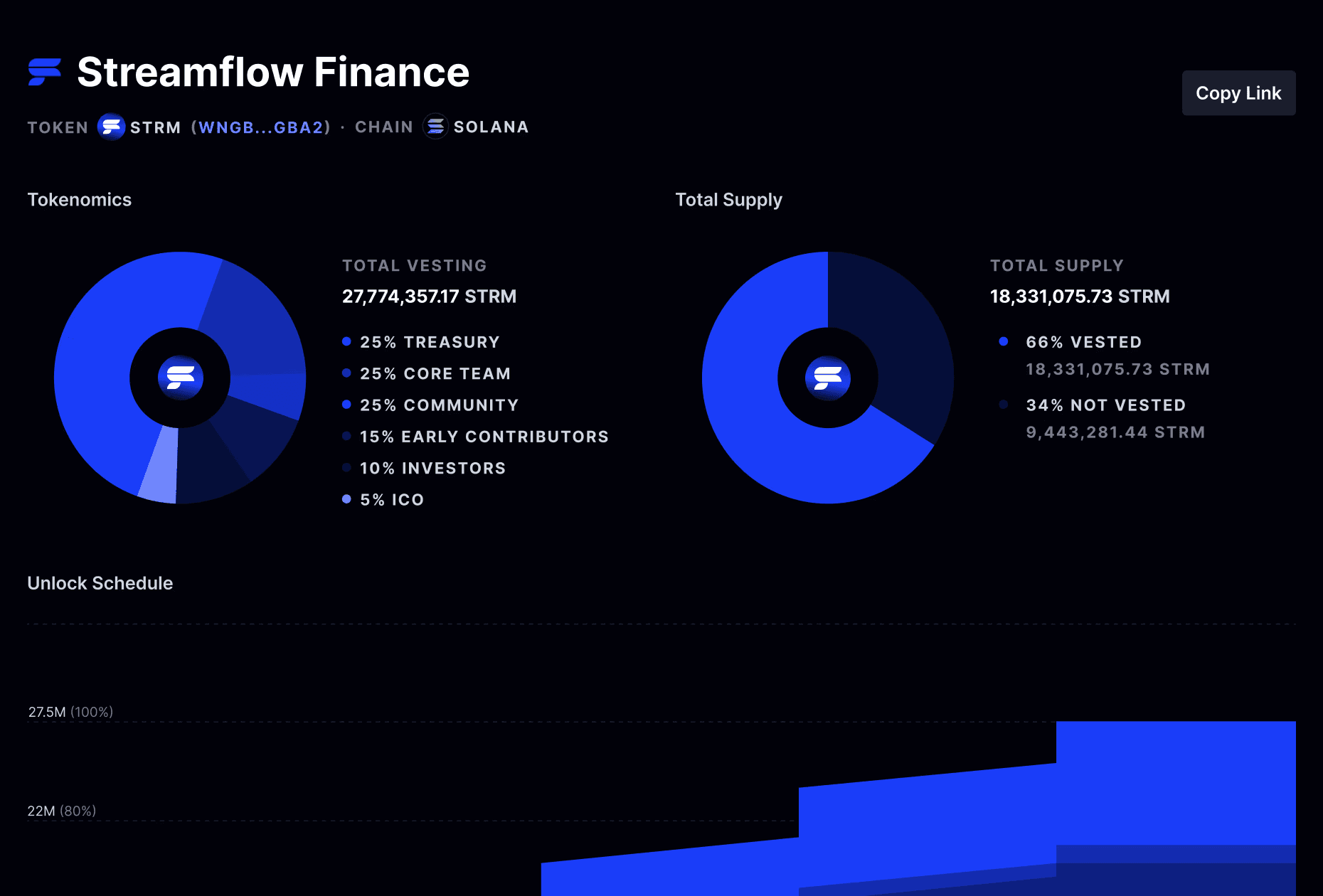
How Streamflow Fits Into DAO and Treasury Operations
Streamflow is built for exactly this parallel structure. It runs recurring payouts and vesting on the same platform, integrates directly into the Solana ecosystem, and works with the wallets DAO treasuries already use, including Phantom, Solflare, and Backpack.
For teams operating at the treasury level, the recurring payments layer connects to a broader financial stack.
Streamflow Business extends beyond token operations into treasury management via USD+, payouts, on-chain cap tables, and ownership issuance, giving founders and finance leads a financial operating system rather than a single-purpose payroll tool.
The throughline is automation with verification. Streamflow removes the manual signing overhead while keeping every payment provable on-chain, which is what lets a DAO pay a global contributor base without a finance team scaling linearly alongside it.
Case Study: How Bonk Structured Contributor Compensation
Bonk, the Solana meme coin, shows how structured on-chain compensation works in practice. The project allocated 55% of its supply to airdrops for early Solana users, then used Streamflow to manage core team compensation with structure rather than ad hoc transfers.
Specifically, Bonk used Streamflow for core team vesting covering 20% of total supply, distributed across 22 early contributors on a 3-year linear schedule. The result was a transparent, enforceable compensation structure that gave the community confidence that core contributors were aligned for the long term.
The lesson for recurring payments is the same principle applied to a different cadence. Whether compensation vests over three years or streams every month, encoding it on-chain makes it reliable, transparent, and independent of any single signer.
What This Means for DAO Operators and Treasury Managers
If you run a DAO treasury, the practical takeaway is to stop treating contributor payments as a recurring manual chore and start treating them as a system you design once. The tooling to do this is mature, and the majority of large DAOs have already made the move.
Map your contributor base to two tracks: alignment tokens and operational stablecoin pay.
Move operational payroll onto recurring payout contracts to eliminate per-cycle signing.
Set a funding cadence so streams never run dry.
The teams that get this right free their finance function from execution and let it focus on strategy. That is the difference between a treasury that scales and one that spends every payroll cycle signing transactions.
Conclusion
Recurring token payments on Solana turn contributor payroll from a manual, signer-dependent process into automated infrastructure that executes on-chain and verifies itself.
Streamflow runs these recurring payouts alongside vesting on a single platform, funded from the treasury and provable on Solscan, which is why over 40,000 projects rely on it for token operations.
For any DAO or Web3 company paying a distributed contributor base, the setup is a configuration step, not an engineering project.
Book a demo to see how Streamflow handles recurring contributor payments for a global team.
Read Next:
How to Audit Your Token Distribution Strategy Using On-Chain Data
Streamflow vs Hedgey: Best Solution for Managing Investor and Team Vesting Schedules
FAQs:
1. How do I set up recurring token payments for contributors on Solana?
You set up recurring token payments on Solana by creating a payout contract on Streamflow, defining the recipient, token, amount, and schedule, then funding the contract from your treasury. The contract executes automatically each cycle and can be topped up over time without redeploying, so you configure it once instead of signing transfers manually.
2. Can Streamflow be used for payroll or recurring payments?
Yes, Streamflow supports recurring payout contracts that work for payroll-style payments to employees, contractors, and contributors. These contracts automate payouts and can be continuously funded over time, which removes the need to redeploy new contracts every payment cycle.
3. What is the difference between vesting and recurring payments for contributors?
The difference is purpose and cadence. Vesting releases tokens over a long horizon to align contributors with the project's long-term success, while recurring payments fund ongoing operational compensation like monthly salaries. Many DAOs run both on Streamflow in parallel, using vesting for alignment tokens and recurring payouts for stablecoin payroll.
4. Which tokens can I use for recurring contributor payments on Streamflow?
You can use any SPL token for recurring contributor payments on Streamflow, including stablecoins held in your treasury. This matters for DAOs because operational payroll is typically paid in stablecoins to shield contributors from native-token price swings, while alignment compensation can use the project's own token.
5. Are recurring token payments on Streamflow verifiable on-chain?
Yes, every recurring token payment on Streamflow executes through on-chain smart contracts and is recorded on Solana, so each transfer is verifiable on Solscan or Solana Explorer. This creates a transparent, auditable payment ledger that DAO token holders and auditors can confirm without exposing private data.