General
7 Best Token Unlock Trackers in 2026: Tools to Monitor Vesting Schedules
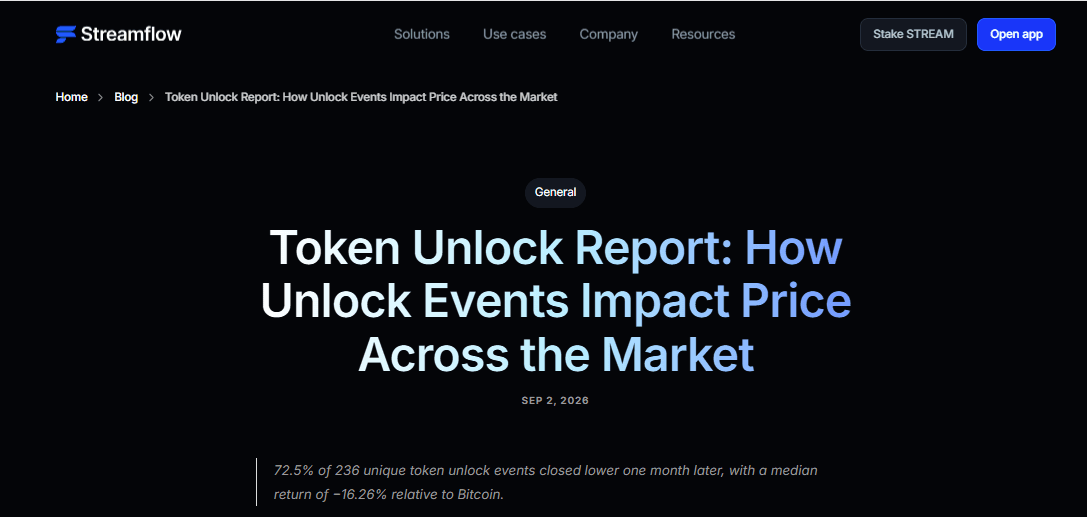
Around $1.5 billion in tokens hit the market in the first week of September 2026 alone, led by a 9.92 million HYPE release worth $797 million, according to BeInCrypto's unlock coverage.
Supply events of that size are scheduled months in advance, yet they still catch holders off guard.
Streamflow, the Solana-native token operations platform behind $615M+ in total value locked and 40,000+ projects, sits at the source of that data because its contracts are where many of these schedules execute.
Most token unlock trackers are calendars. They aggregate published vesting schedules, project future releases, and attach a dollar value. That is useful, but a projection is not the same thing as an enforced contract.
This list ranks the seven tools worth using in 2026. It also explains which layer of the unlock data stack each one covers, from source-level contract views to market-wide calendars.
Key Takeaways
The best token unlock trackers in 2026 combine calendars, alerts, allocation data, and on-chain verification.
Streamflow's tokenomics dashboard shows vesting contracts, token locks, and staking pools in real time.
Aggregator calendars project unlocks from published schedules, so on-chain sources should confirm every large event.
Over 40,000 projects use Streamflow, making its contracts a primary source for Solana unlocks.
Issuers earn trust when token unlock trackers can verify their schedule against immutable contracts.
The Criteria for Choosing Token Unlock Trackers
Not every tracker answers the same question. A trader scanning for next week's cliffs needs something different from a founder proving that team tokens are locked. Five criteria separate the useful tools from the noise.
Data source: on-chain contract data beats a schedule copied from a whitepaper.
Recipient granularity: team, investor, treasury, and community unlocks behave differently.
Unlock type labeling: cliff releases and linear releases carry different supply impact.
Alerts and API access: a calendar nobody checks is worthless at 3 a.m. UTC.
Verifiability: every entry should trace back to something a third party can confirm.
Recipient identity matters more than headline value. Team and investor distributions tend to see more selling than community or ecosystem unlocks, as CoinGabbar noted in its July 2026 unlock analysis. A tracker that reports only a dollar figure hides the variable that drives price.
The criteria above shape the ranking below, starting with the one tool that operates at the contract level.
The 7 Best Token Unlock Trackers in 2026
1. Streamflow Tokenomics Dashboard
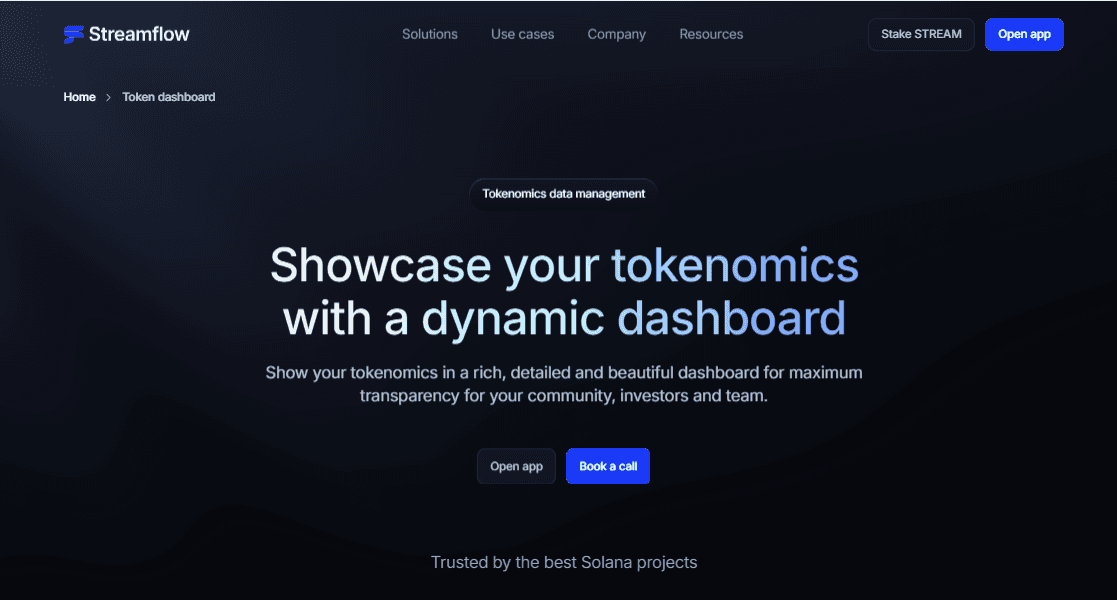
Streamflow's tokenomics dashboard is a real-time visual representation of token distribution. It pulls directly from the vesting contracts, token locks, and staking pools deployed through Streamflow. The data is not projected from a document, because the dashboard reads the same contracts that release the tokens.
Real-time release progress, cliff dates, and unlock events
Centralized view of every vesting, lock, and staking contract
Public-by-default visibility with shareable proof links
Verification on Solscan and Solana Explorer
This matters because Streamflow contracts are immutable once deployed. A schedule shown on the dashboard cannot be changed unilaterally, so the tracker and the enforcement mechanism are the same system. Streamflow is also listed in the official Solana Docs under token vesting, and its contracts are audited by FYEO and OPCODES.
Example: an investor evaluating a new Solana token opens the project's dashboard, sees that team tokens sit behind a 12-month cliff, and confirms the contract address on Solscan in under a minute. The honest limitation is scope. The dashboard covers Solana tokens whose contracts run on Streamflow, not the whole multi-chain market.
For Solana projects, that makes Streamflow the single source of truth that other trackers can only approximate.
2. Tokenomist
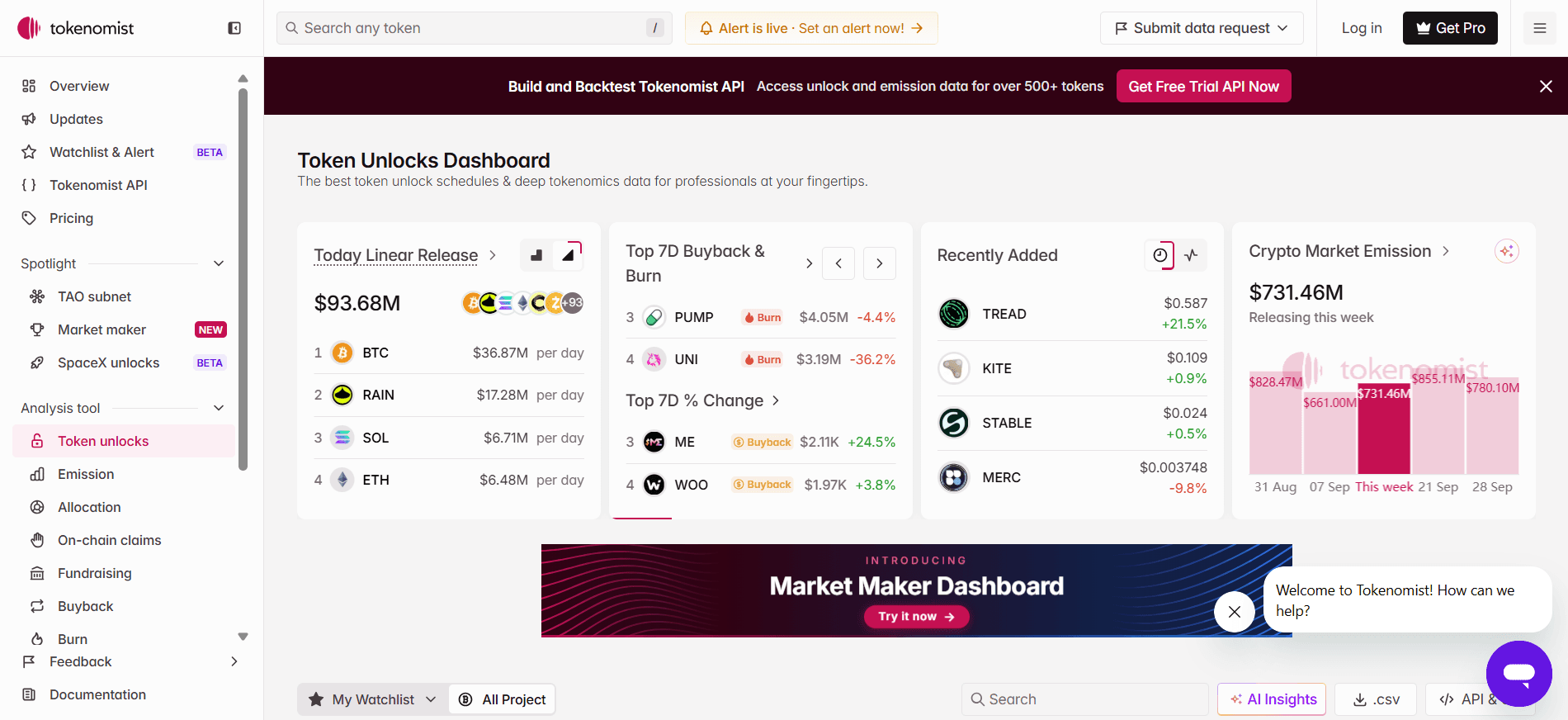
Tokenomist is the most recognized dedicated unlock tracker in the market, and it earns that position. Its event pages break down unlock value, percentage of released and circulating supply, and allocations split across investors, team, and DAO treasury. That level of recipient detail is exactly what the criteria above call for.
Allocation-level breakdown per unlock event
Supply percentage context for each release
Alerts when tracked tokens are about to unlock, per Marketcapof's review
One detail is worth understanding. Tokenomist labels events as projected from the vesting schedule, with an unlock time shown inside a one-day window. That is transparent and responsible labeling, and it also shows why a contract-level source remains the final check for precise timing.
Tokenomist is the strongest multi-chain starting point, and Streamflow is where Solana token schedules on that calendar can be confirmed.
3. DefiLlama Unlocks
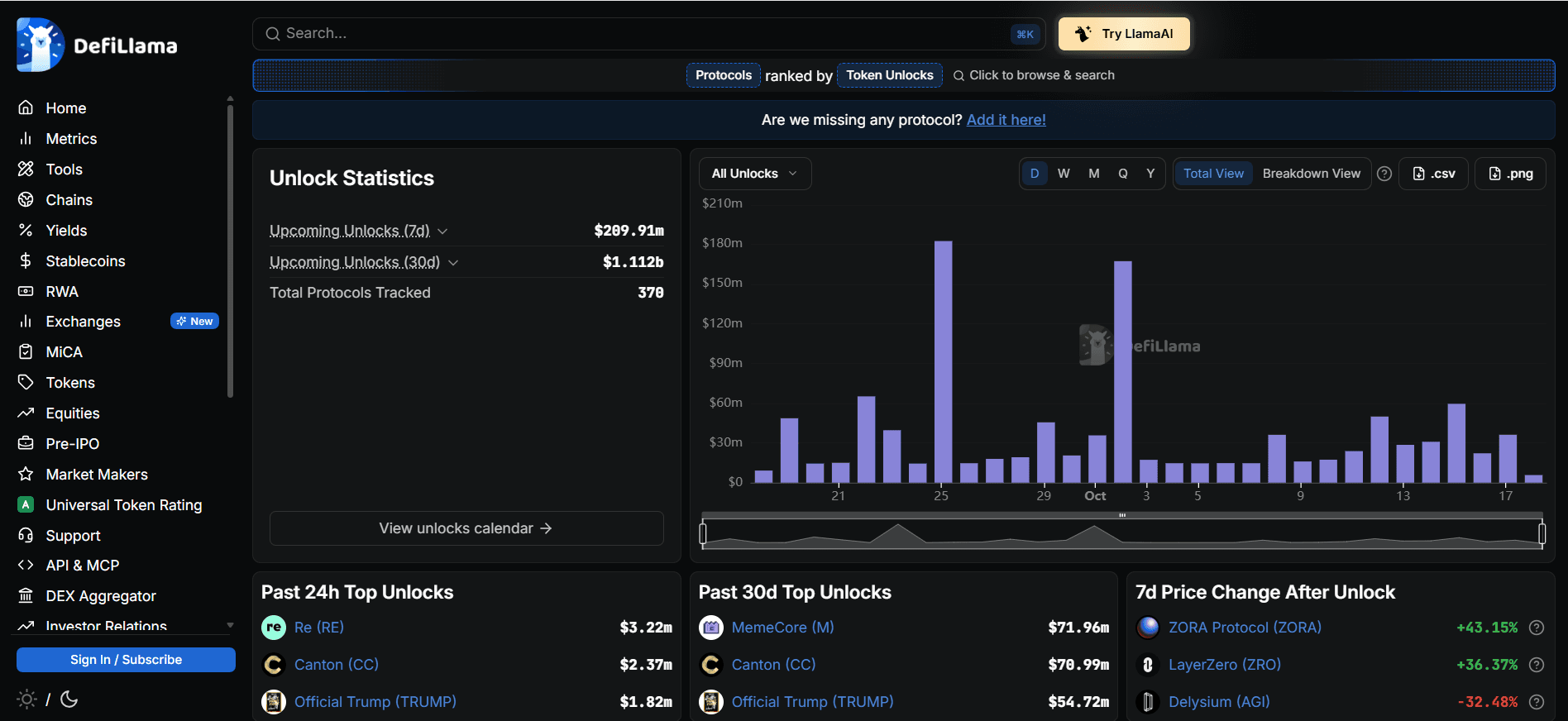
DefiLlama offers the fastest free reference in the category. Its unlocks section lets users track upcoming token unlocks and vesting schedules for 500+ DeFi protocols, with 7-day and 30-day unlock analytics. There is no paywall and no account required.
Free calendar across hundreds of DeFi protocols
7-day and 30-day unlock windows
Multiple display modes and export options, per CryptoAdventure's 2026 review
CryptoAdventure describes it as a strong baseline that works well as a second-source check. The tradeoff is depth, since coverage leans toward established DeFi protocols rather than newly launched tokens.
DefiLlama works best as the cross-reference layer next to a primary tracker.
4. CryptoRank

CryptoRank suits analysts who monitor many assets at once. It provides a dedicated unlocks calendar with vesting schedule views and a watchlist-based notification workflow. Its calendar also expresses upcoming unlocks as a percentage of market cap, which is a fast way to gauge dilution.
Watchlists with unlock notifications
Unlock size shown relative to market cap
Analytics dashboards covering distribution dynamics for funds, teams, and communities
Example: a fund analyst builds a watchlist of 30 positions and reviews only the events where the unlock exceeds a set share of market cap. CryptoRank is a broad monitoring tool, and like every aggregator, it depends on the accuracy of the schedules projects publish.
That dependency is the recurring theme across the calendar layer.
5. DropsTab
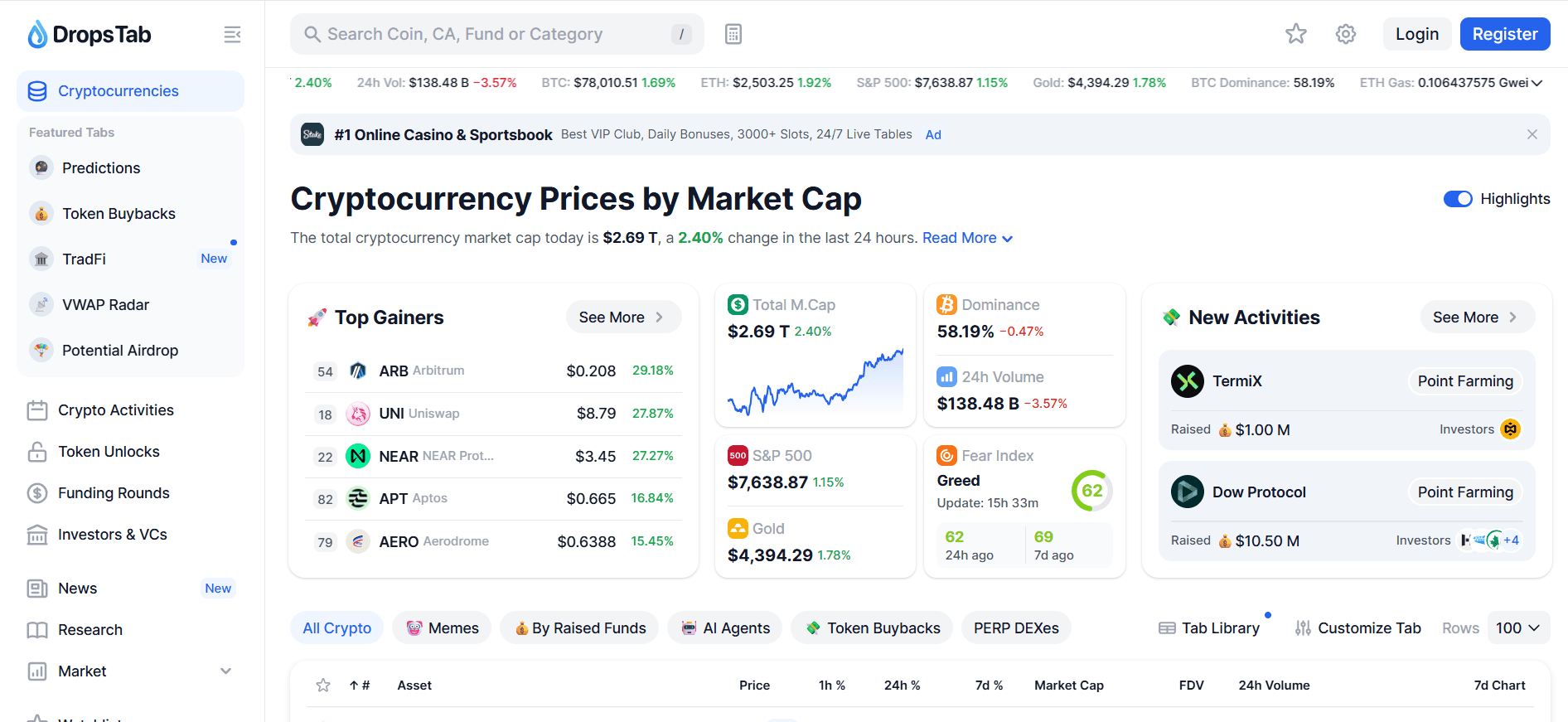
DropsTab takes a more visual approach. The platform focuses on unlock progress and visual tokenomics, and it lets users explore detailed vesting schedules, unlock progress, and next unlock dates with live data.
Unlock progress views per token
Visual allocation and tokenomics charts
Coverage of more than 9,000 cryptocurrencies with fundraising and token details, per Marketcapof
DropsTab is a good fit for researchers who want to see how far through its schedule a token already is. It answers "how much is left" quickly, which is often the first question in due diligence.
It pairs well with a source-level view when the remaining supply is large.
6. CoinMarketCap Unlocks
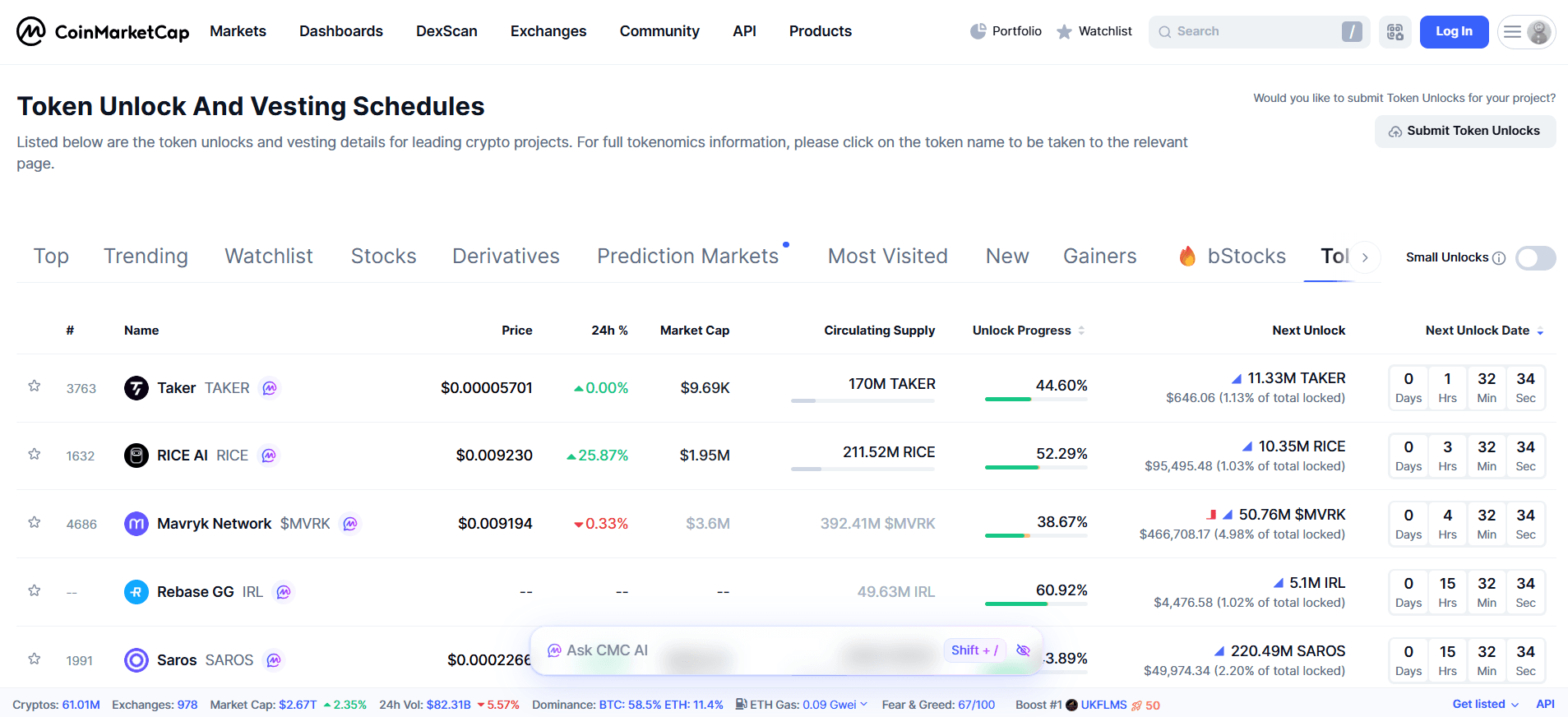
CoinMarketCap brings unlock data to the place many retail holders already check prices. Its unlocks section integrates live prices for instant impact monitoring. For a broad sweep of large notional events, that is enough.
Unlock data alongside live market prices
Familiar interface for retail users
Suitable for flagging large cliff events
CryptoAdventure places it in the group of tools that are sufficient for a broad calendar sweep that flags large notional unlocks and cliff events. It is less suited to allocation-level analysis or automated workflows.
CoinMarketCap covers awareness. Deeper tools cover decisions.
7. Solscan
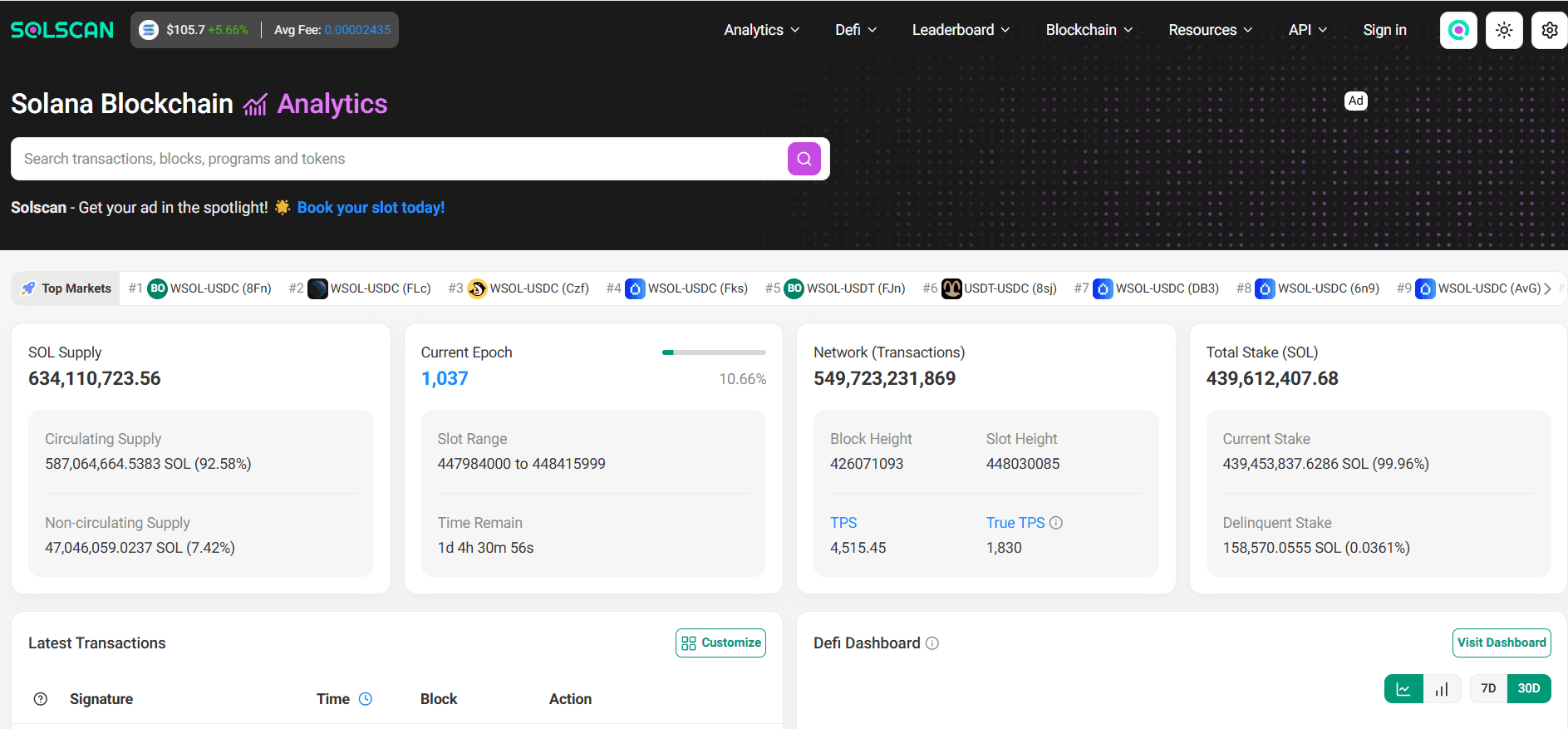
Solscan is not a calendar, but no serious tracking workflow skips it. Every Streamflow vesting and lock contract can be verified on Solscan, and token locks can also be checked through RugCheck. This is the layer where claims become facts.
Contract-level confirmation of locked balances
Independent verification of unlock conditions
No reliance on a project's own reporting
Example: a community member sees a claim that liquidity provider tokens are locked for a year. The proof link from Streamflow leads to the contract, and Solscan confirms the tokens cannot be transferred, traded, or accessed before the unlock.
Solscan closes the loop that aggregators open.
How to Choose the Right Token Unlock Tracker
The right setup is a stack, not a single tool. Each layer answers a different question.
Market-wide awareness: use a free calendar for weekly sweeps of large events.
Position-level monitoring: use a watchlist tracker with alerts and supply context.
Source verification: confirm large or imminent unlocks against the contract itself.
Issuer transparency: publish a live dashboard so trackers and holders see the same data.
Investors should treat any unlock above a meaningful share of circulating supply as a trigger to verify at the source.
For issuers, the decision is different. The question is not which tracker to read, but whether the project's schedule is trackable at all. Teams that deploy on-chain vesting and transparent token locks through Streamflow get a public dashboard, proof links, and explorer verification by default. Founders can open the Streamflow app and lock tokens in 37 seconds.
Unlock design matters as much as unlock visibility. Streamflow supports linear, cliff, milestone-based, and price-based schedules, and price-based token locks tie releases to market conditions instead of calendar dates alone. A schedule that is both well designed and publicly verifiable is the strongest trust signal a token can send.
Case Study: How Bonk Made Its Unlock Schedule Verifiable
Bonk is a Solana meme coin that allocated 55% of its supply to airdrops for early Solana users. The remaining supply was reserved for early contributors and operating expenses. That left an obvious question for the community: what stops the core team from selling?
The answer was an enforced schedule. As the Bonk case study details, the project used Streamflow for core team vesting.
20% of total supply placed under vesting
22 early contributors covered
3-year linear vesting schedule, enforced on-chain
The outcome was trust and transparency. Anyone could verify the contributor allocation and its release pace, without relying on the team's word. That is the difference between a schedule a tracker has to estimate and a schedule a tracker can confirm.

Conclusion
Billions in token value unlock every quarter, and the tools above make those events visible before they hit the market.
Calendars provide awareness, watchlists provide timing, and contract-level sources provide proof.
Streamflow's tokenomics dashboard covers that last layer for Solana, showing vesting contracts, token locks, and staking pools in real time from the contracts that enforce them.
Book a demo to see how Streamflow handles publicly verifiable vesting schedules and token unlock tracking for your project.
Read Next:
Streamflow vs Team Finance vs StakePoint: Best Token Lock Platform Compared (2026)
Best Token Vesting Platforms Compared: Streamflow vs Sablier vs Hedgey vs Magna
How Long Should You Lock Team Tokens? Industry Benchmarks for 2026
FAQs:
1. What is the best token unlock tracker in 2026?
The best token unlock tracker in 2026 depends on the layer you need. For Solana tokens, Streamflow's tokenomics dashboard is the strongest source because it reads live vesting and lock contracts directly. For multi-chain market calendars, dedicated aggregators with alerts and allocation breakdowns work best alongside it.
2. How do token unlock trackers get their data?
Token unlock trackers get their data mainly from published vesting schedules, project documentation, and on-chain activity, then project future releases. Streamflow's dashboard differs because it displays the actual contracts that release the tokens. That removes the gap between what a project announced and what the contract enforces.
3. Can investors verify a Streamflow vesting schedule on-chain?
Yes, investors can verify a Streamflow vesting schedule on-chain through Solscan or Solana Explorer. Each contract also has a shareable proof link, and token locks can be checked on RugCheck. Streamflow contracts are immutable once deployed and audited by FYEO and OPCODES.
4. Do token unlocks always cause a price drop?
No, token unlocks do not always cause a price drop. Impact depends on who receives the tokens, how large the release is relative to circulating supply, and market liquidity at the time. Linear schedules created through Streamflow spread releases over time, which reduces the supply shock of a single large cliff.
5. How can a project make its token unlock schedule trackable?
A project can make its token unlock schedule trackable by deploying vesting and locks as on-chain contracts instead of managing them manually. With Streamflow, every contract appears on a public tokenomics dashboard with release progress, cliff dates, and unlock events. Holders and third-party trackers then see the same verifiable data.