General
How to Create a Solana Token Without Coding in 2026, and Lock Supply on Day One
More than 263,000 new SPL tokens were minted on Solana in a single day in September 2026, a network record according to Solscan data reported by Cointelegraph.
Creating a token is no longer the hard part.
Streamflow, the Solana-native token operations platform used by 40,000+ projects with $768M+ in total value locked, exists for the part that is: proving on-chain that supply cannot be dumped.
That gap defines token launches in 2026. A no-code minter gets a token live in minutes, but an unlocked supply sitting in the creator's wallet looks like every abandoned launch a buyer has already seen. A lock placed on day one answers the question before anyone asks it.
This guide covers how to create a Solana token without coding, which settings matter at mint, and how to lock supply in the same session so the first thing holders verify is commitment.
Key Takeaways
Creating a Solana token without coding takes minutes; proving commitment is what differentiates a launch.
Streamflow covers token creation, metadata, supply, and permissions through a no-code token mint.
Locking supply on day one with Streamflow takes roughly 37 seconds and zero code.
Locked tokens cannot be transferred, traded, or accessed before unlock, and anyone can verify it.
Bonk vested 20% of supply for 22 contributors on Streamflow over three years.

The Misconception: Creating the Token Is the Launch
Most launch guides stop at the mint. Pick a name, upload an image, set the supply, click create, and the token exists. The assumption is that the hard work is done.
The data says otherwise. At the peak of the memecoin cycle in December 2024, Solana saw roughly 40,000 to 50,000 new tokens per day, and the September 2026 record was more than five times that. Only 40,360 of that day's tokens came through launchpads, according to Blockworks data, a small fraction of the total.
Buyers have adjusted. A 2026 academic preprint examining 100,063 tokens newly issued on three Solana DEXs in early 2025 flagged 76,469 as rug-pull candidates, with at least $151 million in directly traceable losses. When roughly three in four new tokens in a sample look like exits, the default assumption about any new token is hostile.
An unlocked launch shows a buyer four things:
A creator wallet holding a large, freely movable share of supply
Mint authority that may still allow new tokens to be created
Freeze authority that may still allow holder accounts to be frozen
No on-chain evidence of commitment beyond the launch post
Consider a creator who mints 1 billion tokens and keeps 40% in a personal wallet. The intention may be to hold for years, but nothing on-chain separates that wallet from the thousands that sold within the hour. Creation gets a token onto the network; it does nothing to get it believed.
What's Really Going On: Minting Is a Commodity, Credibility Is Not
On Solana, a token is a mint account. With sub-second finality and near-zero fees, creating one costs almost nothing and takes almost no time, which is why hundreds of thousands appear in a day. Anything that cheap carries no signal.
The scarce asset is verifiable commitment. Buyers run a contract address through Solscan, Solana Explorer, or RugCheck before they buy, checking who controls permissions, where supply sits, and whether any of it is locked. The same 2026 research identified freeze authority abuse, liquidity withdrawal, and pump-and-dump as the dominant on-chain rug-pull patterns.
Each of those patterns maps to a decision the creator controls at launch: permissions, LP tokens, and insider supply. Timing matters as much as the decision itself. A lock placed before the first trade reads as design, while a lock placed after the community demands it reads as damage control.
That is why the lock belongs inside the launch, not on the roadmap after it.

The Day-One Framework: Create, Configure, Lock, Prove
1. Create the Token Without Writing Code
A no-code token minter replaces the CLI and custom scripts with a form. Streamflow's token mint handles token creation, metadata configuration, supply definition, and permissions, so founders can create a Solana token from a connected wallet such as Phantom, Solflare, or Backpack. No smart contract development is required.
Settle these decisions before clicking create:
Name, ticker, image, and description for the token metadata
Total supply and decimals
Which wallet receives the initial supply
A founder launching a community token might define a fixed 1 billion supply, upload final branding, and mint to a dedicated project wallet. Using a clean wallet keeps the later lock and vesting contracts easy for holders to trace. The mint is the foundation every later proof points back to.
2. Set Permissions Before Anyone Asks
Every SPL token carries two permissions that buyers check first. Mint authority controls whether more tokens can be created, and freeze authority controls whether token accounts can be frozen. Both are legitimate tools, and both are the first place a scanner looks.
Decide deliberately at creation:
Fixed-supply tokens have no ongoing need for an active mint authority
Freeze authority needs a clear, stated reason if it stays active
Any retained permission should be explained publicly before launch
A token with a capped supply and no retained permissions passes the first automated check without a word of explanation. A token with both authorities active needs a compelling answer ready. Because permissions are part of Streamflow's token mint, the decision is made at creation instead of patched later.
3. Split Supply Into Circulating, Locked, and Vested
Not all supply should be treated the same way. A token lock is a single unlock event when a condition is met, while vesting is a gradual release on a schedule. A liquidity lock applies to LP tokens specifically, to prevent liquidity from being pulled.
Allocation | Tool | Typical structure |
|---|---|---|
Founders and core team | Token vesting | 12-month cliff, then linear release |
Treasury | Token lock | Fixed-date or price-based unlock |
LP tokens | Liquidity lock | Fixed-date unlock |
Community | Airdrop | Instant or vested |
Launch float | None | Circulating from day one |
Map every token to one row before launch:
Anything insiders hold goes into vesting or a lock
Anything backing liquidity gets an LP lock
Only the intended float stays liquid
A project might keep a modest float circulating, lock the treasury until a fixed date, and put contributors on automated token vesting with a cliff. The exact percentages depend on the token's design, and no lock fixes a broken allocation. What matters is that no insider supply is left unaccounted for.
4. Lock Supply in the Same Session
The lock should exist before the contract address is shared. Streamflow lets teams lock tokens on Solana through a no-code flow: create the contract in the UI, configure parameters, and deploy. It takes 37 seconds to lock tokens.
Lock options cover the common launch scenarios:
Time-based locks that release on a fixed date
Price-based locks that release at a price threshold
Quick locks for fast launches
Support for both SPL tokens and LP tokens
Once deployed, locked tokens cannot be transferred, traded, or accessed until the unlock criteria are met. Contracts are immutable with no admin override, so check the amount, recipient, and unlock condition before confirming.
A creator can mint, open the Streamflow app, and have treasury supply locked before the first announcement goes out.
5. Publish the Proof
A lock nobody can find does no work. Every Streamflow lock produces a public proof link and appears on a public dashboard, and the contract is verifiable on Solscan, Solana Explorer, and RugCheck. The tokenomics dashboard consolidates locks, vesting contracts, and unlock events into a single real-time view.
Put the proof where buyers already look:
The pinned launch post and project bio
The project website's tokenomics section
Community channels, alongside the contract address
A buyer who finds the proof link next to the contract address verifies the lock in one click instead of asking in chat. That turns the lock from a claim into a checkable fact.
How Streamflow Fits Into This
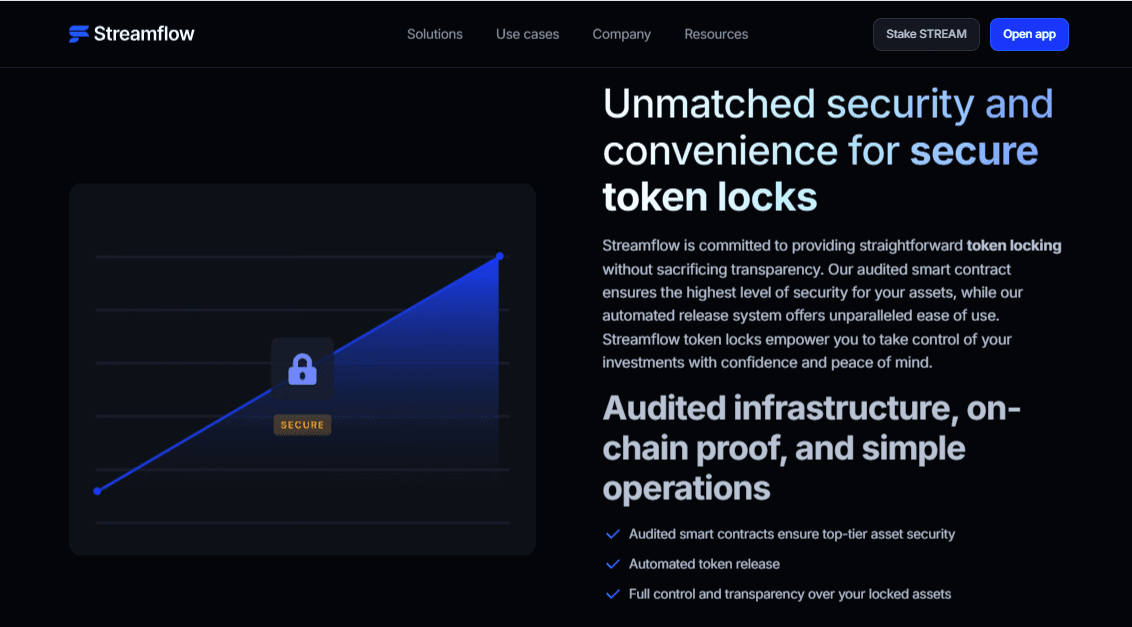
Streamflow runs the full sequence in one place: mint the token, lock supply, vest team allocations, and display everything publicly. The platform is permissionless and works with any SPL token, so a solo creator and a funded team use the same contracts.
Those contracts are audited by FYEO and OPCODES, and Streamflow is listed in the official Solana Docs under token vesting.
Costs follow Solana's economics. Teams pay smart contract creation fees plus network transaction fees, which stay low on Solana; the current schedule is in the Streamflow fees documentation. The same account later extends to airdrops for up to 1 million recipients and no-code staking pools, without migrating to new tooling.
Case Study: How Bonk Turned Vesting Into a Trust Signal
Bonk launched as a Solana meme coin with 55% of supply allocated to airdrops for early Solana users. The remaining supply was reserved for early contributors and operating expenses. That left the question every meme coin faces: what stops insiders from selling?
Bonk answered it on-chain. The team used Streamflow to place 20% of total supply, allocated to 22 early contributors, on a 3-year linear vesting schedule. The outcome was trust and transparency for the community, because the insider allocation was publicly verifiable instead of promised.
The Bonk vesting case study shows the principle at scale. A token with no formal roadmap still gave holders hard proof about its largest insider allocation. Any creator launching today can apply the same structure in minutes.
What This Means for Founders and Token Creators
The practical takeaway is to treat the lock as part of the mint, not a follow-up task. A launch checklist in 2026 looks like this:
Create the token and finalize permissions in one sitting
Lock treasury and LP tokens before sharing the contract address
Put team allocations on vesting with a cliff
Publish proof links alongside the launch announcement
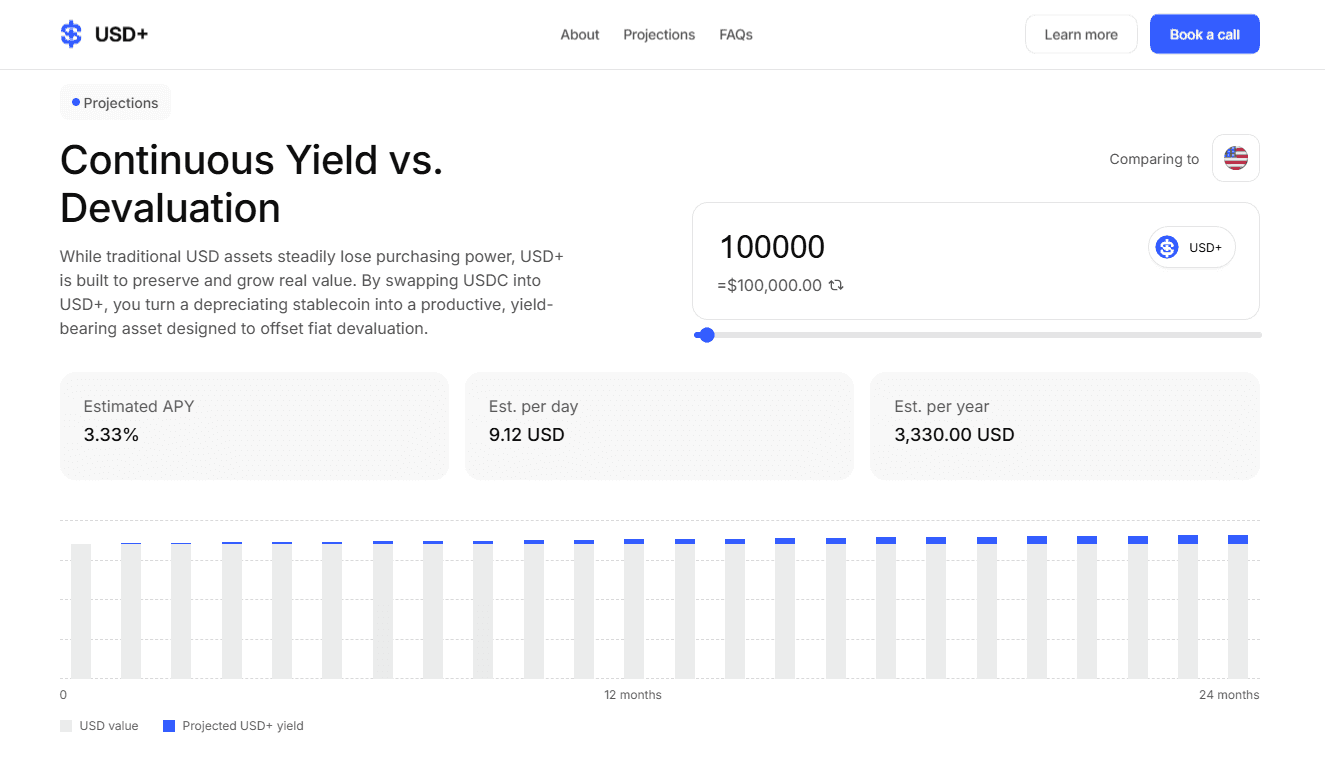
Automation does not replace design. Streamflow enforces whatever schedule is configured, so the allocation itself still has to make sense. For founders building a company around the token, Streamflow Business extends the same infrastructure to treasury management with USD+, payouts, on-chain cap tables, and tokenized SAFE agreements.
Conclusion
On a network that can mint 263,000 tokens in a day, creating a Solana token without coding is table stakes.
What separates a launch from the noise is supply that is provably locked before the first trade, and Streamflow makes that a 37-second step backed by audited, immutable contracts.
Book a demo to see how Streamflow handles token creation, day-one supply locks, and team vesting for a new Solana launch.
Read Next:
Streamflow vs Smithii in 2026: Why Streamflow Is the Better Token Platform to Launch With
Best Crypto Staking Platforms in 2026: APY, Fees, and Lockups Compared
FAQs:
1. How do you create a Solana token without coding in 2026?
You create a Solana token without coding in 2026 by using a no-code token minter such as Streamflow's token mint. Connect a Solana wallet, configure metadata, define supply, and set permissions through the interface. No smart contract development is needed.
2. Why should you lock token supply on day one?
You should lock token supply on day one because buyers check for locks before they buy, and a lock placed before the first trade signals intent instead of reaction. Locked tokens cannot be transferred, traded, or accessed before unlock. On Streamflow, the lock takes about 37 seconds to set up.
3. What is the difference between a token lock and token vesting?
The difference between a token lock and token vesting is the release pattern. A token lock restricts tokens until a single unlock condition is met, such as a date or price level. Token vesting releases tokens gradually on a schedule, often after a cliff.
4. How much does it cost to create and lock a Solana token on Streamflow?
The cost to create and lock a Solana token on Streamflow consists of smart contract creation fees plus Solana transaction fees. Solana's near-zero network fees keep the total low compared with equivalent setups on Ethereum. Current fees are published in Streamflow's documentation.
5. Can investors verify that a Solana token's supply is locked on Streamflow?
Investors can verify that a Solana token's supply is locked on Streamflow through public proof links, public dashboards, and block explorers. Every lock is checkable on Solscan, Solana Explorer, and RugCheck. The contracts are audited by FYEO and OPCODES and cannot be changed once deployed.
