General
Best Platforms for Token Locks in 2026: Complete Review
Streamflow is the most complete token lock platform on Solana, trusted by over 40,000 projects and more than $1.4 billion in total value locked.
Token locks have become one of the most critical signals of credibility in Web3, separating projects that demonstrate genuine long-term commitment from those that exit at the first opportunity.
This article reviews the best platforms available for token locking in 2026 so founders, investors, and community members can make an informed choice.
Key Takeaways
Token locks are immutable on-chain commitments, no transfers until conditions are met.
Streamflow leads in 2026: $1.4B+ TVL, audited contracts, full token ops stack.
Your lock platform is a public trust signal, choose infrastructure investors recognize.
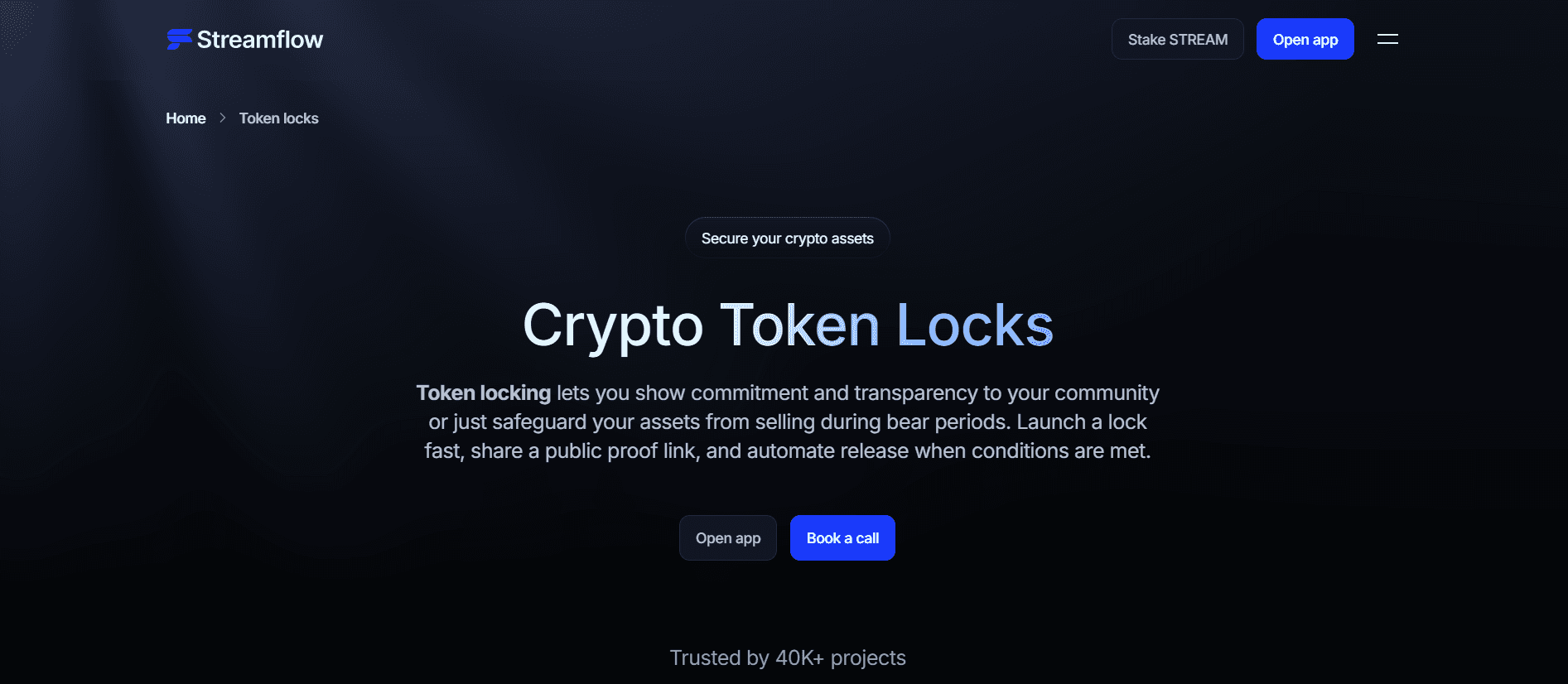
What Are Token Locks
Token locks are on-chain mechanisms that restrict tokens from being transferred, sold, or accessed until predefined conditions, such as a specific date, time period, or price level, are met.
When a project locks tokens on-chain, those tokens are held inside a smart contract and cannot be moved by anyone, including the team, until the unlock criteria are fulfilled.
This is different from simply holding tokens in a wallet. A lock is enforced by the blockchain itself, no admin key, no override, no exception. The contract executes as written. This makes token locks one of the most powerful and credible signals a project can send to its community.
Token locks should not be confused with token vesting, which refers to the gradual, scheduled release of tokens over time, often combined with a cliff period. Locks are typically binary, tokens are either locked or they are not, while vesting introduces time-based release mechanics.
They should also not be confused with liquidity locks, which specifically lock LP tokens to prevent a project from pulling liquidity from a DEX, or with token staking, where tokens are deposited into a protocol to earn rewards. Locks, in their purest form, are about restricting access and proving commitment.
Benefits of Token Locks in 2026
Token locks have evolved from a basic community goodwill gesture into a fundamental piece of token operations infrastructure. In 2026, the market has become sophisticated enough to expect them, and to scrutinize them closely.
1. Investor and Community Confidence
When team allocations, treasury reserves, or investor tranches are locked on-chain, it reduces uncertainty around the token supply. It signals that the team is not in a position to dump tokens and exit.
This alone can materially improve a project's ability to attract serious investors, as locked tokens cannot be transferred, traded, or accessed before the unlock conditions are met.
2. Reduced Sell Pressure and Supply Control
Locked tokens are removed from the circulating supply for the duration of the lock period. This directly reduces the available token supply and, all else equal, applies upward pressure on token price.
For projects that need to manage emissions carefully in their early months, locking team and investor allocations is a key lever.
3. On-Chain Transparency and Verifiability
The best platform for token locks in 2026 must provide publicly accessible proof links and verification on Solana explorers such as Solscan and Solana Explorer.
This means anyone: investor, community member, or analyst, can verify lock conditions without relying on a team's word. That level of transparency is the baseline expectation in a maturing market.
4. Rug-Pull Prevention
Locks enforced through immutable smart contracts remove the ability for insiders to misuse allocations, exploit governance, or execute early exits. Audited smart contracts, like those used by Streamflow, audited by FYEO and OPCODES, are an additional layer of protection, ensuring that the lock mechanics themselves cannot be exploited.
5. Credibility as a Listing and Integration Signal
For projects seeking DEX listings, partnership integrations, or DAO governance participation, demonstrating locked team and investor tokens has become a near-standard requirement.
Platforms that provide shareable proof links and public dashboards make this verification process frictionless for third parties.
Best Platforms for Token Locks in 2026
The token lock market on Solana and across Web3 has matured considerably. Here is an honest review of the leading platforms, what they do well, and where Streamflow stands apart.
1. Streamflow: Best Overall Token Lock Platform on Solana
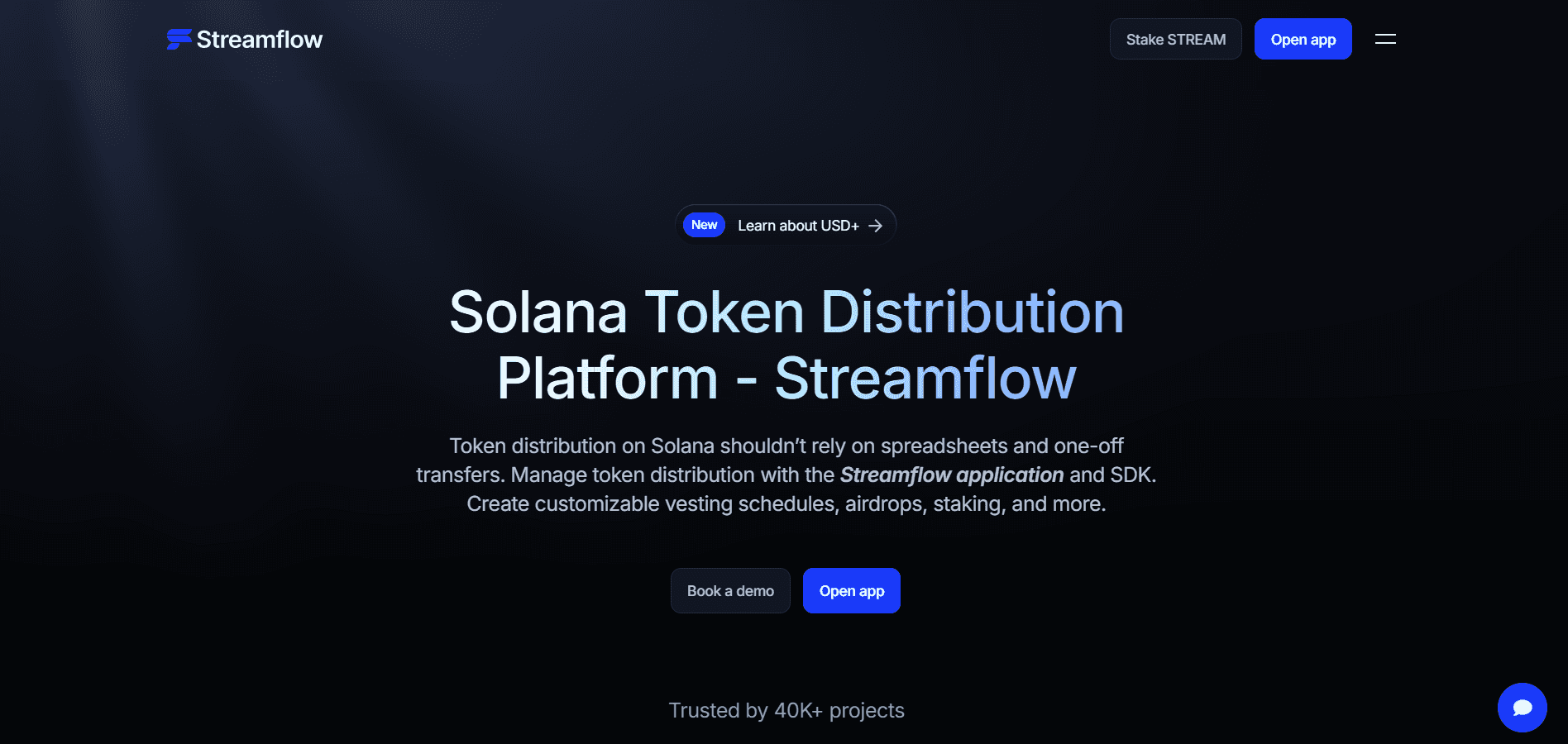
Streamflow is the leading token operations infrastructure platform on Solana, and its token lock product is the most complete and widely adopted in the ecosystem.
With over $1.4 billion in total value locked, more than 1.3 million users, and 40,000+ projects relying on it, Streamflow has earned its position as the infrastructure layer behind token economies on Solana.
Token locks on Streamflow support both time-based and price-based unlock conditions, giving teams full flexibility in how they structure their commitments. Locked tokens cannot be transferred, traded, or accessed until the specified unlock criteria are met, enforced entirely by immutable smart contracts with no admin override capability.
This eliminates the risk of insider manipulation and rug-pull scenarios that continue to erode trust in newer projects.
Every lock on Streamflow generates a shareable public proof link and is fully verifiable on Solscan and Solana Explorer, and even RugCheck, which many investors consult before participating in a new project.
The platform's tokenomics dashboard provides a real-time view of all lock contracts, offering a single source of truth for token distribution that teams can share with investors and communities with zero friction.
Beyond Token Locks
What sets Streamflow apart from every other platform in this review is that token locks are just the entry point.
Streamflow is a full-stack token operations infrastructure platform, covering vesting, airdrops (up to 1 million recipients), no-code staking pools, programmable payments, token minting, a tokenomics dashboard, and white-label portals.
Teams that start with a token lock on Streamflow have access to every tool they need to manage the full token lifecycle without switching platforms.
Streamflow is Solana-native and built to take advantage of Solana's sub-second finality, near-zero fees, and 65,000+ TPS throughput. The platform is listed in the official Solana documentation under token vesting, a trust signal that few competitors can claim.
Ready to lock your tokens? Start on Streamflow and have your first lock contract live in minutes.
2. Magna
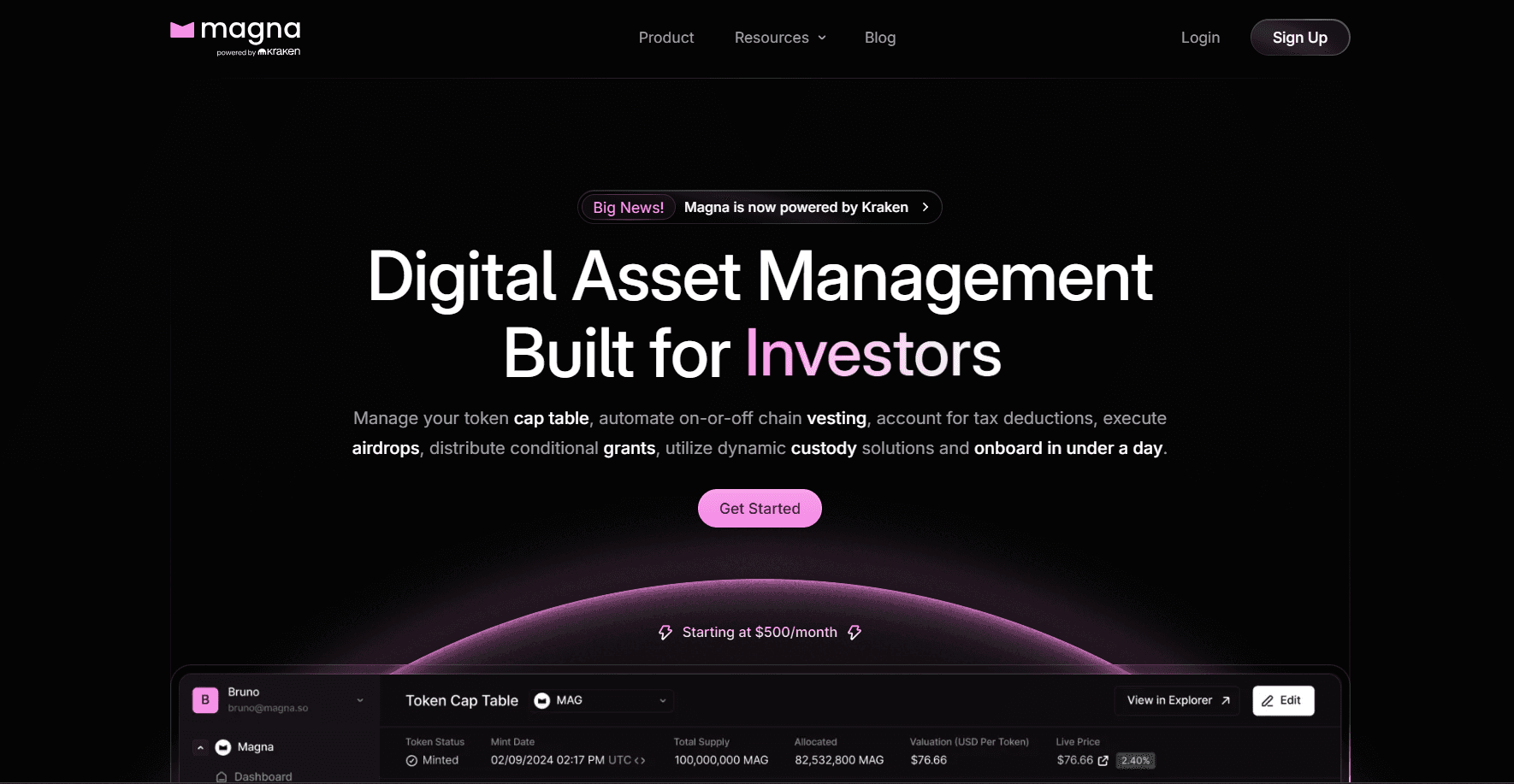
Magna is a token vesting and distribution platform that targets venture-backed projects, offering vesting schedule management and cap table tools. It provides a clean interface for managing investor and team allocations and has built some adoption among early-stage Web3 projects looking for a structured way to handle contributor vesting.
Magna offers solid vesting management functionality, but its scope is narrower than what teams typically need as they scale.
Where Streamflow goes further: Streamflow combines token locks, vesting, airdrops, staking, and payments in a single platform, eliminating the need for teams to stitch together multiple tools as their token economy grows. Streamflow also brings significantly more on-chain transparency, with public proof links and explorer verification natively built into every contract.
For Solana-native projects in particular, Streamflow's performance advantage is material. Built directly on Solana's infrastructure with sub-second finality and near-zero fees, Streamflow enables token lock and vesting operations at a fraction of the cost that cross-chain or Ethereum-native alternatives require, and at a scale that Magna has not demonstrated in terms of TVL or project adoption.
Magna may suit very early-stage teams looking for a simple vesting interface, but for projects that need a credible, verifiable, and scalable infrastructure layer, Streamflow's $1.4B+ TVL and 40,000+ project base speak to a category difference.
3. Hedgey
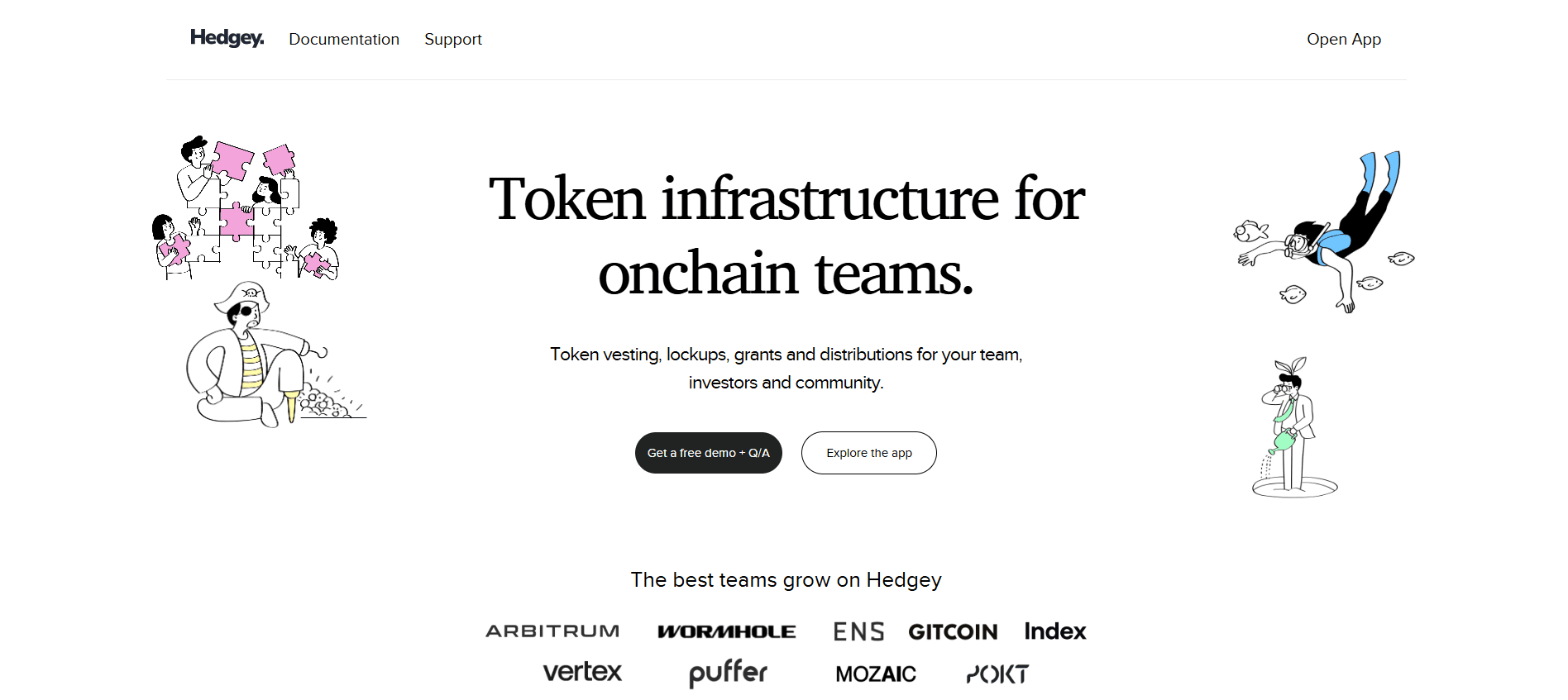
Hedgey is a multi-chain token distribution platform offering token vesting, lockups, and grants management. It supports several EVM chains and has built tooling aimed at DAOs and on-chain grants programs, making it a reasonable option for teams operating in Ethereum-adjacent ecosystems.
Hedgey's multi-chain approach is useful for projects that need to operate across EVM chains, but for Solana-native projects, it is not the right fit. Streamflow is purpose-built for Solana, meaning it benefits from Solana's 65,000+ TPS throughput, sub-second finality, and near-zero fees, which translate directly into lower costs and faster execution for token lock deployments.
Hedgey offers grants and vesting tooling that works reasonably well for DAO contributor payouts, but it does not provide the comprehensive token operations stack that Streamflow delivers.
There is no airdrop infrastructure capable of reaching up to 1 million recipients, no built-in staking pool creation, and no native tokenomics dashboard providing a public, real-time view of token distribution.
For teams that want a single platform across the full token lifecycle, Hedgey requires significant external tooling.
Streamflow's audited smart contract security, verified by FYEO and OPCODES, and its listing in the official Solana documentation position it as the more credible and complete infrastructure choice for projects that need locks, vesting, and distribution under one roof.
4. Jupiter (Lock Feature)
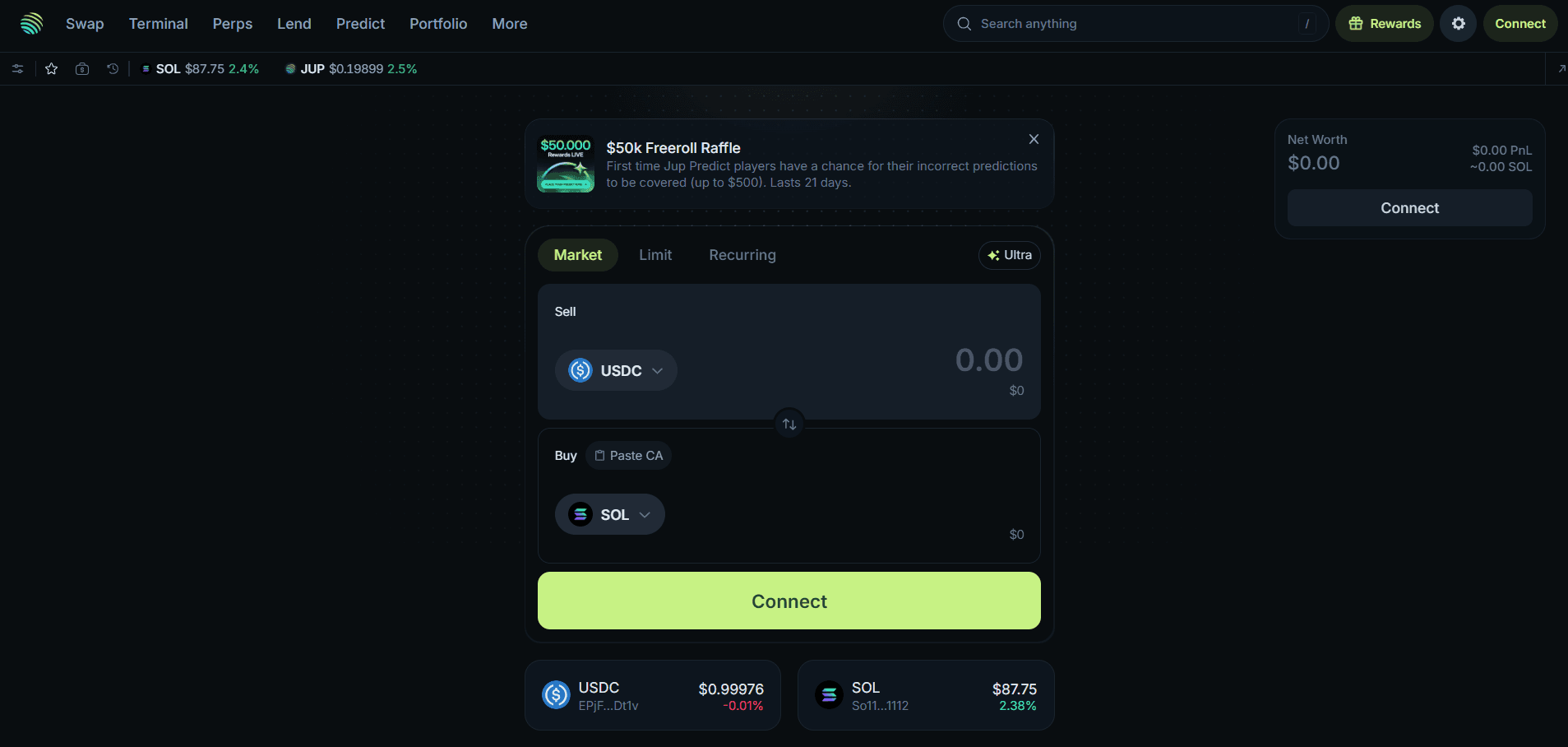
Jupiter is one of Solana's most widely used DEX aggregators, and it has introduced a token lock feature that allows projects to lock team and investor tokens directly from its interface.
Given Jupiter's position as a high-traffic Solana application, its lock feature benefits from existing user familiarity and ecosystem integration.
Jupiter's lock feature is a practical addition for projects already operating within its ecosystem, but it is a point solution, not a platform.
Streamflow is purpose-built for token operations infrastructure, meaning it offers considerably more depth:
Time-based and price-based unlock conditions
Automatic release mechanics
Public tokenomics dashboards
Shareable proof links
Explorer verification across Solscan, Solana Explorer, and RugCheck.
Jupiter's primary value is as a DEX aggregator, and its lock feature reflects that focus, it handles a basic use case but does not extend to the broader token lifecycle needs that projects encounter post-launch.
Teams that need vesting schedules for multiple stakeholder groups, bulk CSV imports for large contributor cohorts, staking infrastructure, or airdrop capabilities will quickly find themselves looking for additional tooling.
Streamflow serves as the infrastructure layer for projects that have moved beyond a single lock and are managing the full complexity of a token economy, from initial lock through vesting, airdrops, staking rewards, and ongoing payments. That full-stack capability, combined with $1.4B+ TVL and 1.3M+ users, is the relevant comparison point.
5. FluxBeam
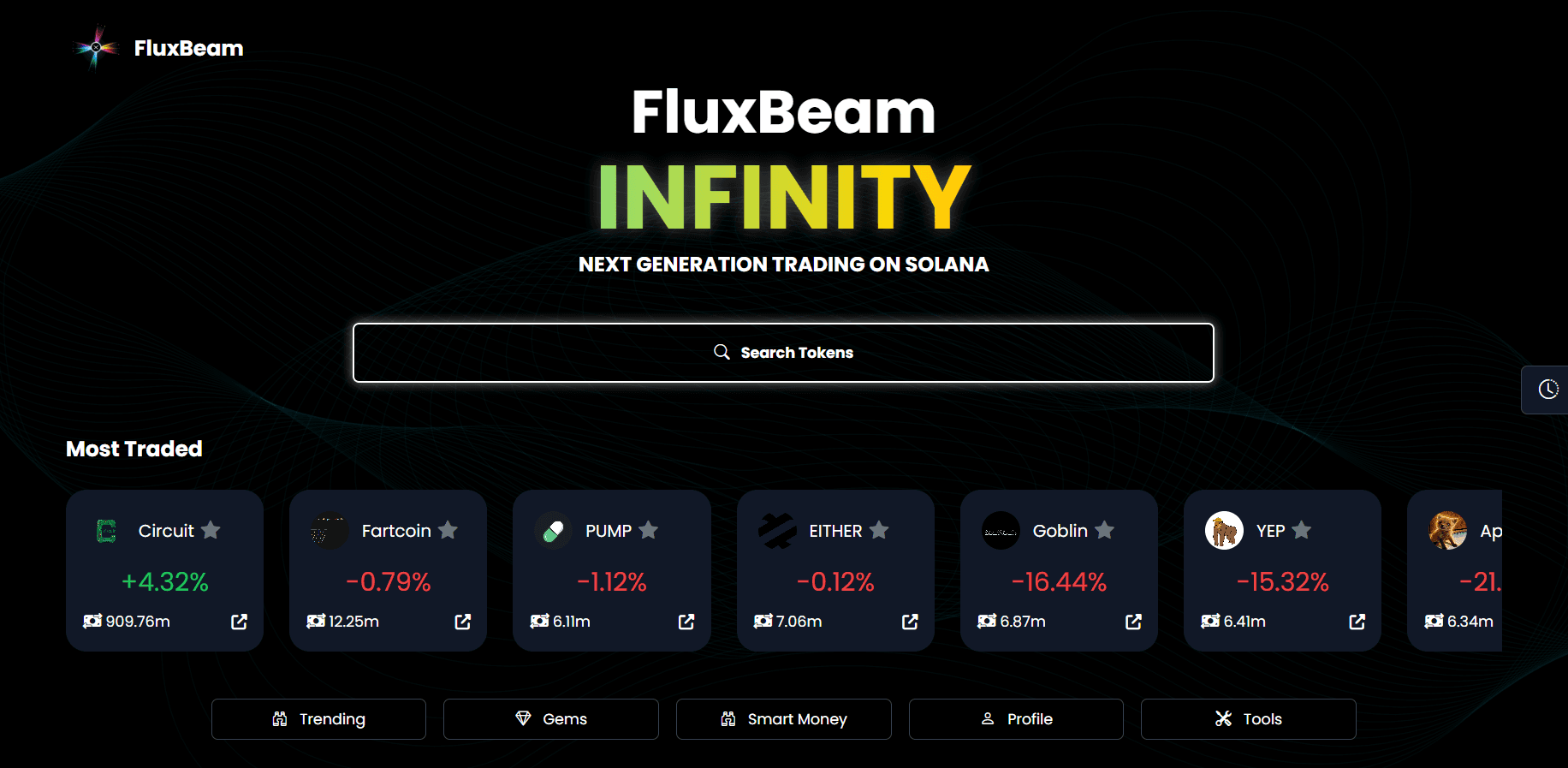
FluxBeam is a Solana-native DEX that has expanded its tooling to include a token locker, supporting both standard SPL tokens and the newer Token Extensions (Token2022) standard.
It was among the first platforms on Solana to embrace Token2022, which earned it a Solana Foundation grant and visibility at Breakpoint 2023, making it a recognized name in the Solana builder community.
The FluxBeam token locker lets projects lock Solana-based tokens for a specified time frame and does handle the Token2022 standard, which is a genuine differentiator for projects using extended token functionality.
For simple, time-based locks tied to a DEX-native workflow, it serves its purpose. However, where FluxBeam remains a point tool, Streamflow operates as a full token operations platform, offering price-based unlock conditions, automatic release mechanics, bulk CSV imports, shareable proof links, and explorer verification across Solscan, Solana Explorer, and RugCheck, none of which FluxBeam's locker provides natively.
The deeper gap is in platform depth. FluxBeam is primarily a DEX, and its token locker reflects that focus, it handles a specific, narrow use case without extending into the vesting schedules, airdrop infrastructure, staking pools, or tokenomics dashboards that projects need as they grow.
Teams using FluxBeam for locks will find themselves reaching for additional tooling almost immediately post-launch.
6. Smithii Tools
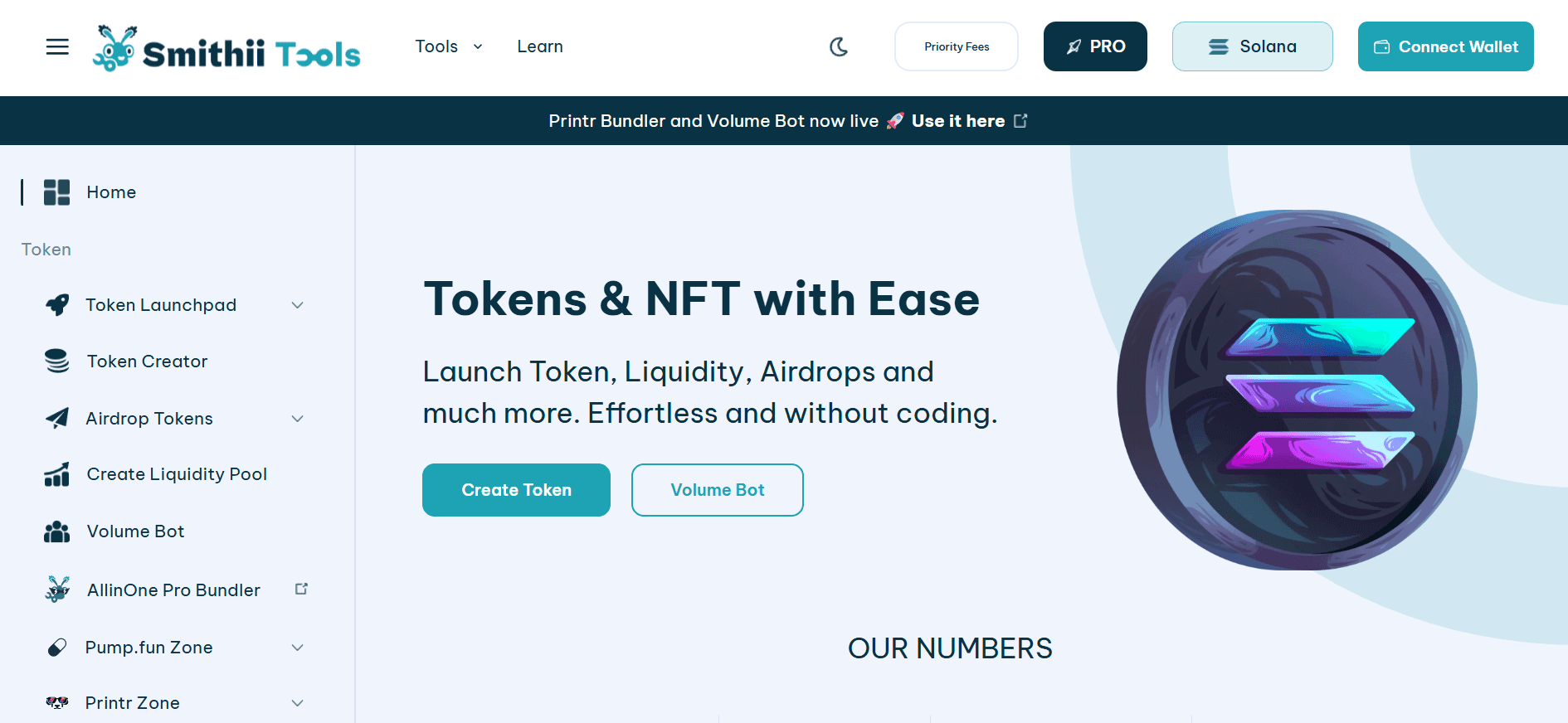
Smithii Tools is a multi-chain web3 toolkit that includes a Solana token vesting and lock product, audited by CoinFabrik, with a no-code interface and thousands of monthly users. It supports both SPL token locks and LP token locks on Solana, and its straightforward UX makes it accessible to early-stage teams and meme coin creators who want a quick lock with minimal friction.
Smithii's audit from CoinFabrik and its support for liquidity pool token locking are genuine positives, locking LP tokens to prevent rug-pull accusations is a valid use case, and Smithii handles it simply.
For very early projects with a narrow, immediate need and no plans for broader token operations, it is a functional option. That said, the platform's scope stops sharply at the lock itself, with no public tokenomics dashboards, no token vesting schedule configuration, no airdrop tooling, and no staking infrastructure.
Where Smithii provides a certificate-style proof of lock, Streamflow provides public proof links verifiable directly on Solscan, Solana Explorer, and RugCheck, the explorers and security tools that serious investors and due diligence processes actually use.
The credibility signal carried by a Streamflow lock, backed by audits from FYEO and OPCODES and recognized in the official Solana documentation, is materially stronger than what a smaller toolkit can provide.
For projects that start with a simple lock and then need vesting for contributors, airdrops for community distribution, or staking pools for holder retention, Smithii offers no path forward within the same platform. Streamflow covers the entire lifecycle, making it the more strategic choice for any team building beyond the earliest stage.
Why Streamflow Is the Best Platform for Token Locks on Solana in 2026
Streamflow is the best platform for token locks on Solana because it is:
Audited smart contracts (FYEO + OPCODES), no admin override possible
Time-based and price-based unlock conditions
Public proof links + Solscan / Solana Explorer / RugCheck verification
Real-time tokenomics dashboard, single source of truth
Full token lifecycle platform: locks, vesting, airdrops, staking, payments
$1.4B+ TVL | 1.3M+ users | 40K+ projects
Listed in official Solana Docs
Deployable in as little as 37 seconds, no code required
Streamflow wins the category not because of a single feature advantage, but because of the combination of depth, security, transparency, and scale it delivers across the entire token operations stack.
Token locks on Streamflow are enforced through immutable smart contracts that cannot be modified, overridden, or cancelled by any party once deployed.
This is the highest possible standard for lock credibility, backed by audits from FYEO and OPCODES, open-source contracts, and on-chain verification that anyone can inspect at any time.
The platform's tokenomics dashboard gives projects a real-time, public-facing view of all locked allocations, vesting schedules, and unlock events, turning what is often an opaque process into a transparent investor relations asset.
Shareable proof links make it trivial to demonstrate locked commitments in due diligence, community updates, and exchange listing applications.
Beyond locks, Streamflow provides everything a project needs to manage its token economy:
Linear, cliff, milestone, and price-based vesting schedules
Airdrops for up to 1 million recipients
No-code staking pools with configurable reward logic
Programmable payments for contributor payroll
White-label portals for branded experiences
A token minter
No other platform reviewed here matches this breadth.
For Solana-native projects specifically, Streamflow's performance advantage is compounding. Sub-second finality and near-zero fees on Solana mean that deploying and managing lock contracts costs a fraction of what Ethereum-based alternatives require, and scales without degradation as project size grows.
How to Start Locking Tokens on Solana with Streamflow
Getting started with token locks on Streamflow is straightforward and requires no smart contract development.
Connect your wallet: Visit app.streamflow.finance and connect a Solana-compatible wallet: Phantom, Solflare, or Backpack all work natively.
Select Token Locks: Navigate to the Token Locks section and click to create a new lock contract.
Define your lock parameters: Choose the token, the amount, and the unlock conditions, time-based (fixed date) or price-based. Configure automatic release if desired.
Fund the contract: Deposit the tokens into the smart contract. Once funded, the tokens are secured on-chain and cannot be moved until unlock conditions are met.
Share your proof link: Streamflow generates a shareable public proof link for every lock. Share it with your community, investors, and any third parties who need to verify your commitment.
The lock is also immediately verifiable on Solscan, Solana Explorer, and RugCheck.
Conclusion
Streamflow is the most complete, secure, and widely trusted platform for token locks on Solana in 2026, and the infrastructure layer that serious projects choose when the credibility of their token economy is on the line.
From audited immutable smart contracts and public proof links to a full-stack platform that spans vesting, airdrops, staking, and payments, Streamflow does more than lock tokens: it turns tokenomics from a plan into an enforceable, transparent system.
The platforms reviewed in this article each serve a segment of the market, but none match the depth, scale, or Solana-native performance that Streamflow delivers.
With $1.4B+ in total value locked, 1.3M+ users, and 40,000+ projects, Streamflow is the proven infrastructure choice for token operations in 2026.
Book a demo with Streamflow to discuss your project's token lock and distribution needs, or launch on Streamflow directly and have your first lock live in minutes.
Read Next:
FAQs:
1. What is a token lock and how does it work?
A token lock is an on-chain mechanism that restricts tokens from being transferred, traded, or accessed until predefined conditions, such as a specific date, time period, or price level, are met. Token locks work by depositing tokens into a smart contract that holds them securely on-chain, enforcing the unlock conditions automatically without requiring any human action.
2. What is the difference between a token lock and token vesting?
A token lock and token vesting are related but distinct mechanisms. A token lock restricts the entire locked amount until a single unlock condition is met, after which all locked tokens become accessible at once. Token vesting releases tokens gradually over time according to a predefined schedule, often with a cliff period before any tokens are released.
3. Can a token lock be modified or cancelled after deployment on Streamflow?
No. A token lock deployed on Streamflow cannot be modified or cancelled after deployment.
4. How do investors verify that tokens are locked on Streamflow?
Investors can verify token locks on Streamflow through multiple channels. Every lock contract generates a shareable public proof link accessible by anyone without needing to connect a wallet or create an account. Lock contracts are also verifiable directly on Solscan, Solana Explorer, and RugCheck by searching the contract address.
5. Why is Streamflow considered the best token lock platform on Solana?
Streamflow is considered the best token lock platform on Solana because it combines the deepest feature set, the strongest security credentials, and the most proven track record in the ecosystem.