General
Top 5 Ways to Grow Your NFT Project with Streamflow in 2026
The NFT market has quietly shifted from speculation to utility. Active participation in NFTs grew 80% year-over-year heading into 2026, signaling renewed interest rooted in utility rather than FOMO, according to EarnPark's 2026 NFT market analysis.
The projects winning that shift are the ones turning one-time buyers into long-term holders, and Streamflow is the Solana-native token operations infrastructure that makes that possible, with over $1.4B in total value locked and 40,000+ projects already building on it.
Growing an NFT project in 2026 is no longer about minting out and hoping the floor holds. It is about reward systems, transparent token distribution, and incentives that keep your community engaged long after the drop.
Solana processes roughly 18% of all NFT transactions, driven by high-throughput, low-fee mints and trades, which makes it the natural home for the kind of high-frequency reward distribution that retention demands.
This article breaks down five concrete, infrastructure-backed ways to grow your NFT project with Streamflow, each tied to a real Streamflow product and a real outcome. No vague growth-hacking advice, just the systems that move retention, trust, and community alignment.
Key Takeaways
Streamflow lets NFT projects reward holders, run airdrops, and vest team tokens on Solana.
Holder rewards and vested airdrops turn one-time NFT buyers into long-term aligned community members.
Token locks and vesting on Streamflow give NFT projects verifiable, on-chain proof of commitment.
Over 40,000 projects use Streamflow for token distribution, locks, staking, and airdrops.
Streamflow automates NFT growth mechanics without smart contract development or manual transfers.
The Criteria: What Actually Drives NFT Project Growth in 2026
Before the five tactics, it helps to define what "growth" means for an NFT project today. Floor price and mint revenue are vanity metrics if your holders churn the week after the drop. Durable growth comes from a handful of repeatable mechanics.
Use these criteria to evaluate any growth tactic:
Retention impact: Does it give holders a reason to keep their NFTs instead of flipping?
Trust signal: Does it prove to the market that the team is committed and not preparing to dump?
Scalability: Can it reach thousands or millions of holders without manual work or errors?
Transparency: Can holders verify everything on-chain rather than trusting a promise?
Cost efficiency: Does it stay economical at scale, given how often NFT communities expect rewards?
Each of the five methods below scores well on multiple criteria. They share one thing in common: they replace manual, trust-me operations with automated, verifiable smart contracts. That is the difference between a project that fades after mint and one that compounds a community over time.
1. Reward Your Holders With Automated, Recurring Token Distributions
The single most reliable retention lever for an NFT project is rewarding the people who hold. The community behind a project plays a major role in its growth, with social events, campaigns, and regular updates keeping holders connected to the brand. Token rewards make that connection tangible.
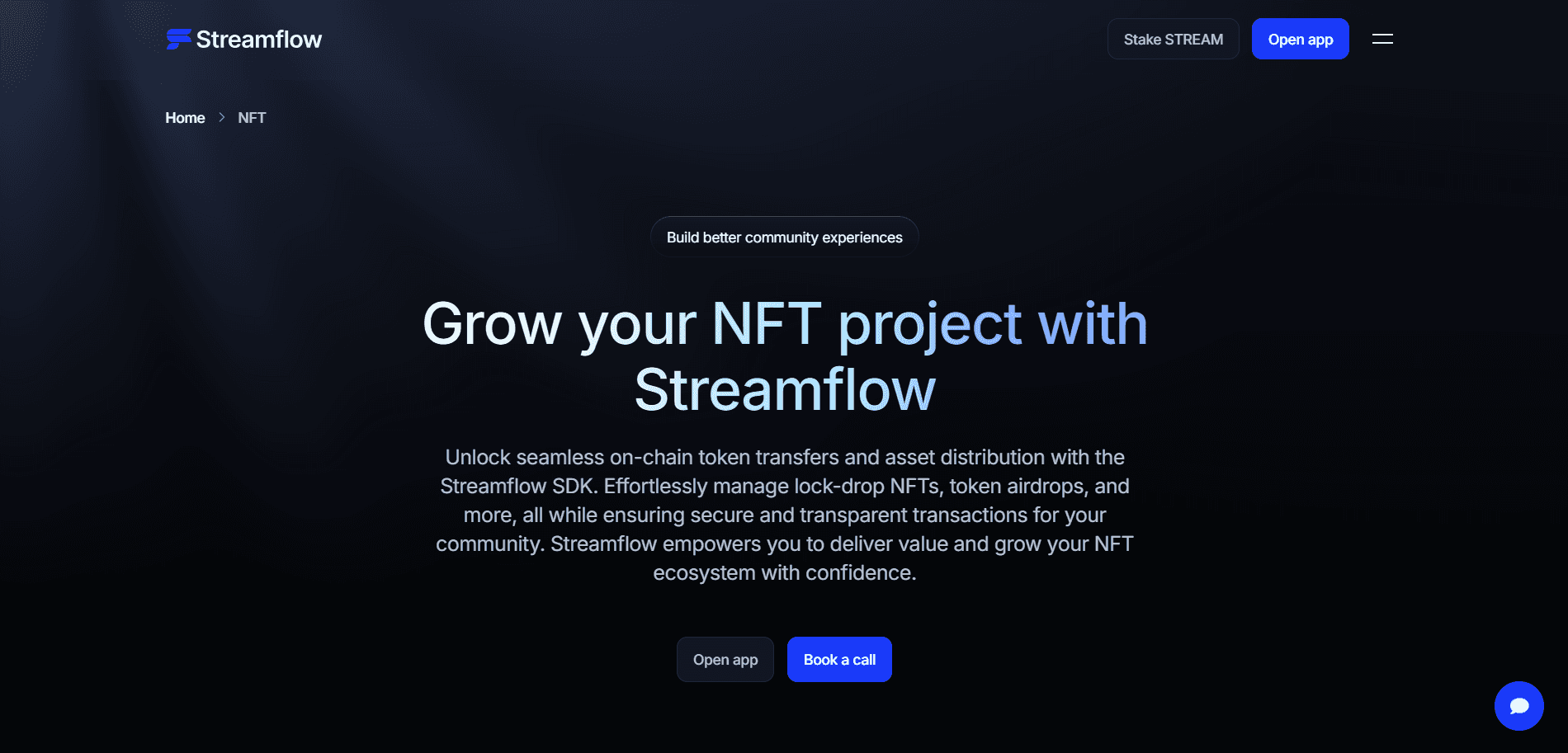
Streamflow's NFT solution is built specifically for this. Instead of manually sending tokens to holder wallets every cycle, you define the logic once and let smart contracts execute it.
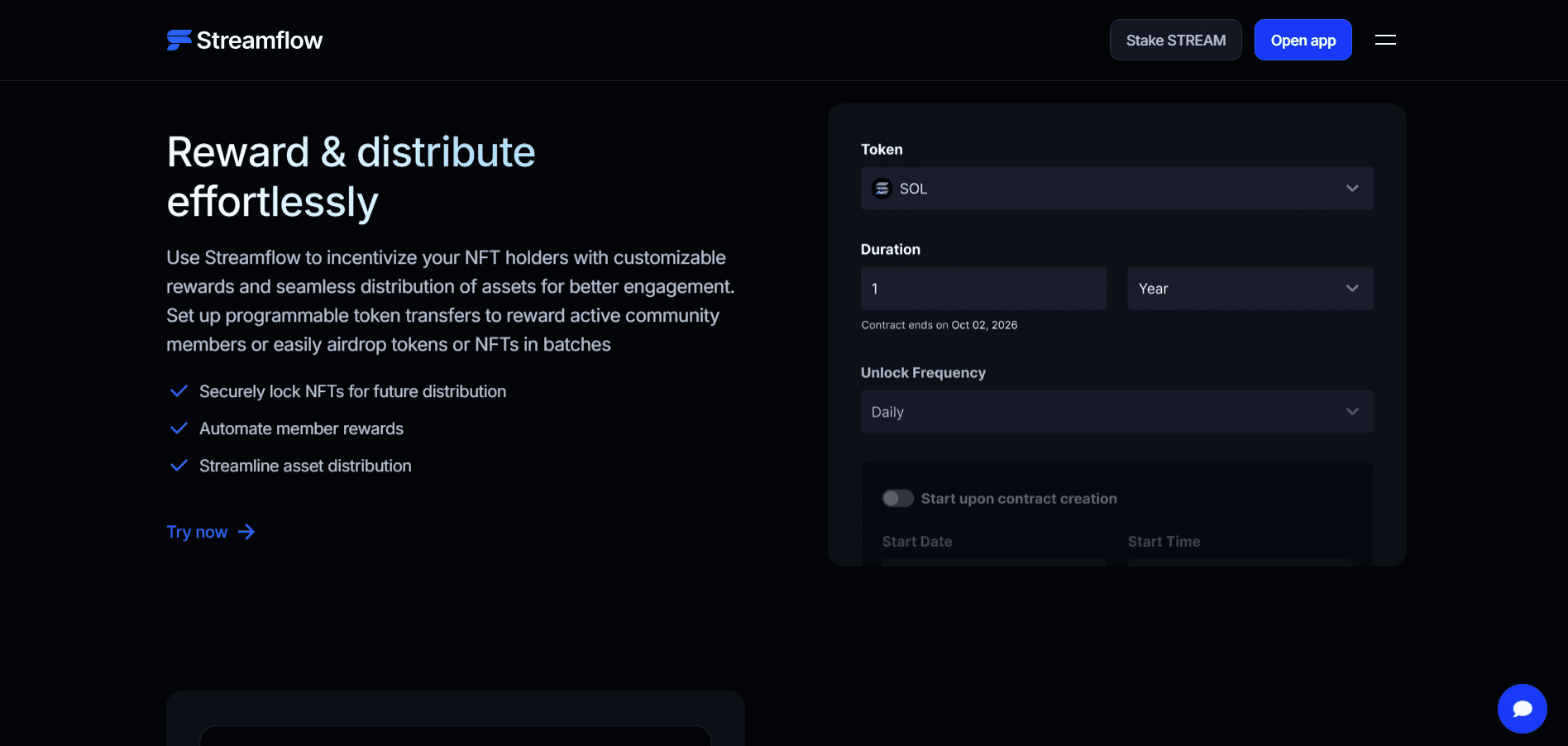
Distribute rewards to active community members on a recurring schedule.
Segment by NFT holder status so only eligible wallets receive allocations.
Push reward deposits directly into wallets with no claim friction.
Access metadata for every processed transfer for clean accounting.
For example, a Solana collectibles project can set up NFT holder rewards that pay out a community token weekly to every wallet still holding the original mint. Holders who sell forfeit the stream, which builds a structural incentive to hold. The whole system runs on-chain, so holders can verify their rewards on Solscan rather than trusting a Discord announcement.
Recurring holder rewards turn a static collection into a living economy, which is exactly the kind of utility the 2026 market rewards.
2. Run Vested Airdrops to Reward Loyalty Instead of Mercenaries
Airdrops are the fastest way to expand an NFT community, but instant airdrops attract farmers who dump immediately. Vested airdrops fix this by releasing tokens gradually, filtering out mercenaries and rewarding genuine long-term holders.
Streamflow's airdrop launch platform supports instant, vested, and price-based airdrops at serious scale.
Distribute to up to 1 million recipients in a single campaign.
Import up to 100,000 recipients per CSV file.
Run claim portals with real-time delivery and claim tracking.
Automatically return unclaimed tokens after the claim window closes.
Consider a GameFi-adjacent NFT project rewarding its earliest holders. Instead of a flat instant drop, it structures a vested airdrop via the SDK so allocations unlock over several months. The holders who stay get the full reward, the flippers self-select out. You can pair this with eligibility filtering and snapshot logic to target only wallets that meet your loyalty criteria.
Vested airdrops convert a growth spike into a retention engine, which is the difference between a temporary numbers bump and a real community.
3. Launch a Staking Program to Reduce Sell Pressure and Reward Engagement
If your NFT project has a token, staking is how you reduce circulating supply and reward the holders who believe in the long game. Streamflow's staking pools on Solana let you deploy a full staking program without writing or auditing custom contracts.
Stake any SPL token with configurable APY and lock periods.
Choose pool types: Fund Once, Continuous Funding, Governance Staking, or Custom.
Distribute rewards automatically with easy top-ups.
Keep pools fully non-custodial with public, real-time staking data.
Teams use staking for clear strategic reasons: reduce sell pressure, reward holders, drive engagement, and support governance. An NFT project can spin up a governance staking pool so holders who stake gain voting weight on roadmap decisions, deepening their stake in the project's direction.
You can launch a staking pool on Streamflow in minutes, with rewards flowing to stakers without any manual intervention.
Staking gives your most committed holders a reason to lock in rather than sell, tightening supply and strengthening the community core.
4. Lock Team and Treasury Tokens to Build Verifiable Trust
Nothing kills an NFT project faster than a perceived rug. The fastest way to earn community trust is to prove, on-chain, that your team cannot dump. Streamflow turns token locking into a transparent trust signal.
With token locks on Solana, you restrict tokens from being transferred, traded, or accessed until predefined conditions are met.
Set fixed-date unlocks or price-based unlock conditions.
Generate public proof links and dashboards anyone can verify.
Lock SPL tokens, LP tokens, team allocations, and treasury funds.
Verify everything on Solscan, Solana Explorer, or RugCheck.
For instance, an NFT project allocating tokens to its founding team can lock those allocations with a public dashboard, then share the proof link in its docs. Prospective holders see immutable evidence that the team is committed for the long haul.
Solana's high-throughput, low-fee design makes locking and verifying these commitments far more cost-efficient than doing the same on Ethereum.
Locked tokens that the whole market can verify are the cheapest, strongest trust signal an NFT project can send.
5. Vest Team and Contributor Allocations for Long-Term Alignment
Locks prove commitment for a fixed window. Vesting goes further by releasing tokens gradually over time, aligning your team, advisors, and contributors with the project's long-term success. Streamflow turns vesting schedules into immutable on-chain contracts that release exactly as designed.
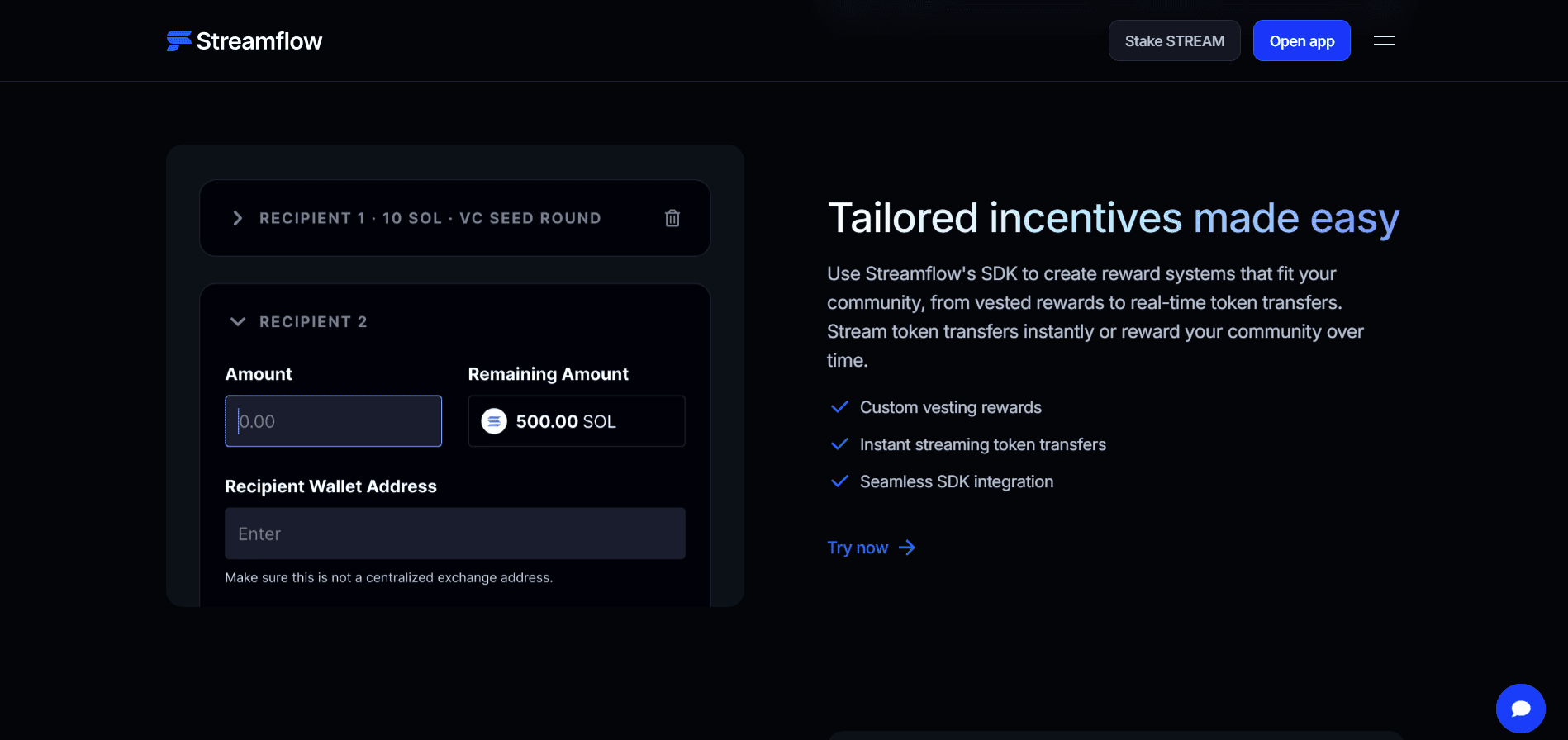
Automated token vesting supports every model an NFT project needs.
Linear, cliff, cliff-plus-linear, graded, milestone-based, and price-based vesting.
Bulk recipient import via CSV for large contributor groups.
Shareable proof links and explorer verification for transparency.
A standard 12-month cliff for founders and core team allocations.
This is exactly how serious Solana projects structure their distributions. In the Heavenland case study, the Solana metaverse project placed 97% of its $HTO token supply on a 5-year linear vesting schedule with cliffs across team, incentives, and treasury allocations. The design let Heavenland provide initial liquidity without excessive inflation, and the outcome was a more engaged and dedicated player community.
For NFT projects building real long-term value, vesting paired with Streamflow Business for financial operations extends this into full treasury and ownership management on Solana.
Vesting converts your team's incentives into code, so the people building your project are aligned with the holders for years, not weeks.
How to Choose the Right Growth Mechanics for Your NFT Project
You do not need all five at once. Sequence them based on where your project is.
Pre-launch or at mint: Lead with token locks and vesting to establish trust before you ask anyone to buy in.
Post-mint, building community: Layer in holder rewards and vested airdrops to convert buyers into long-term holders.
Scaling and governance: Add staking to reduce sell pressure and give committed holders a voice.
The common thread is that every mechanic above runs on audited, immutable smart contracts you configure without code. That means a small NFT team can operate growth infrastructure that used to require an engineering department.
Streamflow's NFT tooling, airdrops, staking, locks, and vesting all live in one platform, so you are not stitching together five vendors to run one community.
Case Study: How Bonk Used Streamflow to Build Trust at Scale
The trust mechanics above are not theoretical. Bonk, the Solana meme coin that became a cultural cornerstone of the ecosystem, used Streamflow for its core team vesting. The project allocated 20% of total supply to 22 early contributors on a 3-year linear vesting schedule.
That structure mattered because Bonk had already committed 55% of its supply to airdrops for early Solana users, making transparency around the remaining allocations critical. By vesting the contributor allocations on-chain through Streamflow, Bonk gave its enormous community verifiable proof that insiders could not dump.
The outcome was exactly the trust and transparency a community-first project needs to endure, the same outcome any NFT project chasing durable growth in 2026 is after.
Conclusion
The NFT projects growing in 2026 are the ones that replaced hype with utility, manual promises with on-chain proof, and one-time drops with recurring incentives.
Streamflow gives NFT teams the full stack to do this, holder rewards, vested airdrops, staking, locks, and vesting, all automated on Solana and verifiable by anyone.
With 40,000+ projects already building on the platform, the infrastructure for durable NFT growth is already proven.
Book a demo to see how Streamflow handles holder rewards, vested airdrops, and team vesting for a growing NFT project.
Read Next:
FAQs:
1. How can Streamflow help grow my NFT project in 2026?
Streamflow helps grow your NFT project in 2026 by automating the retention and trust mechanics that durable communities need. You can distribute recurring holder rewards, run vested airdrops to up to 1 million recipients, deploy no-code staking pools, and lock or vest team tokens for verifiable trust. Everything runs on audited on-chain smart contracts on Solana, so holders can verify it independently.
2. What is the best way to reward NFT holders on Solana?
The best way to reward NFT holders on Solana is automated, recurring token distribution segmented by holder status. Streamflow lets you push reward deposits directly into eligible wallets on a set schedule with no claim friction, and it captures transfer metadata for clean accounting. Because it runs on Solana, the high throughput and near-zero fees make frequent reward cycles economically viable.
3. Should NFT projects use instant or vested airdrops for growth?
NFT projects focused on growth should generally use vested airdrops rather than instant ones. Vested airdrops release tokens gradually, which filters out mercenary farmers who dump immediately and rewards genuine long-term holders. Streamflow supports instant, vested, and price-based airdrops at scale, so you can match the structure to your retention goals.
4. How do token locks help an NFT project build trust?
Token locks help an NFT project build trust by providing on-chain proof that team and treasury tokens cannot be transferred, traded, or accessed before the unlock conditions are met. Streamflow generates public proof links and dashboards that anyone can verify on Solscan, Solana Explorer, or RugCheck. This turns a "trust us" promise into verifiable evidence of commitment.
5. Is Streamflow's smart contract code audited and secure?
Yes, Streamflow's smart contracts are audited and built for security. The contracts have been audited by FYEO and OPCODES, are immutable once deployed, and execute entirely on-chain with verification available through Solscan and Solana Explorer. This reduces the risk of manipulation, insider misuse, and rug-pull behavior that can damage an NFT project's reputation.