General
Best Token Vesting Platforms for Solana: 2026 Complete Comparison
The crypto industry processed roughly $97 billion in token unlocks during 2025, according to data compiled by Tokenomist and CryptoRank.
Almost all of that supply moved through vesting schedules, the smart contracts that decide when team, investor, and community tokens become liquid.
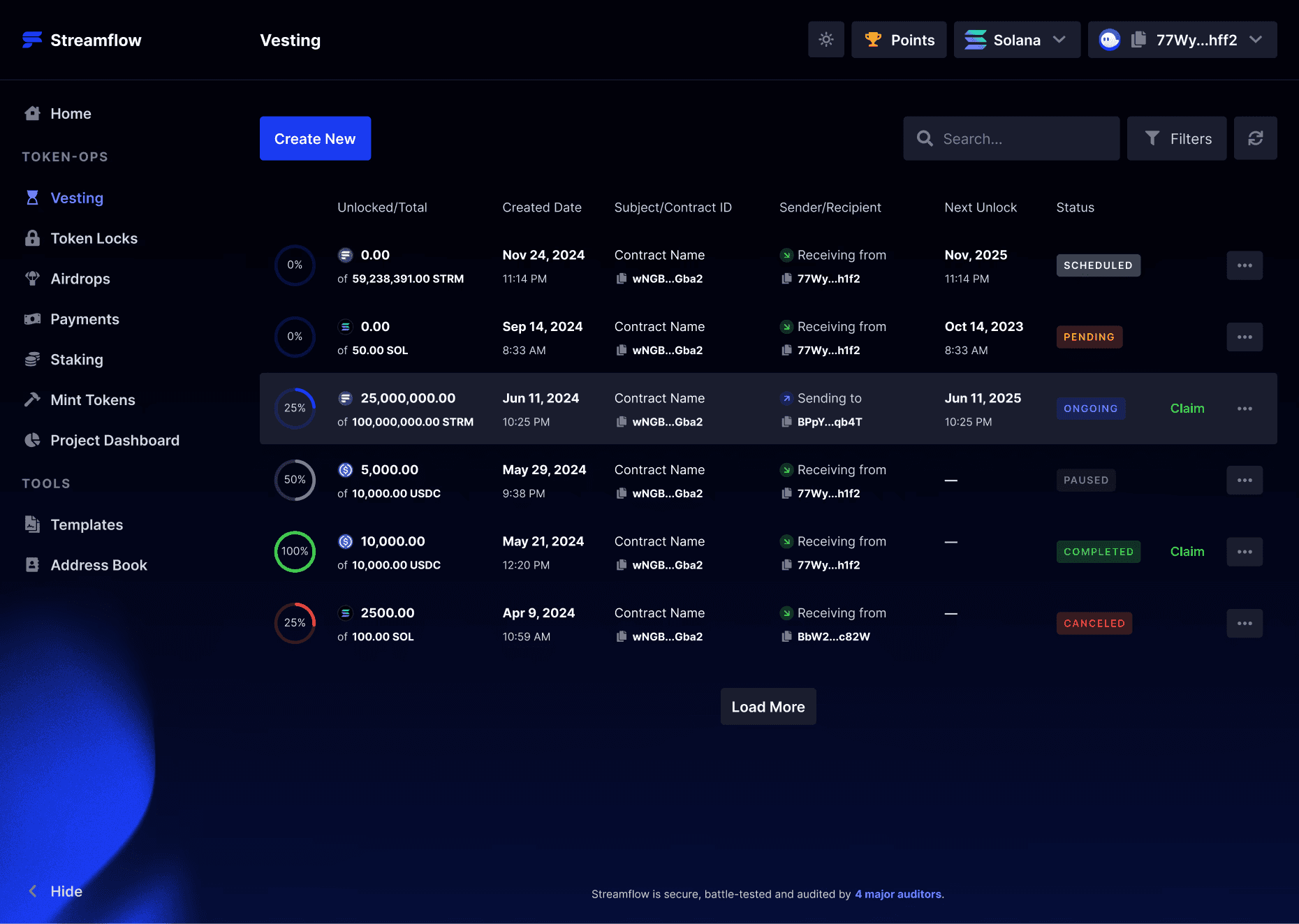
Streamflow, the Solana-native token operations platform that has processed over $1.4 billion in total value locked across 40,000+ projects, sits at the center of that activity on Solana.
On Solana, the choice of vesting platform is not cosmetic. A vesting schedule is enforced by a contract that, once deployed, controls real tokens for months or years. The wrong tool means manual errors, weak verifiability, or schedules that cannot adapt to how your token actually trades.
This guide compares the leading token vesting platforms for Solana in 2026, the criteria that separate them, and where each one genuinely fits. Here is the short version before the detail.
Key Takeaways
Streamflow leads Solana token vesting platforms with audited contracts, immutable schedules, and proven scale.
The best vesting platform depends on schedule flexibility, security audits, scale, and on-chain verifiability.
Streamflow supports linear, cliff, graded, milestone, and price-based vesting for any Solana allocation.
Over 40,000 projects use Streamflow for token vesting, locks, and on-chain distribution.
Jupiter Lock, Magna, Bonfida, and Smithii each fit specific Solana vesting use cases.
The Criteria for Choosing a Token Vesting Platform on Solana
Not every token vesting tool solves the same problem. Before comparing platforms, anchor your decision on the criteria that actually affect outcomes for token holders and your team.
On-chain enforcement and immutability: A schedule should be enforced by a smart contract that cannot be silently altered after deployment.
Schedule flexibility: Linear, cliff, graded, milestone-based, and price-based vesting cover different stakeholder groups and market conditions.
Security and verifiability: Audited contracts plus public proof links and explorer verification let investors confirm commitments themselves.
Scale and bulk operations: CSV import and multi-recipient contracts matter once you are vesting dozens or thousands of allocations.
Cost and ease of use: Solana's near-zero fees make on-chain vesting cheap, but no-code setup versus developer integration changes who can run it.
A memecoin locking founder tokens has different needs from a DeFi protocol vesting four stakeholder groups across four years. Weigh these five criteria against your own structure before picking a platform.
1. Streamflow
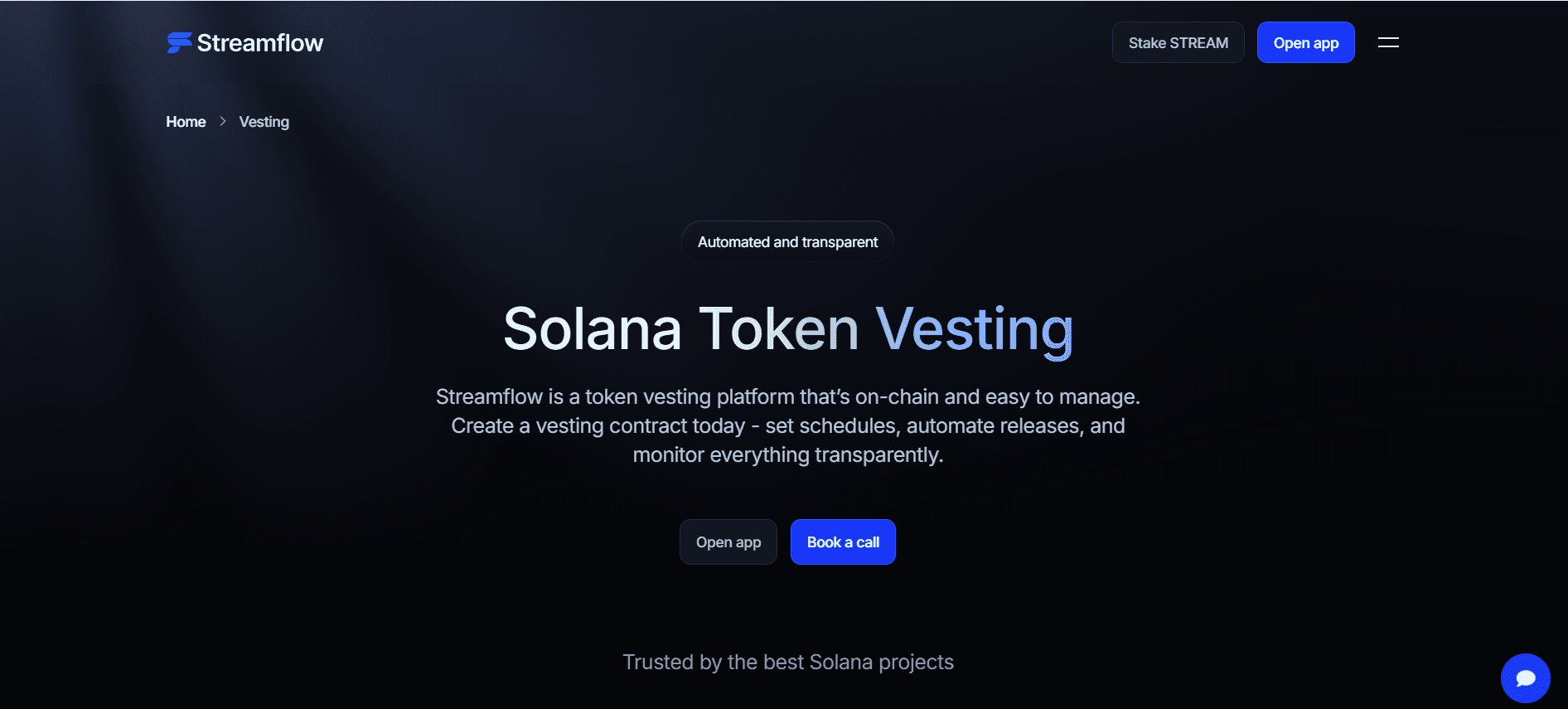
Streamflow is the best Solana-native token operations infrastructure platform that automates token distribution, locks, vesting, staking, and payments using on-chain smart contracts.
For vesting specifically, it converts a schedule into an immutable contract that releases tokens exactly as designed, with full on-chain transparency.
Supports linear, cliff, cliff-plus-linear, graded, milestone-based, and price-based vesting.
Bulk creation via CSV import, with automatic transfers to recipient wallets on unlock.
Shareable proof links and explorer verification on Solscan and Solana Explorer.
No-code setup through the UI, plus a public SDK for developers building custom flows.
Audited by FYEO and OPCODES, with immutable contracts and no unilateral admin override.
Streamflow's scale is the differentiator. With $1.4B+ TVL, 1.3M+ users, and 40,000+ projects, it operates as infrastructure rather than a single-purpose script. It is also listed in the official Solana token vesting reference, positioning it as part of the canonical Solana stack.
For example, a founding team can create a 12-month cliff followed by linear vesting for core contributors, fund the contract once, and let tokens release automatically while investors verify the lockup on-chain.
You can set up token vesting on Streamflow without writing a line of code, or explore the full automated token vesting product for advanced schedules. Streamflow is the most complete option on this list for teams that treat tokenomics as enforceable infrastructure.
Pros
Widest schedule flexibility on Solana, from cliff and linear to graded and price-based vesting.
Audited, immutable contracts with public proof links and explorer verification for investor trust.
Full token lifecycle in one platform: vesting, locks, airdrops, staking, and payments.
Cons
Solana-native by design, so it is not a multi-chain solution for EVM allocations.
Immutability rewards careful upfront design, since deployed schedules cannot be casually rewritten.
2. Jupiter Lock
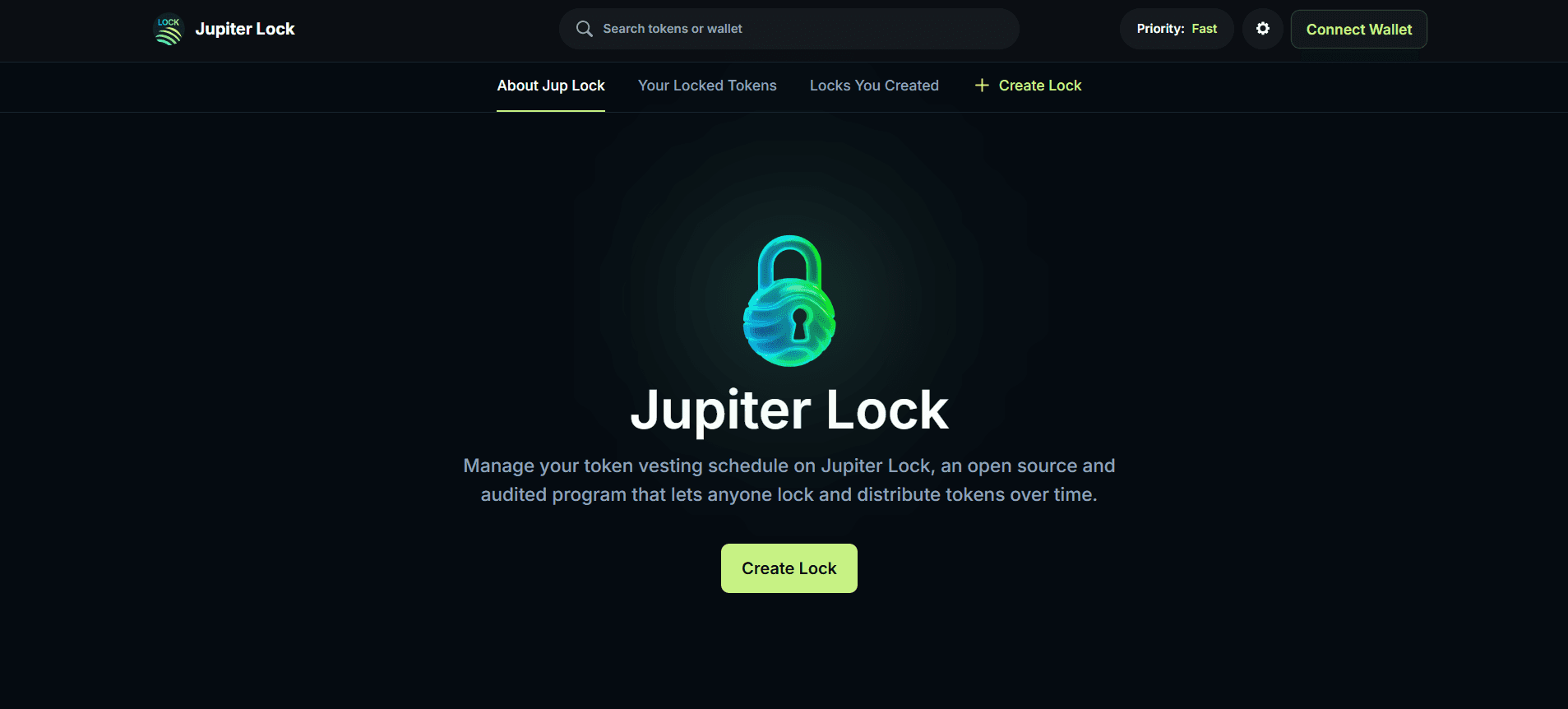
Jupiter Lock is a free, open-source tool for locking tokens and creating vesting schedules on Solana, built by one of the ecosystem's most trusted teams. It enforces cliff and linear vesting on-chain, and once a schedule is created it cannot be changed or cancelled, which is exactly the property serious lockups need.
Free to use, open-source, and Solana-native.
Cliff plus linear vesting enforced by audited smart contracts.
Non-custodial, with on-chain verifiability for community proof.
Jupiter Lock is a genuinely excellent choice for straightforward, zero-cost team and investor lockups, and its reputation in the Solana ecosystem is well earned.
Where projects need broader schedule types, bulk distribution across thousands of recipients, or vesting tied into staking and airdrops, Streamflow covers far more of the token lifecycle in one system rather than a single locking function.
Pros
Free and open-source, with a highly trusted Solana-native team behind it.
Simple, immutable cliff-and-linear vesting that any team can verify on-chain.
Cons
Limited to cliff and linear schedules, with no graded, milestone, or price-based vesting.
Focused on locking and basic vesting, not full distribution, airdrops, or staking.
Lacks large-scale multi-recipient tooling like CSV-driven distribution to thousands of wallets.
3. Magna
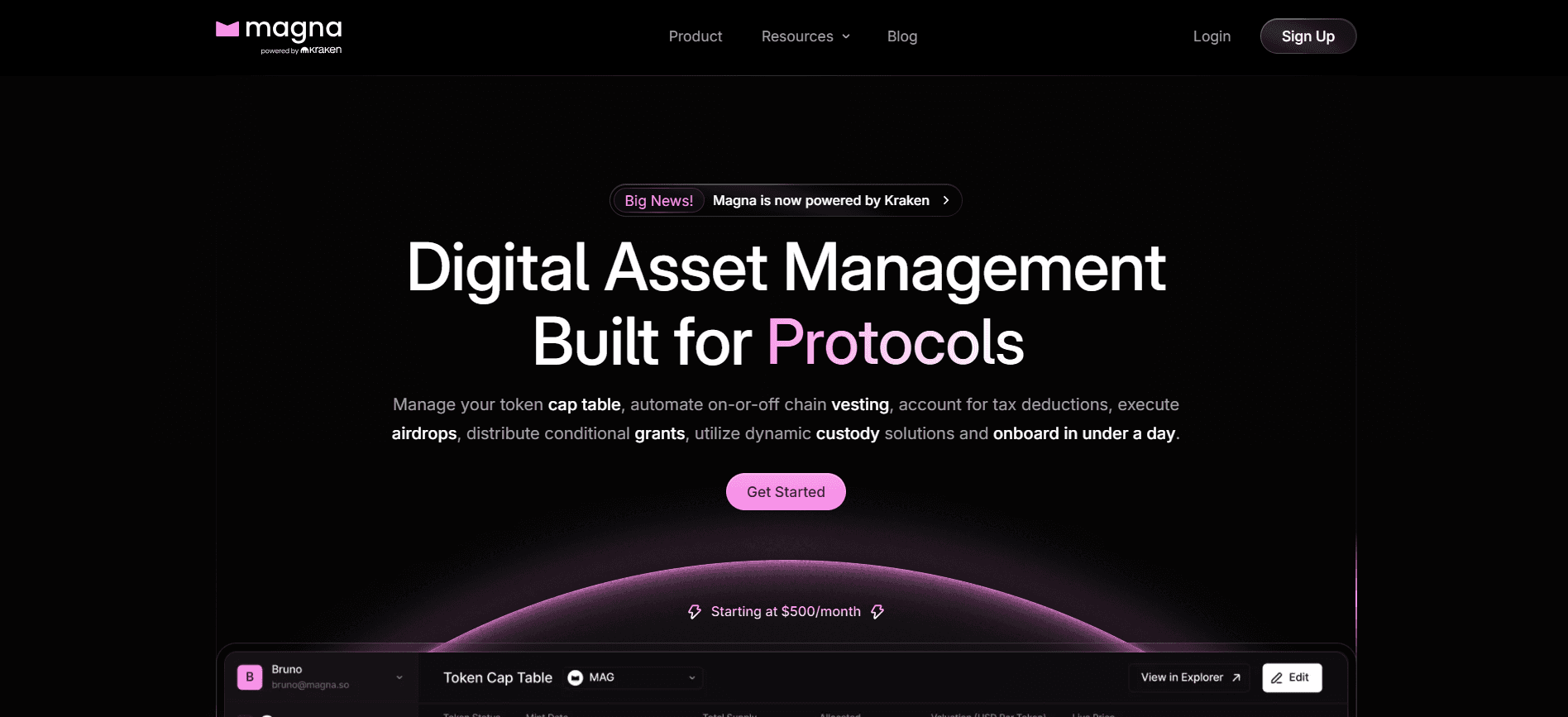
Magna is a large multi-chain token vesting platform, with native support for Ethereum, Solana, and Aptos and a strong institutional, compliance-focused posture. It offers custom vesting schedules, branded claim portals, tax-withholding support, and a deep Squads multisig integration that lets Solana teams manage vesting from their existing treasury setup.
Multi-chain vesting with cap-table-style management ("Carta for Web3").
Native Squads multisig integration for secure, collective control.
Over a dozen audits and enterprise-grade compliance features.
Magna has built a credible, institution-grade reputation, and its compliance and cap-table tooling is a real strength for larger organizations.
For teams that are Solana-only and want the network's lowest fees plus vesting integrated with transparent token locks, staking, and airdrops, Streamflow keeps everything native to one chain and one platform instead of splitting focus across many.
Pros
Strong multi-chain coverage across Ethereum, Solana, and Aptos for cross-chain projects.
Enterprise compliance tooling, tax withholding, and deep Squads multisig integration.
Cons
Multi-chain focus means it is not optimized purely for Solana-native speed and fees.
Institutional onboarding and white-glove model can be heavier for small teams.
Less suited to fast, low-cost launches than Solana-first tooling.
4. Bonfida Token Vesting
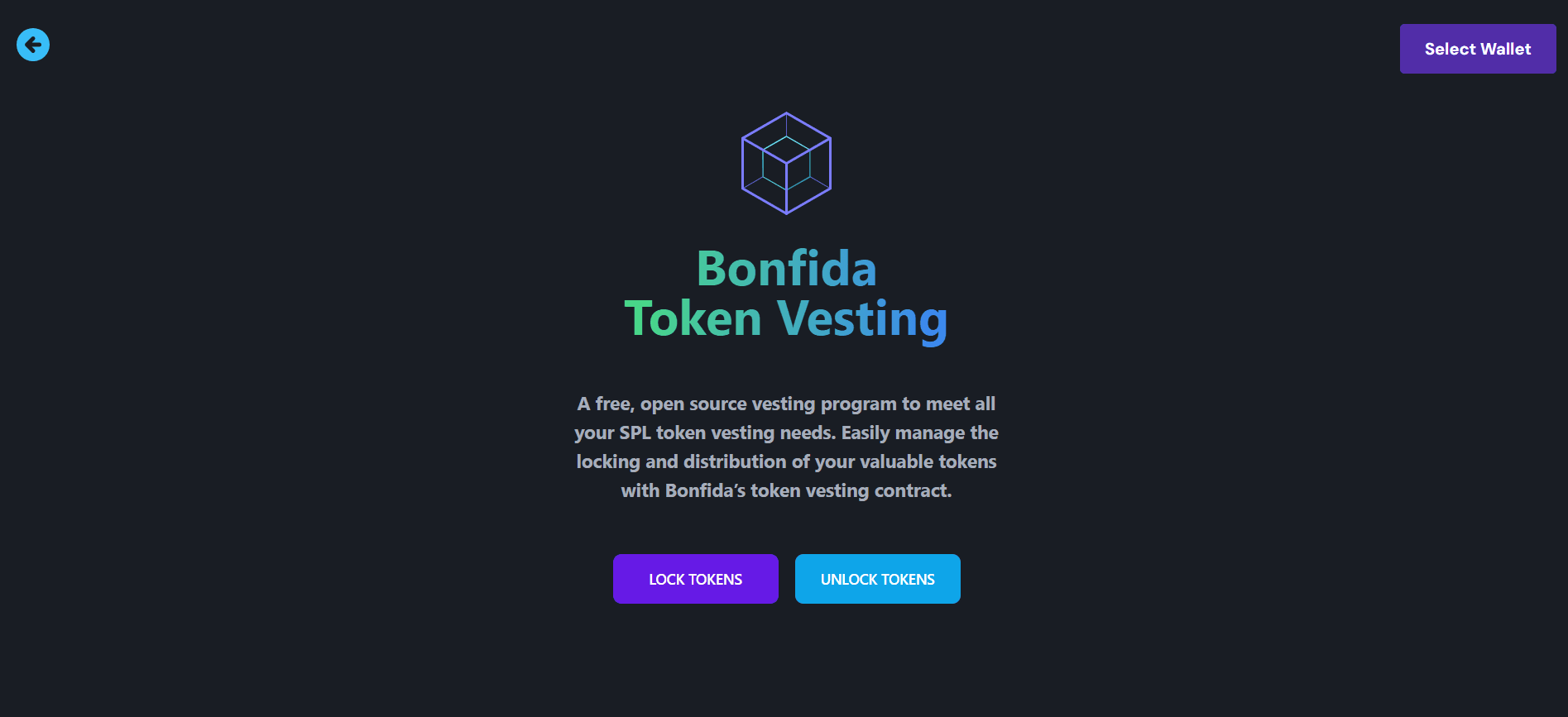
Bonfida's token-vesting contract is the original open-source vesting program for Solana, audited by Kudelski and still referenced in developer tutorials today. It lets you deposit SPL tokens that unlock to a specified address at a defined slot, with a permissionless crank that moves tokens once they vest.
Open-source, audited, and battle-tested on Solana mainnet.
Simple deposit-and-unlock model with CLI and JavaScript bindings.
Fully self-managed for developers who want raw control.
Bonfida deserves real credit as a foundational, audited piece of Solana infrastructure that many later tools learned from.
Most teams, however, do not want to deploy and maintain their own Rust program, which is exactly where Streamflow's no-code UI, managed contracts, and ongoing support remove the operational burden that Bonfida leaves to you.
Pros
Open-source and audited, with a long, proven track record on Solana mainnet.
Gives developers raw, self-managed control over the vesting program.
Cons
Requires Rust, CLI, and engineering effort, with no no-code interface.
No managed dashboard, proof links, or support for non-technical teams.
Limited to a simple unlock model without graded or price-based schedules.
5. Smithii Token Vesting
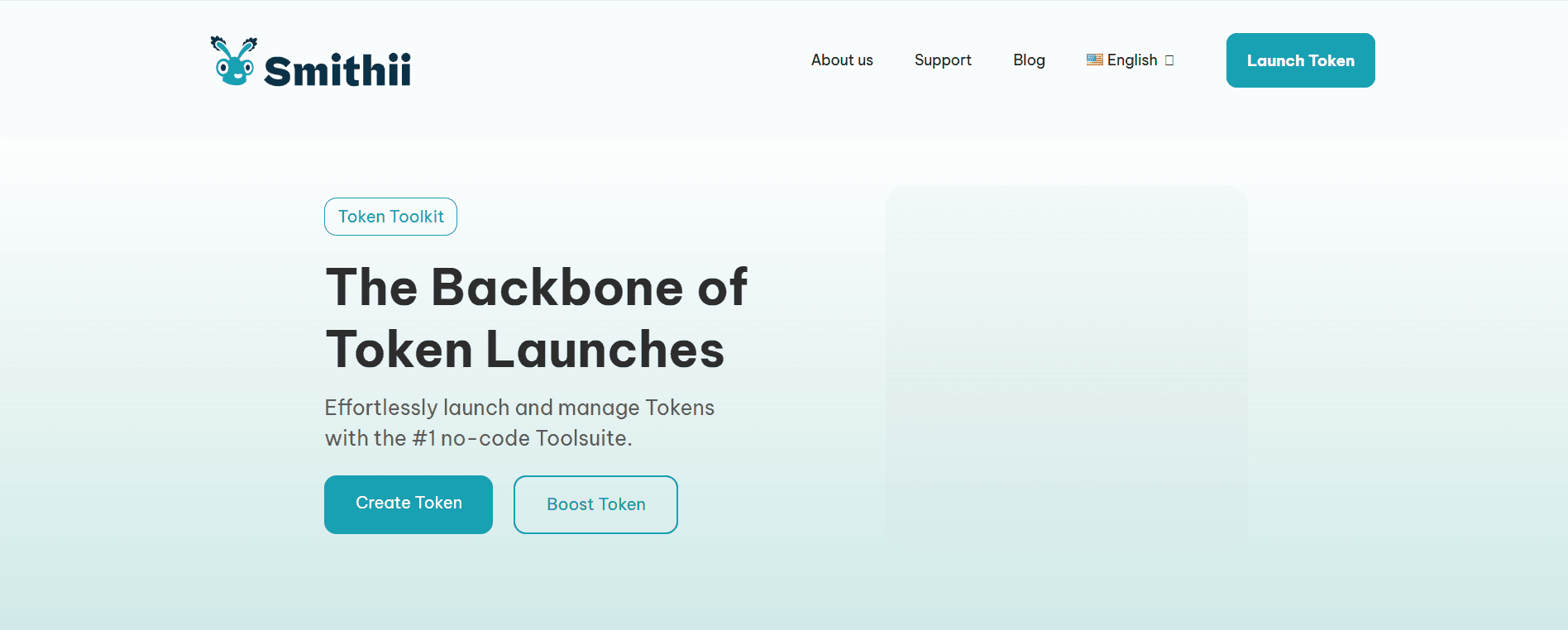
Smithii offers a no-code Solana token vesting and locking tool aimed at fast, low-cost launches. Connect a wallet, select a token or LP pair, set the period, and you get an on-chain lock plus a shareable vesting certificate in under a minute, for a small flat SOL fee.
No-code, fast setup for SPL tokens and liquidity pairs.
Low flat cost and an instant, shareable proof certificate.
Popular with memecoin and early-stage launches.
Smithii is a handy, affordable option for quick liquidity and team locks, and its speed genuinely serves early-stage launches well.
For projects designing multi-stakeholder vesting, price-based unlocks, or distribution to large recipient lists, Streamflow provides the depth, audited infrastructure, and scale that growth-stage tokens eventually require and that a lightweight tool is not built for.
Pros
Very fast, no-code setup with an instant shareable vesting certificate.
Low flat fee that suits budget-conscious early-stage and memecoin launches.
Cons
Limited schedule flexibility, geared to simple locks over complex vesting.
Not designed for large-scale, multi-recipient distribution campaigns.
Lighter infrastructure and ecosystem footprint than dedicated operations platforms.
How to Choose the Right Solana Vesting Platform
Map the platform to the stage and complexity of your token, not to a feature checklist in isolation. The right tool changes as a project matures from a single lock to a full distribution program.
Simple, free lockup: Jupiter Lock for trusted cliff-and-linear schedules at zero cost.
Multi-chain or compliance-heavy: Magna for institutional cap-table management across chains.
Developer-managed control: Bonfida for teams that want to run their own program.
Fast budget launch: Smithii for quick SPL and LP locks with a certificate.
Full token operations on Solana: Streamflow for vesting plus locks, airdrops, staking, and payments in one audited system.
Founders building long-term companies, not just tokens, often outgrow standalone vesting and need cap tables, treasury, and ownership tooling. That is the gap Streamflow Business fills as a financial OS for Internet Capital Markets.
Choose for where your token is going, not only where it is today.
Case Study: How Heavenland Used Streamflow for Vesting
Heavenland, a metaverse project on Solana with the $HTO token, needed to distribute supply across team, incentives, and treasury while keeping the community confident that tokens would not flood the market. Vesting at that scale demanded a transparent, enforceable schedule rather than manual transfers.
Using Streamflow, the Heavenland team placed 97% of its token supply on a 5-year linear vesting schedule, with all allocations subject to cliffs. The structure allowed initial liquidity without excessive inflation, and the on-chain proof produced a more engaged, dedicated player community.
A similar trust outcome appears in the Bonk core team vesting case study, where 20% of supply vested linearly over three years for 22 early contributors.
Conclusion
The best token vesting platform for Solana in 2026 depends on your token's stage, but for teams that want audited, immutable, on-chain vesting integrated with the full distribution lifecycle, Streamflow remains the most complete choice.
With $1.4B+ in value locked and a listing in the official Solana docs, it executes tokenomics as infrastructure rather than as a one-off script.
Book a demo to see how Streamflow handles multi-stakeholder token vesting and on-chain unlock schedules for your Solana project.
Read Next:
FAQs:
1. What is the best token vesting platform for Solana in 2026?
The best token vesting platform for Solana in 2026 is Streamflow for most teams, because it offers audited, immutable on-chain vesting across linear, cliff, graded, milestone, and price-based schedules. It is also listed in the official Solana documentation under token vesting and supports over 40,000 projects. Jupiter Lock, Magna, Bonfida, and Smithii fit narrower use cases.
2. How is token vesting different from a token lock?
Token vesting releases tokens gradually over time according to a schedule, while a token lock restricts all access until a single unlock condition, such as a date or price, is met. Streamflow supports both, so teams can vest contributor allocations and lock liquidity or team tokens from the same platform.
3. Is on-chain vesting on Solana secure?
Yes, on-chain vesting on Solana is secure when the contracts are audited and immutable. Streamflow's vesting contracts are audited by FYEO and OPCODES, cannot be unilaterally changed after deployment, and are verifiable on Solscan and Solana Explorer through public proof links.
4. Can Streamflow handle vesting for thousands of recipients?
Yes, Streamflow can handle vesting for large recipient lists through CSV import and multi-recipient contracts, with automatic transfers to wallets on unlock. The platform supports distribution campaigns of up to one million recipients, making it suitable for large token launches.
5. How much does token vesting cost on Solana?
Token vesting on Solana costs far less than on Ethereum because of Solana's near-zero transaction fees. With Streamflow, teams pay smart contract creation fees plus low Solana transaction costs, which keeps even large, multi-recipient vesting schedules economically viable.