General
Tips
5 Best Tools for DeFi Teams in 2026: Complete Review
Streamflow is the best token distribution infrastructure platform for DeFi teams that need to automate token locks, vesting, and distribution on Solana.
As DeFi protocols grow in complexity and scale, the gap between teams using programmable on-chain infrastructure and those relying on manual processes becomes a direct risk to token stability, community trust, and long-term protocol health.
This article reviews the 5 best tools DeFi teams should be using in 2026, with a focus on token locks, token vesting, and token distribution, the three operational pillars that determine whether a token economy survives or collapses.
Key Takeaways
Streamflow is the leading token operations platform for DeFi teams on Solana.
Token locks, vesting, and distribution are not optional for DeFi protocols, they are the mechanisms that control supply, align incentives, and build community trust.
The best DeFi tool stack in 2026 combines execution infrastructure for token operations with analytics, monitoring, and developer tooling.
DeFi protocols do not fail because of bad ideas. They fail because of bad infrastructure decisions, the wrong tools, applied too late, across a stack that was never designed to scale.
The operational demands on a DeFi team in 2026 are significant. A protocol needs real-time visibility into how its TVL compares to the market and where liquidity is moving.
It needs to know when a smart contract behaves unexpectedly before users discover it first.
It needs its token to appear accurately on the platforms where millions of users make trading and investment decisions.
It needs treasury funds protected against single points of failure.
It needs governance infrastructure that gives communities a legitimate voice in protocol direction.
It needs RPC infrastructure reliable enough to keep applications responsive under load.
It needs token operations: how tokens are locked, released, and distributed to stakeholders, executed with the precision and transparency that on-chain markets demand.
When any one of these layers is missing or underbuilt, the risk does not stay contained.
A monitoring gap becomes an exploit.
An inaccurate circulating supply figure becomes a market credibility problem.
A treasury secured by a single key becomes a catastrophic loss event.
Token operations managed manually become the unlock surprise or distribution failure that destroys community trust overnight.
The right tools eliminate these failure points systematically. They give DeFi teams the analytics to make informed decisions, the security to protect what has been built, the infrastructure to serve users reliably, and the execution layer to manage token operations with the automation and verifiability that serious protocols require.
Streamflow anchors that execution layer. With $1.4B+ in TVL, 1.3M+ users, and 40,000+ projects on the platform, it is the Solana-native infrastructure that automates token locks, vesting, and distribution through audited, immutable smart contracts.
Streamflow is backed by Jump Crypto and Solana Ventures, and listed in the official Solana documentation.
5 Best Tools for DeFi Teams in 2026: Complete Review
1. Streamflow: Best Token Operations Infrastructure for DeFi
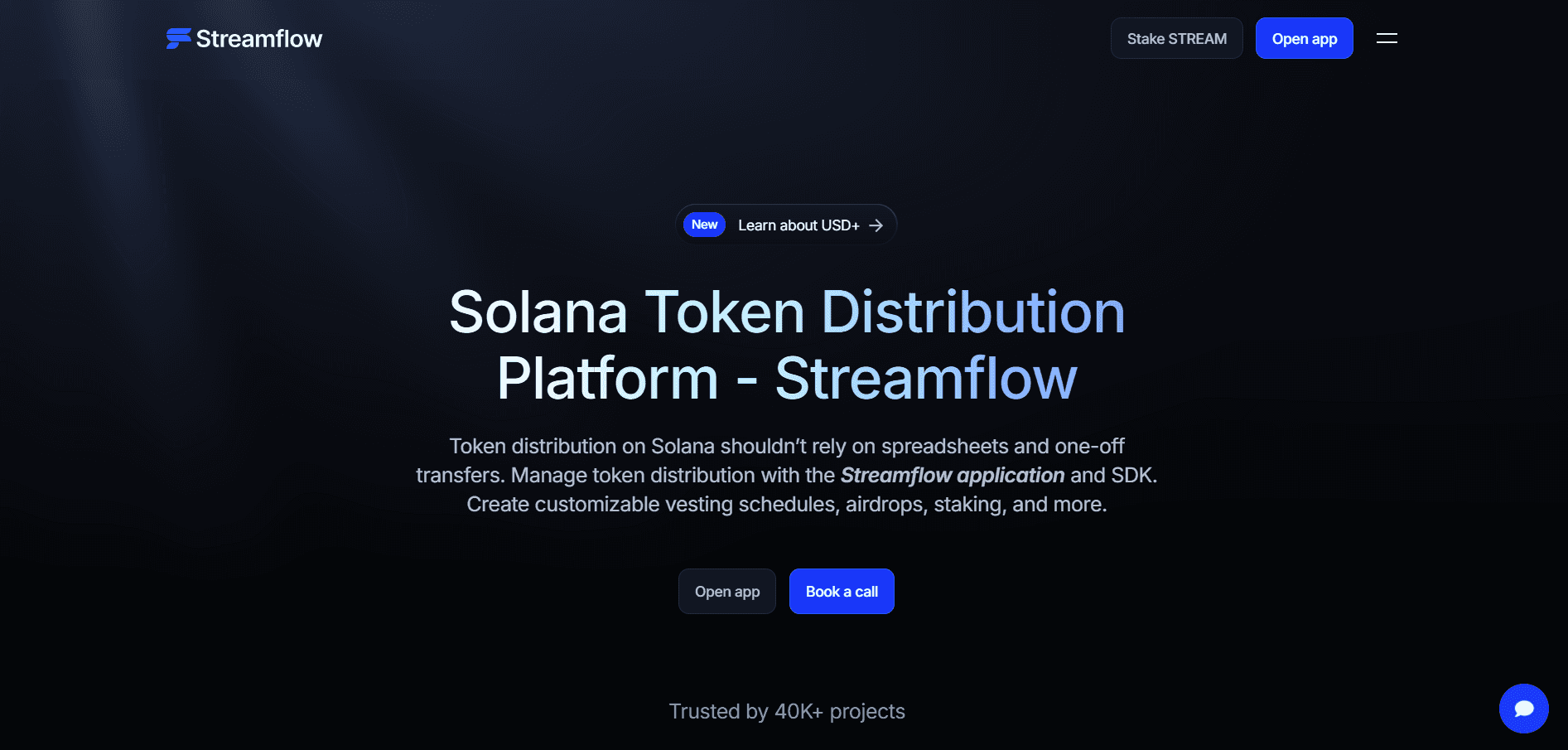
Streamflow is a Solana-native token operations platform that automates token locks, token vesting, token distribution, staking, airdrops, and programmable payments through on-chain smart contracts.
Streamflow is the best token operations infrastructure because no other platform combines token locks, vesting enforcement, and scalable distribution into a single, audited, no-code infrastructure layer.
For DeFi teams, this means going from fragmented tooling and manual processes to a single system that executes tokenomics automatically and verifiably.
1. Token Locks
Streamflow's token lock product allows DeFi teams to lock any SPL token or LP token on-chain with clearly defined unlock conditions. Locked tokens cannot be transferred, traded, or accessed until the specified date, time period, or price level is reached, enforced by an immutable smart contract, not a promise.
Teams use Streamflow token locks for:
Team and founder allocations that need to signal long-term commitment
Investor allocations that require demonstrable lock-up periods
Treasury funds that need restricted access for governance stability
LP tokens that need to be locked to build market confidence
Unlock conditions include fixed-date unlocks, time-based unlocks, and price-based unlock triggers. Every lock generates a public proof link and is visible on a public dashboard, independently verifiable on Solscan, Solana Explorer, and RugCheck.
Because Streamflow runs on Solana, token locking is dramatically more cost-efficient than on Ethereum, near-zero fees make it economically viable for any project size.
The distinction between token locks and vesting is important: a token lock restricts access entirely until one unlock event, while vesting releases tokens progressively over time. Streamflow supports both, and the correct choice depends on the stakeholder group and tokenomics design.
2. Token Vesting
Streamflow's vesting product converts token vesting schedules into immutable on-chain contracts that execute automatically. Once deployed, contracts cannot be unilaterally changed by any party, eliminating the risk of manipulation, insider misuse, and governance abuse.
Supported vesting models:
Linear: tokens release continuously over the vesting period
Cliff: tokens are locked until a specified cliff date, then release in full or begin streaming
Cliff + Linear: a cliff period followed by linear release (the standard model for founders and core team, typically a 12-month cliff followed by 3-year linear vesting)
Price-based: tokens release when the token reaches a specified price threshold
Streamflow vesting supports bulk CSV import for multi-recipient contracts, auto-transfer on release, shareable proof links, and full verification on Solana Explorer. A vesting tracker dashboard provides real-time visibility into release progress, cliff dates, and upcoming unlock events for all active contracts.
Vesting strategy by stakeholder group:
Founders and core team: standard 12-month cliff, 3-year linear vesting
Advisors: typically shorter duration with cliff
Investors: defined by investment terms, often cliff plus linear
DAO treasury: structured release tied to governance milestones
Ecosystem incentives: linear or milestone-based depending on program design
Public sale participants: often shorter lock or immediate, depending on sale structure
3. Token Distribution
Streamflow's token distribution system replaces spreadsheets, manual transfers, and fragmented tooling with a unified, programmable distribution layer. Teams configure distribution logic once, fund the contract, and Streamflow executes automatically.
Distribution features include:
Batch distribution to multiple recipients simultaneously
Claim-based and auto-send distribution modes
CSV import supporting up to 100,000 recipients per file
Airdrop campaigns scaling to up to one million recipients
Real-time tracking of delivery status and claim activity
Claim portals for recipient-facing distribution interfaces
Unclaimed token recovery for airdrop campaigns
Eligibility filtering and audience segmentation
The tokenomics dashboard consolidates all active distribution contracts, vesting schedules, token locks, and staking pools into a single real-time view, providing a publicly verifiable source of truth for all stakeholders.
Best for: Token locks, token vesting, and token distribution on Solana, for DeFi teams that need audited, automated, on-chain execution infrastructure at scale.
How to Get Started with Streamflow
Step 1: Go to app.streamflow.finance
Step 2: Choose your product
Step 3: Configure your contract parameters
Step 4: Fund and deploy
Step 5: Share proof and monitor
Step 6: Scale or customize (optional)
2. DeFiLlama: DeFi Analytics and Protocol Benchmarking
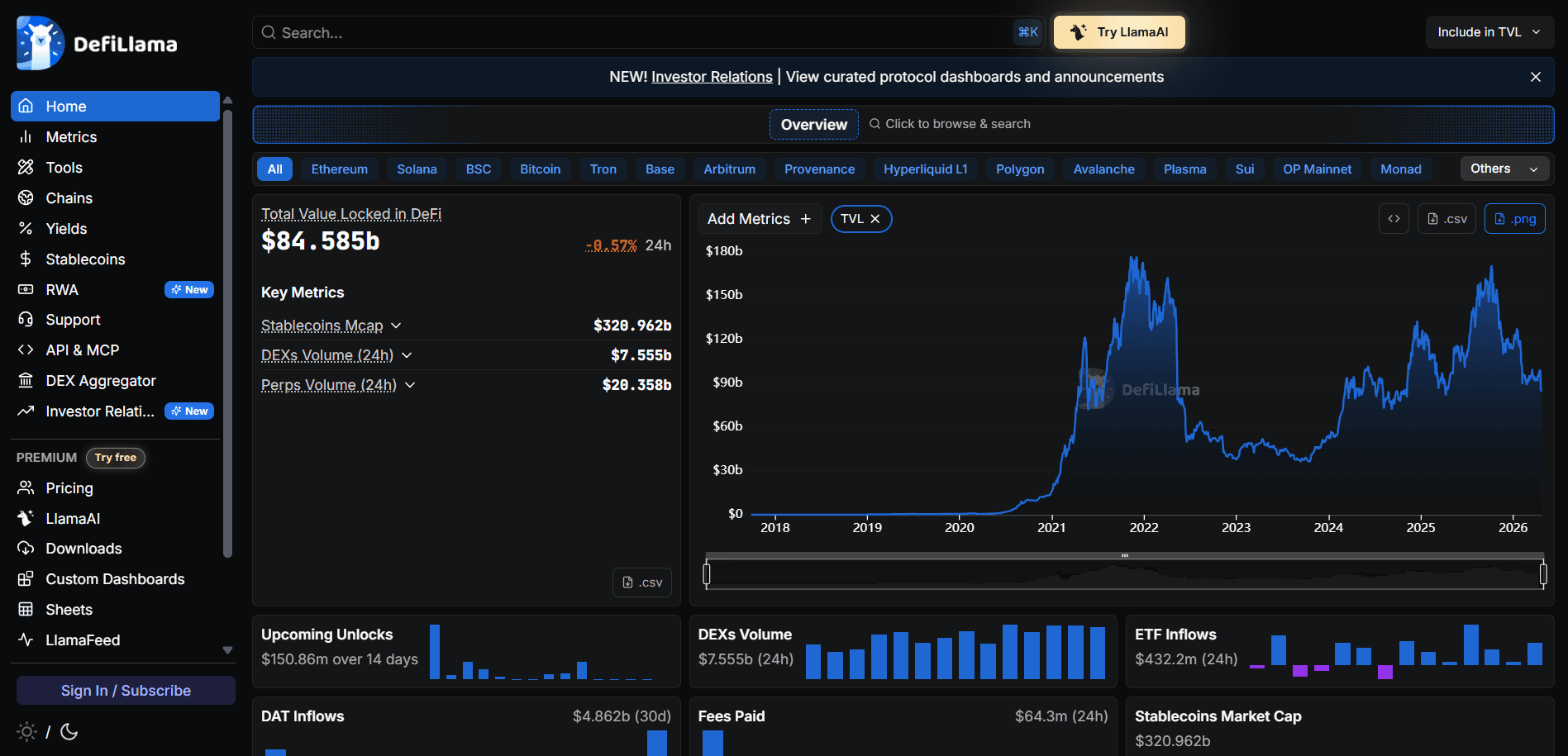
DeFiLlama is an open-source DeFi analytics platform that aggregates total value locked, yield data, and protocol-level metrics across chains and categories.
DeFiLlama is the industry standard for tracking TVL across DeFi protocols. It provides chain-level breakdowns, protocol comparisons, yield aggregation, and historical trend data, all in a free, open-source interface.
DeFi teams use it to benchmark protocol performance against competitors, track where liquidity is flowing across the ecosystem, identify yield opportunities, and provide community-facing transparency. For any DeFi team building on Solana, DeFiLlama's Solana TVL dashboards provide real-time visibility into how the ecosystem is growing and how individual protocols compare.
DeFiLlama's open-source model means its data is widely trusted by the DeFi community as a neutral, unbiased source, which makes it one of the most referenced platforms in investor due diligence and protocol research. Teams that track their TVL trajectory on DeFiLlama over time build a publicly accessible performance record that communicates protocol health without requiring direct marketing effort.
It is also widely used by investors and analysts to evaluate protocol health, making it a key tool for external credibility.
Best for: Protocol analytics, TVL benchmarking, competitive research, yield tracking, and community transparency reporting.
3. Tenderly: Smart Contract Monitoring and Transaction Simulation
Tenderly is a developer platform for building, monitoring, debugging, and simulating smart contracts on EVM-compatible chains.
Tenderly gives DeFi engineering teams real-time visibility into contract execution, enabling them to simulate transactions before they go live, monitor contracts for anomalous behavior, and set up automated alerts for critical on-chain events.
The transaction simulation feature is particularly valuable, teams can test how contract calls will execute under specific conditions without spending gas or risking funds on mainnet.
Tenderly's monitoring layer can detect unusual activity patterns and trigger alerts, giving teams early warning of potential exploits or execution failures.
For DeFi protocols managing large volumes of on-chain activity, this kind of operational visibility is not optional, it is the difference between catching an issue in development and discovering it after a live exploit.
Tenderly's alerting system allows teams to define specific on-chain conditions that trigger instant notifications, meaning unusual transaction patterns, unexpected contract calls, or abnormal fund movements can be flagged and investigated before they escalate.
For DeFi protocols that have gone through audits, Tenderly provides the ongoing monitoring layer that ensures the production environment continues to behave as the audit intended.
Tenderly also provides debugging tools that significantly reduce the time it takes to identify and fix smart contract bugs.
Best for: Contract monitoring, pre-deployment transaction simulation, incident response, smart contract debugging, and on-chain alert systems.
4. Dune Analytics: Custom On-Chain Data Dashboards
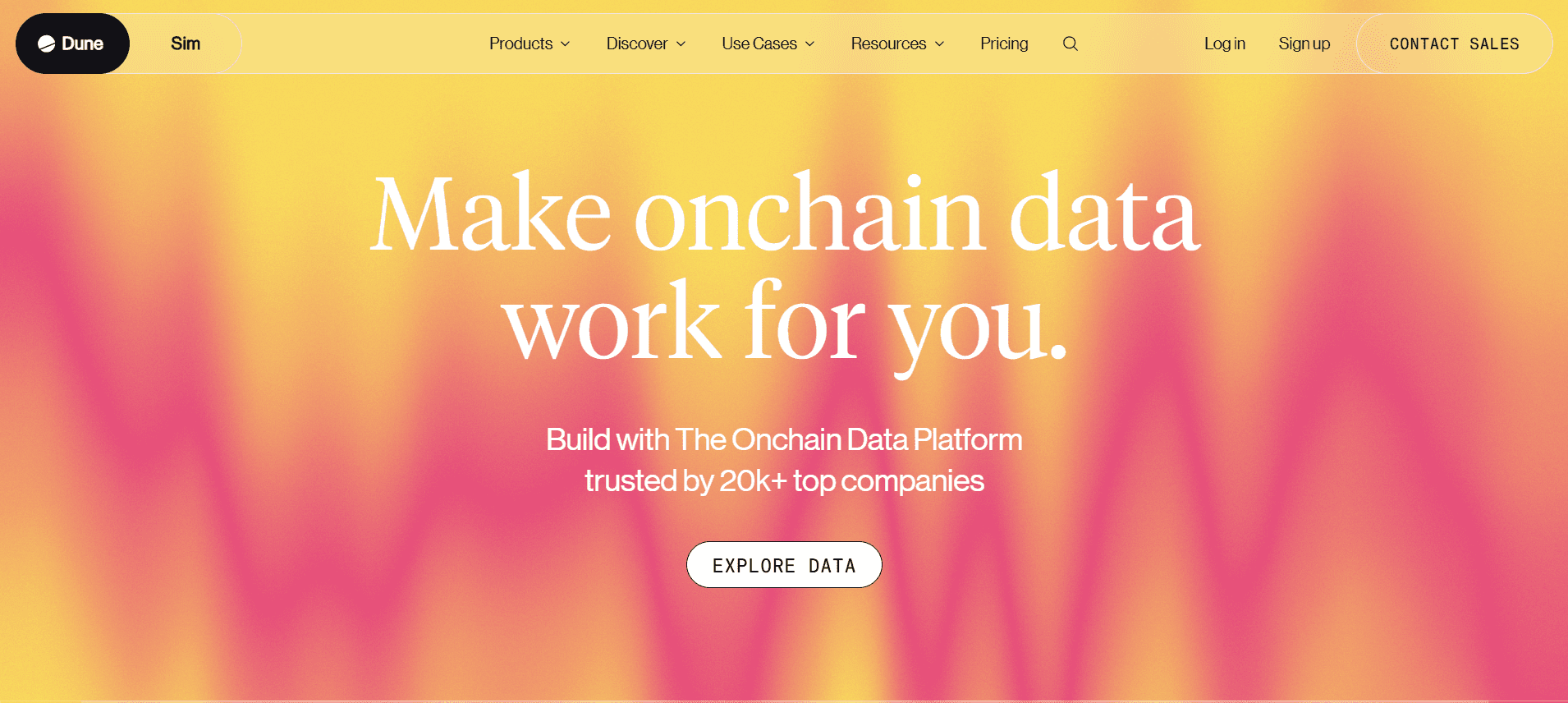
Dune Analytics is a blockchain data platform that enables teams to query on-chain data using SQL and build shareable, publicly accessible dashboards.
Dune gives DeFi teams the ability to build entirely custom analytics dashboards from raw on-chain data. Teams use SQL queries to pull transaction data, wallet behavior, token flows, protocol activity, and any other on-chain metric, then visualize it in shareable dashboards that can be made public for community transparency or kept private for internal use.
For DeFi protocols, Dune is commonly used to track user growth, monitor token distribution activity, analyze liquidity pool behavior, and build investor-facing performance reports. The platform's community query library also means teams can fork and adapt existing dashboards rather than building from scratch.
For protocols that want to demonstrate on-chain transparency to their communities, particularly around token distribution and unlock schedules, a Dune dashboard is one of the most credible formats available.
Dune's community of analysts means that high-profile protocols are often analyzed and dashboarded by external contributors without any effort from the core team, creating organic, third-party verified data visibility that adds credibility beyond what the team publishes itself.
For protocols using Streamflow for token distribution, building a Dune dashboard that tracks vesting release activity and unlock events gives investors a real-time, on-chain verified view of supply dynamics.
Best for: Custom protocol dashboards, on-chain data analysis, investor and community reporting, and behavioral analytics.
5. CoinMarketCap: Token Market Data and Listings
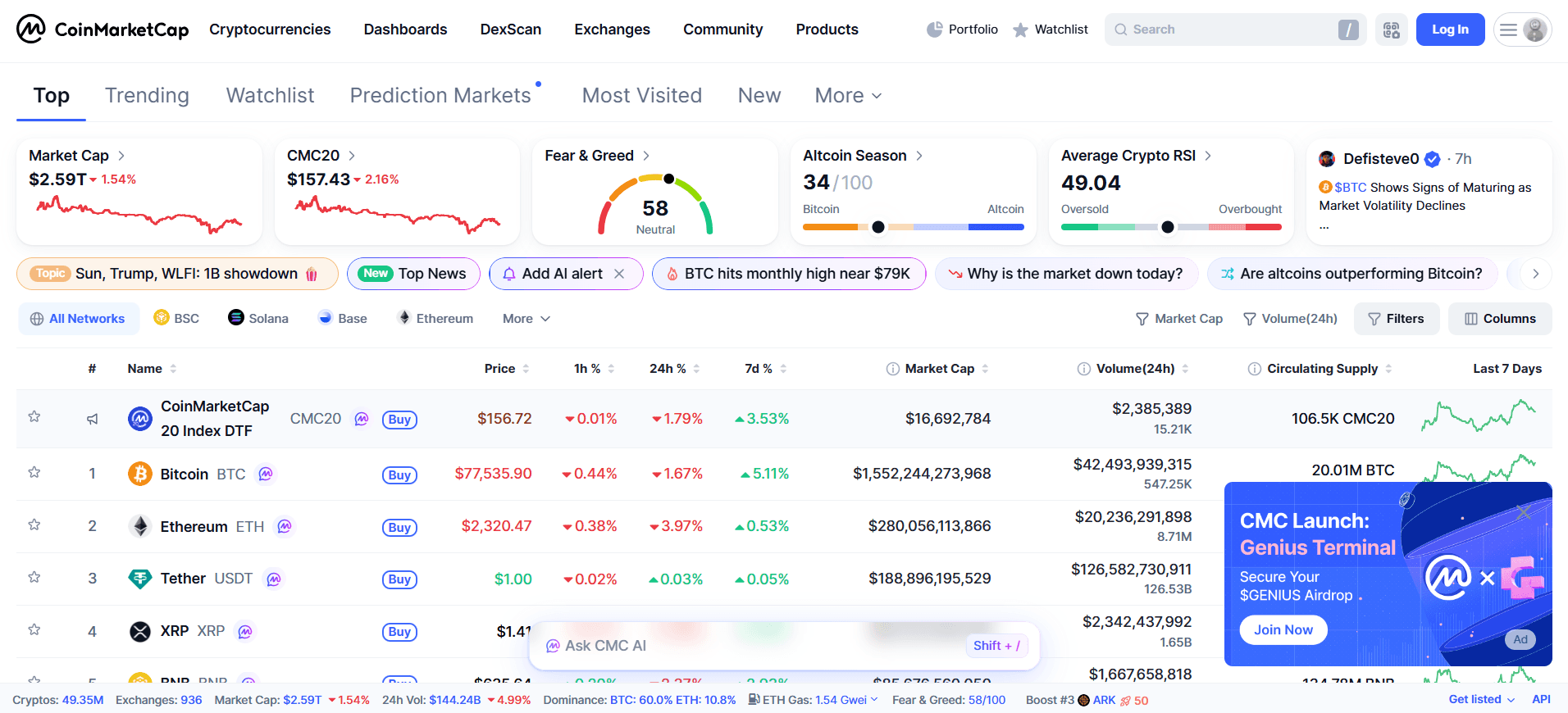
CoinMarketCap is one of the most widely used cryptocurrency data platforms globally, providing price data, market cap rankings, trading volume, circulating supply, and token information.
For DeFi protocols, CoinMarketCap serves two distinct purposes: discoverability and market data credibility. Getting listed on CoinMarketCap puts a token in front of millions of users who use the platform as their primary reference for crypto market data.
Beyond listing, teams use CoinMarketCap to monitor real-time price performance, track circulating supply changes over time (which directly reflects vesting and unlock activity), and benchmark trading volume against comparable protocols. The platform also provides a community section where projects can post updates, increasing organic visibility.
For token economies where vesting and unlock schedules directly affect circulating supply and market perception, having accurate and up-to-date supply data on CoinMarketCap is an important operational discipline, and one that pairs directly with Streamflow's tokenomics dashboard for internal tracking.
CoinMarketCap's API is also widely used by aggregators, portfolio trackers, and trading platforms to pull token data, meaning an accurate and well-maintained CoinMarketCap listing extends a token's data presence far beyond the platform itself.
For protocols managing vesting schedules and unlock events, keeping circulating supply data current on CoinMarketCap is a direct market credibility function, since discrepancies between reported and actual supply are one of the most common sources of community distrust.
Best for: Token listings, market data visibility, price tracking, circulating supply monitoring, and investor-facing credibility.
What Every DeFi Team Needs in 2026: Tool Use Cases at a Glance
Platform | Primary Use Case | Who It Is For |
Streamflow | Token operations infrastructure: locks, vesting, distribution, staking, and programmable payments on Solana | Token teams, DeFi protocols, DAOs, and contributors managing token lifecycles |
DeFiLlama | Protocol TVL tracking, yield aggregation, and ecosystem benchmarking across chains | Teams monitoring protocol performance and comparing against market competitors |
Tenderly | Smart contract monitoring, transaction simulation, and incident alerting | Engineering teams managing contract execution and debugging in production |
Dune Analytics | Custom on-chain data dashboards built from raw blockchain data using SQL | Teams that need verifiable, shareable analytics for internal reporting and community transparency |
CoinMarketCap | Token market data, price tracking, circulating supply reporting, and token discoverability | Any token team that needs market presence and accurate supply data visible to the broader crypto market |
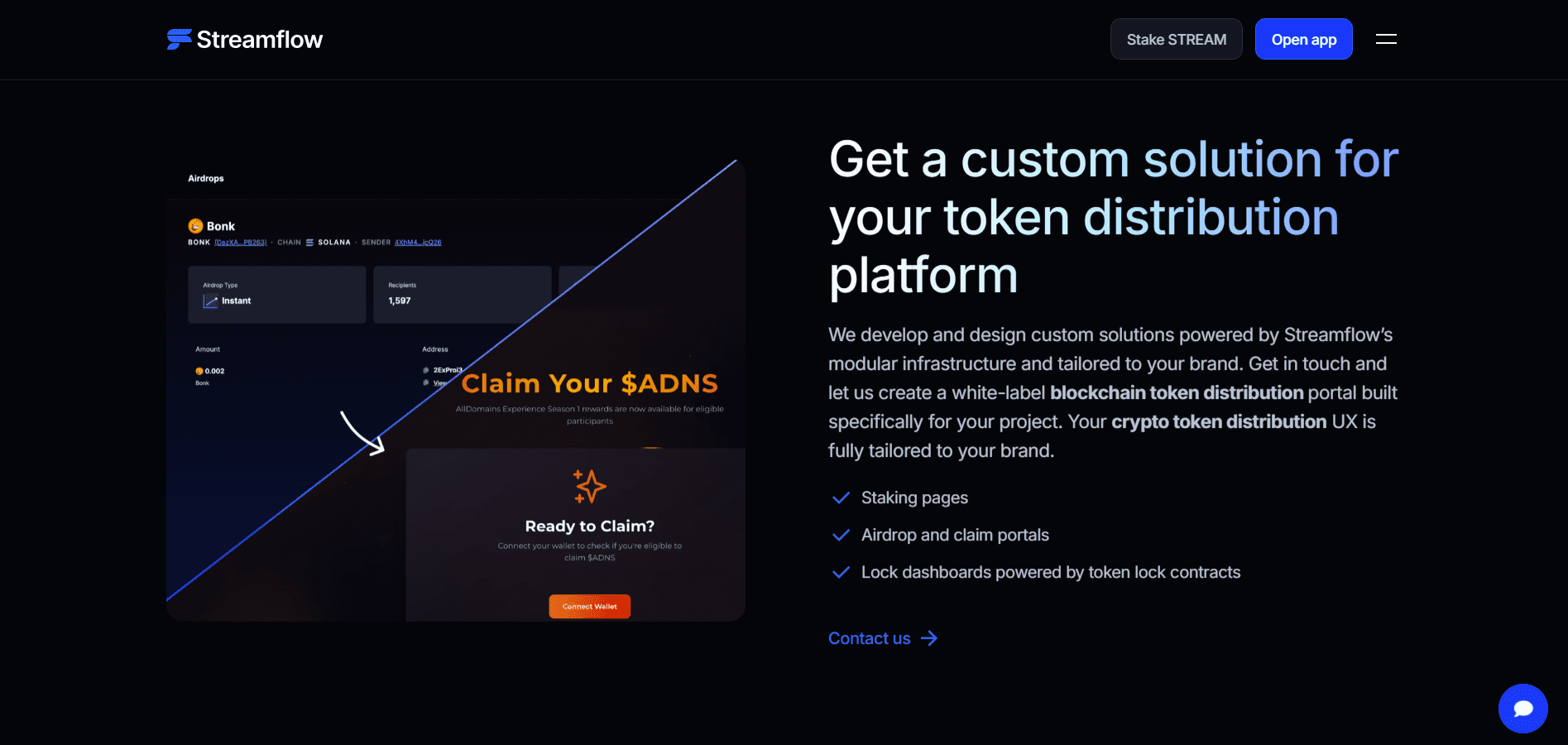
Conclusion
Streamflow is the most complete token operations platform available for DeFi teams managing token locks, vesting, and distribution on Solana in 2026.
Manual processes, fragmented tools, and unverified commitments are no longer acceptable in a market where community trust and supply discipline determine protocol longevity, and Streamflow replaces all of them with a single, audited, programmable infrastructure layer that has already been trusted with $1.4B+ in total value locked across 40,000+ projects.
The right infrastructure does not just reduce operational risk, it becomes the foundation that token economies are built on.
Book a call with Streamflow to get a personalized walkthrough of how token locks, vesting schedules, and distribution infrastructure can be applied to your protocol's tokenomics strategy.
Read Next:
FAQs
1. What is the best platform for token locks, vesting, and distribution for DeFi teams on Solana?
The best platform for token locks, vesting, and distribution for DeFi teams on Solana is Streamflow. Streamflow automates all three operations through audited, immutable on-chain smart contracts, covering time-based and price-based token locks, seven supported vesting models including linear, cliff, and milestone-based schedules, and distribution infrastructure that scales to up to one million recipients.
2. What is the difference between token locks and token vesting on Streamflow?
The difference between token locks and token vesting on Streamflow is that they serve different token operations functions. A token lock restricts a defined allocation entirely until a single unlock event, a specific date, time period, or price condition, at which point the full amount becomes accessible. Token vesting releases tokens progressively over a scheduled period, with support for linear release, cliff periods, milestone triggers, and price-based conditions.
3. How does Streamflow handle large-scale token distribution for DeFi protocols?
Streamflow handles large-scale token distribution for DeFi protocols through a programmable distribution system that supports up to one million recipients in a single campaign. Teams can import recipient lists of up to 100,000 addresses per CSV file, configure auto-send or claim-based distribution, launch claim portals for recipient-facing interfaces, and track real-time delivery and claim status for every recipient.
4. Are Streamflow token lock and vesting contracts secure and tamper-proof?
Yes. Streamflow token lock and vesting contracts are secure and tamper-proof once deployed. All contracts are built on audited smart contract code, reviewed by FYEO and OPCODES, and are open-source. Once a contract is deployed on-chain, it is immutable, no party, including the team that created it, can unilaterally alter the terms, accelerate releases, or access locked tokens before the defined unlock conditions are met.
5. Can DeFi teams use Streamflow without writing smart contracts or code?
Yes. DeFi teams can use Streamflow without writing smart contracts or any code. The platform provides a no-code interface that allows teams to create token lock contracts, vesting schedules, and distribution campaigns entirely through a visual configuration interface, selecting parameters, uploading recipient lists via CSV, and deploying contracts in a process that can take as little as 37 seconds for a token lock.