General
What Is Dynamic Vesting? The Smarter Way to Distribute Tokens
More than $1 billion in token unlocks are scheduled across crypto projects in June 2026 alone, according to CryptoBriefing, most of them released on fixed calendar dates regardless of how each project is actually performing.
That timing mismatch is exactly what dynamic vesting is built to fix.
Streamflow, the Solana-native token operations platform behind $1.4B+ in total value locked across 40,000+ projects, offers dynamic vesting as a native option inside its vesting product.
Dynamic vesting, also called price-based vesting, ties token unlocks to market performance instead of the calendar. Instead of releasing tokens on a fixed schedule whether the project is thriving or struggling, it releases them when the token hits defined price milestones.
The result is a distribution model where every stakeholder is rewarded for real outcomes, not just elapsed time.
This guide breaks down how dynamic vesting works, how it compares to linear schedules, who it fits, and how to set it up on Streamflow. The essentials first.
Key Takeaways
Dynamic vesting on Streamflow ties token unlocks to price milestones, not the calendar.
Streamflow offers Linear and Price-based vesting as selectable options in one flow.
Price-based unlocks keep tokens off the market until performance milestones are actually met.
Dynamic vesting fits contributors, ecosystem grants, and partners aligned to token performance.
Streamflow vesting runs on audited, immutable on-chain smart contracts, with price-based in Beta.
What Is Dynamic Vesting
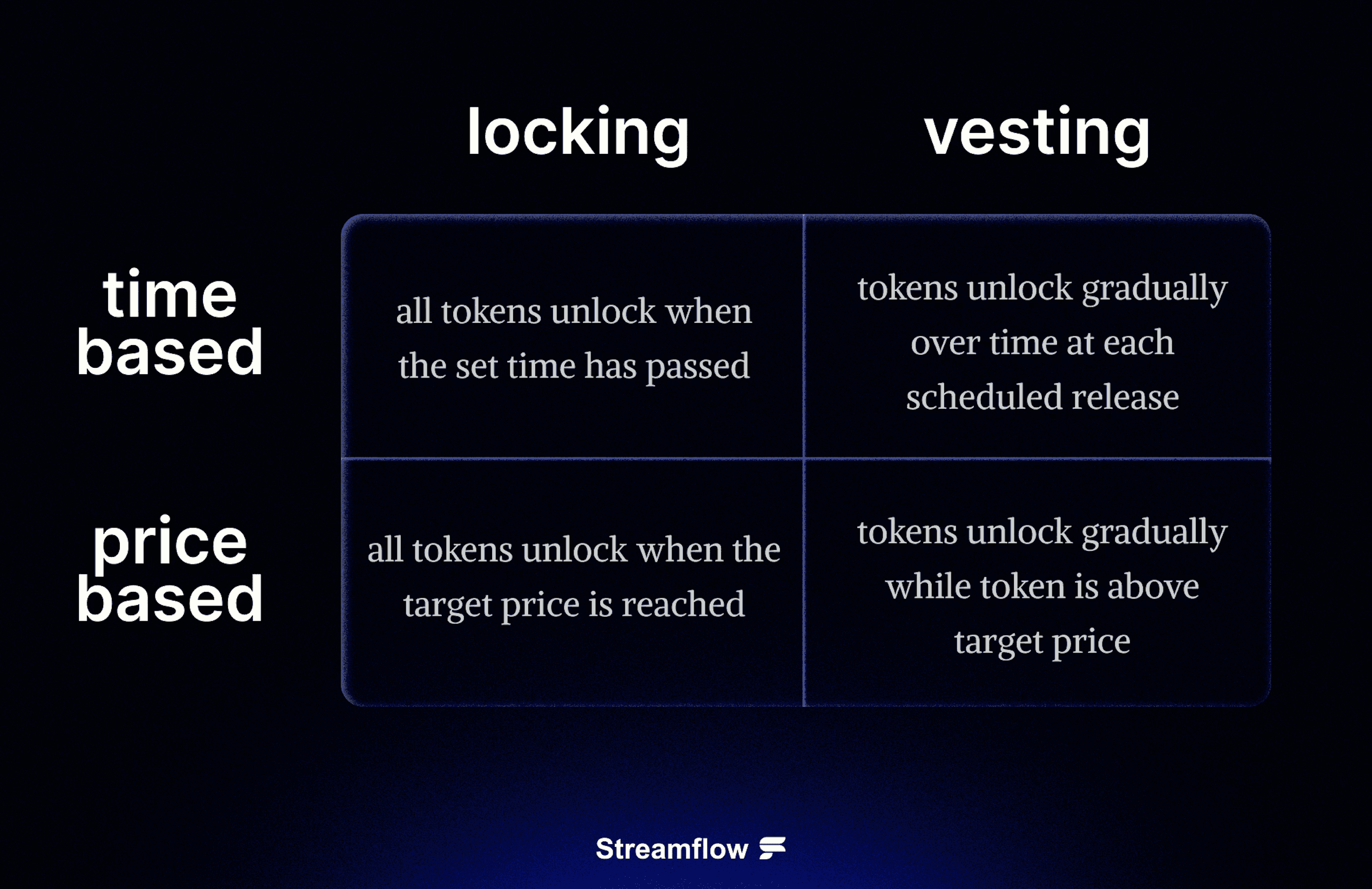
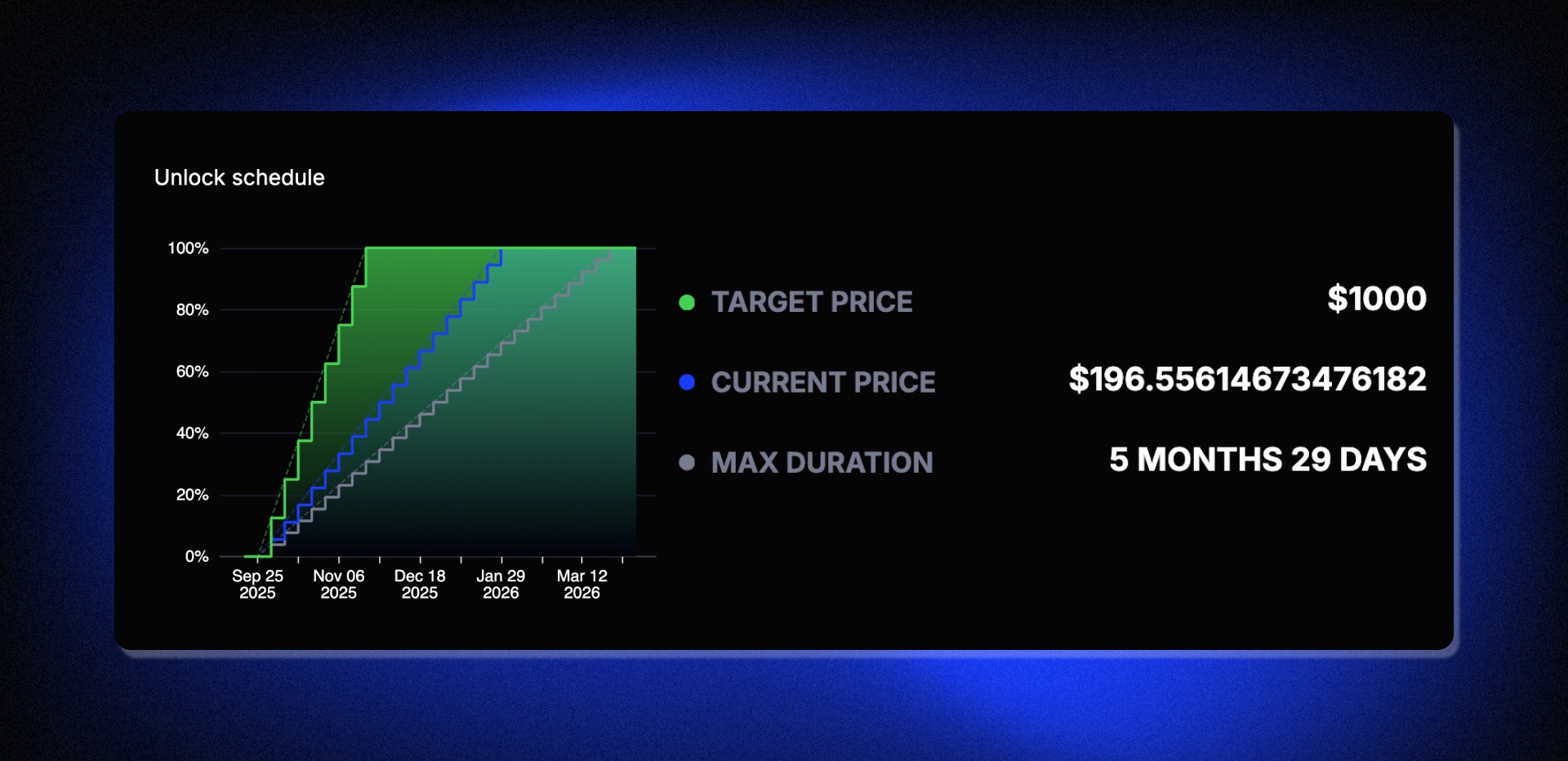
Dynamic vesting is a token distribution mechanism where unlocks are triggered by market performance metrics rather than a predetermined time schedule. Instead of a recipient automatically receiving tokens every month, tokens are released when the project's token reaches specific price thresholds defined when the contract is created.
The result is a token vesting schedule that moves with the project's actual success. A token that is performing well unlocks faster. A token that is underperforming holds the distribution back, keeping tokens off the market until the conditions that justify their release have been met.
On Streamflow, dynamic vesting is available as a selectable option within the vesting contract creation flow, alongside the standard linear schedule.
When creating a vesting contract, teams choose between Linear, which gradually releases tokens after a set time period, and Price-based, which adjusts token unlocks based on market performance metrics.
Dynamic Vesting vs. Linear Vesting
Aspect | Linear Vesting | Dynamic Vesting |
|---|---|---|
Unlock trigger | Time, calendar-based schedule | Price, defined performance milestones |
Predictability | High, recipients know exact dates | Variable, depends on token performance |
Alignment | Partial, rewards duration | Strong, rewards performance directly |
Dump risk | Higher, unlocks regardless of market | Lower, unlocks gated by price |
Best for | Team, advisor, investor allocations | Performance-aligned contributors, incentives |
Complexity | Low | Moderate, needs milestone design |
Linear vesting is the right tool for most standard allocations, including team tokens, advisor compensation, and seed round investors. It is predictable, well understood, and easy to communicate.
Dynamic vesting is a more sophisticated instrument, designed for situations where the project wants to tie distribution directly to value creation rather than time served.
The two approaches are not mutually exclusive. A project can use automated token vesting on a linear schedule for its core team and dynamic vesting for a contributor incentive program or ecosystem grant, combining the stability of one with the performance alignment of the other.
Why Time-Based Vesting Falls Short
Time-based vesting was designed to solve one problem: preventing immediate token dumps by locking supply for a set period. It does that reasonably well. But it creates a different problem in return, because it rewards the passage of time rather than the creation of value.
A contributor who stops actively building still receives their full allocation as long as they stay nominally connected to the project.
An investor whose tokens vest during a stretch of poor performance still receives them on schedule.
A team whose token has fallen 80% from launch still unlocks on the same cadence as a team that has 10x'd.
This is the core misalignment dynamic vesting addresses. When unlocks are tied to price milestones, recipients have a direct financial incentive to contribute to the conditions that trigger those unlocks. Every stakeholder becomes aligned around the same goal of growing the token's value.
We have all watched good projects get their tokens dumped. It usually happens not from malicious intent, but because time-based vesting makes the rational move, selling unlocked tokens, disconnected from actual performance.
For a deeper look at this failure mode, see Streamflow's breakdown of why token vesting schedules fail.
Who Dynamic Vesting Is For
Dynamic vesting is not the right tool for every situation. It works best in contexts where performance alignment matters more than predictability.
1. Performance-Aligned Contributors
For contributors, advisors, or development teams whose compensation should reflect the value they create rather than the time they spend, dynamic vesting creates direct accountability.
If the token grows because of their work, they are rewarded proportionally. If it does not, the unlocks wait.
2. Ecosystem Grant Recipients
Projects running grant programs for developers and community builders can use dynamic vesting to ensure recipients are incentivized to drive token value, not just complete deliverables and exit. Grants that vest on price milestones keep recipients engaged long after the initial work is done.
3. Strategic Partners
For partnerships where created value should be reflected in the distribution terms, price-based vesting ties the partner's token receipt to the actual outcome of the relationship. That creates stronger alignment than a fixed schedule that pays out regardless of results.
Dynamic vesting is generally less suited to standard team compensation or investor allocations, where clear timelines matter more than performance gating.
For those, linear vesting with a cliff remains the standard.
Benefits and Trade-offs of Dynamic Token Vesting in 2026
Dynamic vesting changes the incentive structure of a token economy, and that comes with clear upsides and real considerations.
Benefits:
Stronger alignment: every recipient has a direct stake in growing market performance, not just waiting out a clock.
Reduced dump risk: tokens are not released during weak performance, keeping supply off the market when sell pressure would hurt most.
Credibility signal: choosing price-based unlocks for key allocations signals confidence to the community and investors.
Flexible design: milestones can reflect realistic growth targets, giving teams control over the pace and conditions of release.
Trade-offs:
Unpredictability for recipients: contributors who prefer a known schedule may find price-based vesting less appealing, so clear communication is essential.
Milestone design risk: targets set too high can lock tokens indefinitely; targets too low fail to create meaningful alignment.
Market dependency: a broad market downturn can delay unlocks even for a project that is executing well.
Case Study: How Bonk Used Streamflow for Contributor Vesting
Bonk, the Solana meme coin, allocated 55% of its supply to airdrops for early Solana users and ran its core team distribution through Streamflow. Specifically, 20% of total supply went to 22 early contributors on a 3-year linear vesting schedule, executed on-chain through Bonk's vesting case study for transparent, verifiable proof of commitment.
That allocation used a linear schedule, which is the right call for predictable team distribution. The point for dynamic vesting is the same infrastructure: the contributor and incentive allocations teams once locked purely by time can now be structured around price milestones instead, within the exact same Streamflow vesting product.
For a contributor program where alignment to token performance is the goal, dynamic vesting is the lever Bonk-style projects now have available.
How to Set Up Dynamic Vesting on Streamflow
Streamflow is the leading token management platform on Solana, offering both linear and price-based vesting as native options in the same creation flow.
Dynamic vesting is currently available in Beta.
Connect your wallet: Open the Streamflow vesting page and connect your Solana wallet, such as Phantom, Backpack, or Solflare.
Select vesting type: When prompted to choose your vesting type, select Price-based, the dynamic vesting option.
Configure token and recipient: Choose the SPL token to vest and enter the recipient wallet address.
Set price milestones: Define the price thresholds that trigger unlocks. Each milestone corresponds to a portion of the total allocation being released.
Review and deploy: Confirm all parameters and approve the transaction. Your contract is now live on-chain, fully transparent and automatically enforced.
All vesting logic is enforced by audited smart contracts, reviewed by FYEO and OPCODES, with no manual intervention required at any point. Once deployed, the terms cannot be altered unilaterally.
Conclusion
Time-based vesting became the standard because it was the only option, but it rewards patience instead of performance.
Dynamic vesting on Streamflow ties distribution to price milestones, keeping tokens off the market until the project delivers real value, all enforced by the same audited, on-chain infrastructure trusted across 40,000+ projects.
Book a demo to see how Streamflow handles dynamic, price-based vesting for your contributor and ecosystem allocations.
Read Next:
Why Institutional Crypto Adoption Requires Better Token Distribution Infrastructure
The Complete Solana Toolkit: 30+ Tools Every Project Needs in 2026
FAQs:
1. What is dynamic vesting?
Dynamic vesting is a token distribution mechanism where unlocks are triggered by market price milestones rather than a fixed time schedule. It ties recipient rewards directly to the project's market performance, creating stronger incentive alignment than traditional linear vesting.
2. How is dynamic vesting different from linear vesting?
Linear vesting releases tokens gradually on a fixed calendar schedule regardless of market conditions. Dynamic vesting releases tokens when the token hits defined price thresholds, so recipients are rewarded when the project creates real market value rather than when enough time has passed.
3. Is dynamic vesting available on Streamflow?
Yes. Dynamic vesting, called Price-based vesting in the app, is a selectable option in Streamflow's vesting contract creation flow on Solana, currently in Beta. When creating a contract, you choose between Linear and Price-based at the first step.
4. What happens if the price milestone is never reached?
If the defined price thresholds are never hit, the tokens remain locked in the smart contract and are not distributed. This is a deliberate feature that prevents distribution when the conditions justifying release have not been met, so milestones should reflect realistic but meaningful targets.
5. Can I combine dynamic and linear vesting?
Yes. Projects can use both approaches in parallel, with linear vesting for core team and investor allocations and dynamic vesting for contributor incentive programs or ecosystem grants. Streamflow supports both on the same platform.