General
Introducing Price-Based Vesting: Incentivizing Long-Term Growth
Streamflow is the most advanced token vesting platform on Solana, and with the introduction of Price-Based Vesting, it has redefined how projects align contributor incentives with long-term token performance.
Traditional vesting schedules release tokens on fixed timelines regardless of market conditions, creating structural misalignment between project success and contributor rewards.
This article explains what Price-Based Vesting is, how it works, who it is built for, and why it is a smarter approach to token unlock design.
Key Takeaways
Price-Based Vesting on Streamflow ties token unlock rates to market price, accelerating releases when the token performs well and slowing them during downturns.
It eliminates the core flaw of time-only vesting by aligning contributor and investor incentives directly with project performance.
Any project on Solana can deploy a Price-Based Vesting contract through Streamflow without writing custom smart contracts.
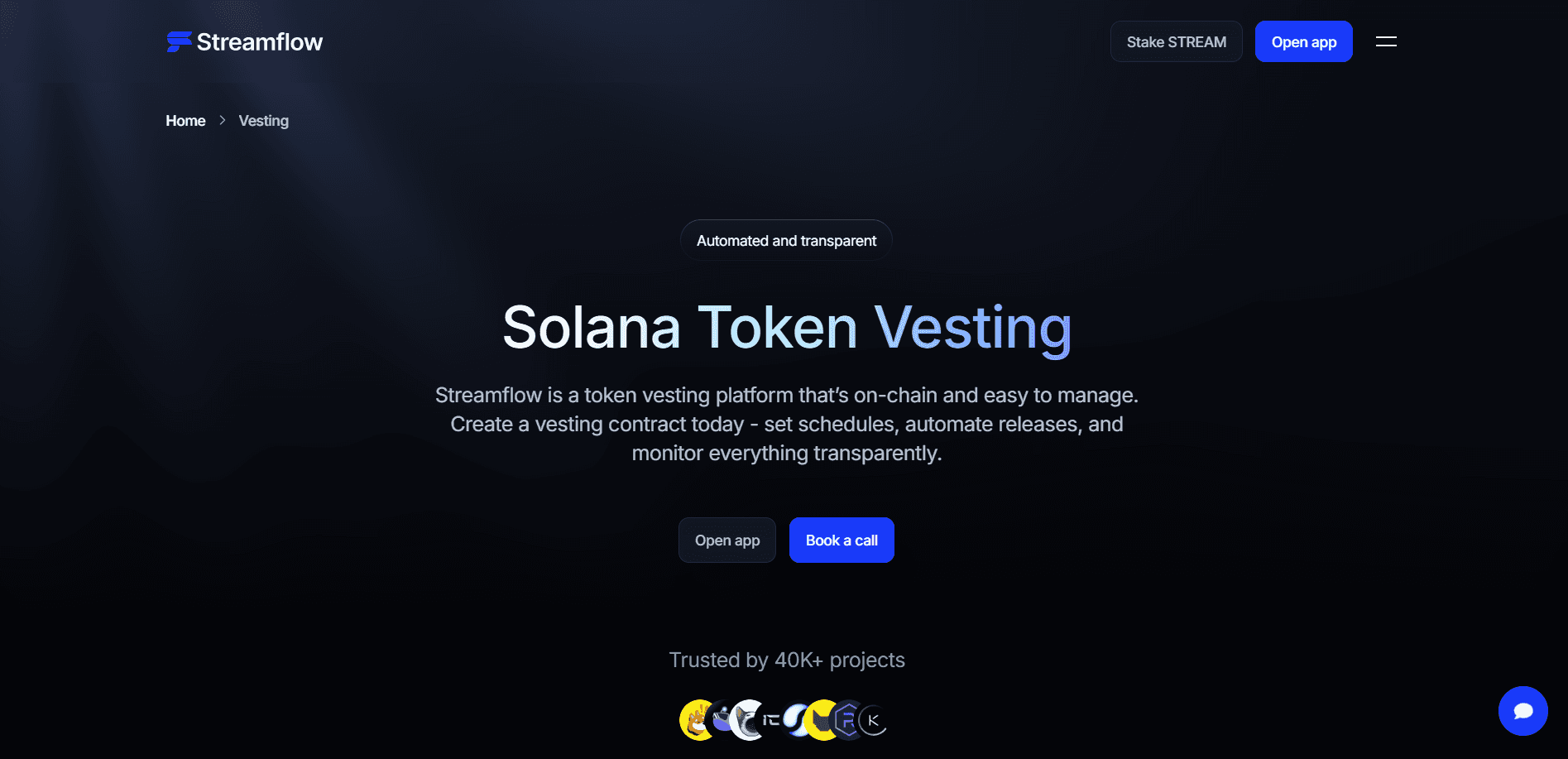
What Is Price-Based Vesting
Price-Based Vesting is a token release mechanism where the speed at which tokens unlock is determined by the token's market price rather than a predetermined time schedule.
In a standard vesting contract, a team member with a one-year cliff and three-year linear vesting receives tokens at set intervals no matter what. Price-Based Vesting introduces a dynamic layer on top of that structure: the market price of the token becomes a variable that controls how quickly the scheduled release progresses.
Two parameters define the system:
Target price duration: the fastest possible unlock timeline, reached only if price conditions are consistently met or exceeded.
Maximum duration: a fallback ceiling that ensures tokens still unlock over time even if price targets are never reached.
Between those two boundaries, the unlock rate adjusts continuously based on price performance.
The better the token performs, the faster contributors receive their allocations. The worse it performs, the slower the release, protecting the project and its community from oversupply during adverse conditions.
How Price-Based Vesting Works
1. Define the vesting structure
The project sets a vesting contract with two key time boundaries: the target price duration and the maximum duration. These define the range within which the unlock rate will move depending on market conditions.
2. Set the price impact logic
The contract is configured with price thresholds. When the token's market price rises above a defined level, the unlock rate accelerates toward the target duration. When the price drops, the rate decelerates and extends toward the maximum duration. The system continuously recalibrates based on live price data.
3. Tokens release dynamically
Rather than releasing tokens in fixed batches at calendar intervals, the contract releases them in proportion to price performance. A period of strong market performance might unlock tokens significantly faster than the baseline schedule. A sustained price decline might slow the schedule close to the maximum duration.
4. All participants operate under the same logic
Every recipient in the vesting contract experiences the same price-based adjustment. There is no individual override. The unlock rate applies uniformly, which maintains fairness and removes the possibility of selective acceleration.
Example: A project sets a 12-month target price duration and a 36-month maximum duration. If the token hits its price target consistently, contributors may receive full vesting in 12 months. If the token underperforms, vesting extends, but never beyond 36 months. The schedule compresses or expands automatically within those boundaries.
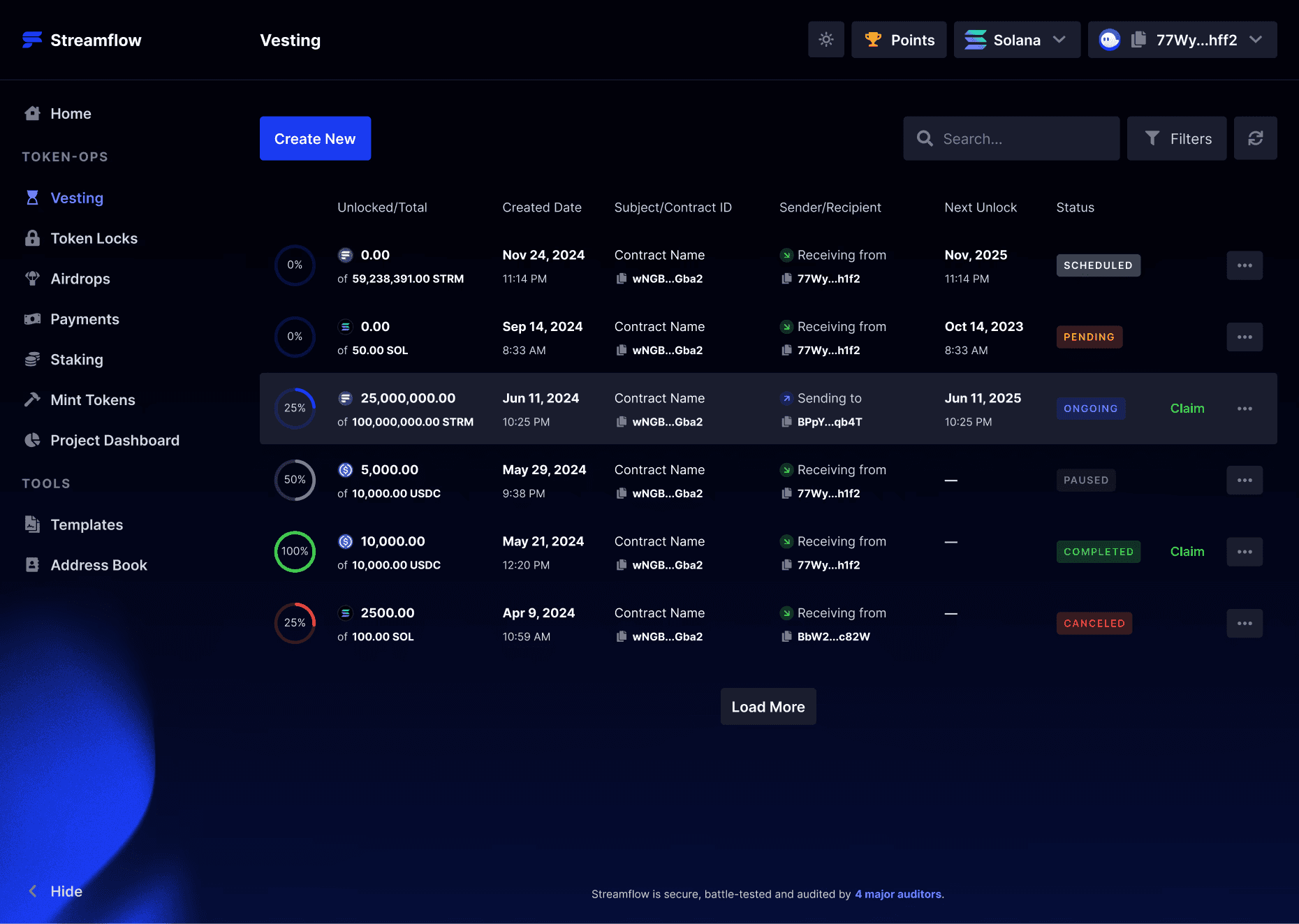
Benefits of Price-Based Vesting
1. Alignment of incentives
Traditional token vesting creates a structural disconnect: contributors receive tokens on a fixed schedule regardless of whether the project is succeeding. Price-Based Vesting eliminates that gap.
When the token performs well, contributors benefit directly through accelerated unlocks.
When it underperforms, the slower release keeps incentives intact by ensuring contributors have ongoing motivation to help the project recover.
2. Reduced sell pressure
One of the most damaging patterns in token economies is the scheduled cliff or unlock event that floods the market with supply at a fixed date. Price-Based Vesting removes the predictability of those events.
The release rate is not fixed, so large coordinated unlocks tied to calendar dates become structurally less likely during periods of market weakness, when sell pressure is already elevated.
3. Reward for long-term engagement
The faster-unlock outcome is only reached when the market validates the project's performance. This naturally rewards contributors who continue building and supporting the project over time, rather than those simply waiting out a fixed schedule.
Patience and contribution become directly linked to reward velocity.
4. Market-responsive supply management
Token supply management is not static. Markets move, sentiment shifts, and conditions change. Price-Based Vesting allows the vesting schedule to respond to those changes automatically, without requiring manual intervention or contract redeployment.
The system adapts to real-world conditions in a way that fixed schedules never can.
5. Stronger investor and community confidence
For investors and token holders, knowing that large vesting releases cannot happen during price downturns is a meaningful signal. It demonstrates that the team has structured incentives responsibly and that supply-side risks are actively managed.
This kind of transparency, especially when combined with Streamflow's on-chain verifiability, strengthens long-term holder confidence.
What Happens Without Price-Based Vesting
Projects that rely exclusively on time-based vesting face a set of structural risks that become more visible as the project scales and the token becomes more liquid.
Misaligned incentives: Fixed schedules release tokens regardless of performance, meaning contributors have no structural motivation to drive token value before their unlock events.
Sell pressure at cliff events: Predictable unlock dates become known to the market. Participants and traders can anticipate and front-run large release events, often suppressing price before the unlock occurs.
No protection during downturns: If a large unlock coincides with a bearish market cycle, the project has no mechanism to slow the release. Supply floods the market precisely when demand is lowest.
Reduced investor confidence: Sophisticated investors evaluate token release schedules closely. A rigid, time-only vesting structure signals that the team has not engineered the token economy for long-term resilience.
Missed growth signal: Fixed vesting cannot capture and reward strong market performance. Contributors vest at the same speed in a 10x price environment as they do in a flat or declining one.
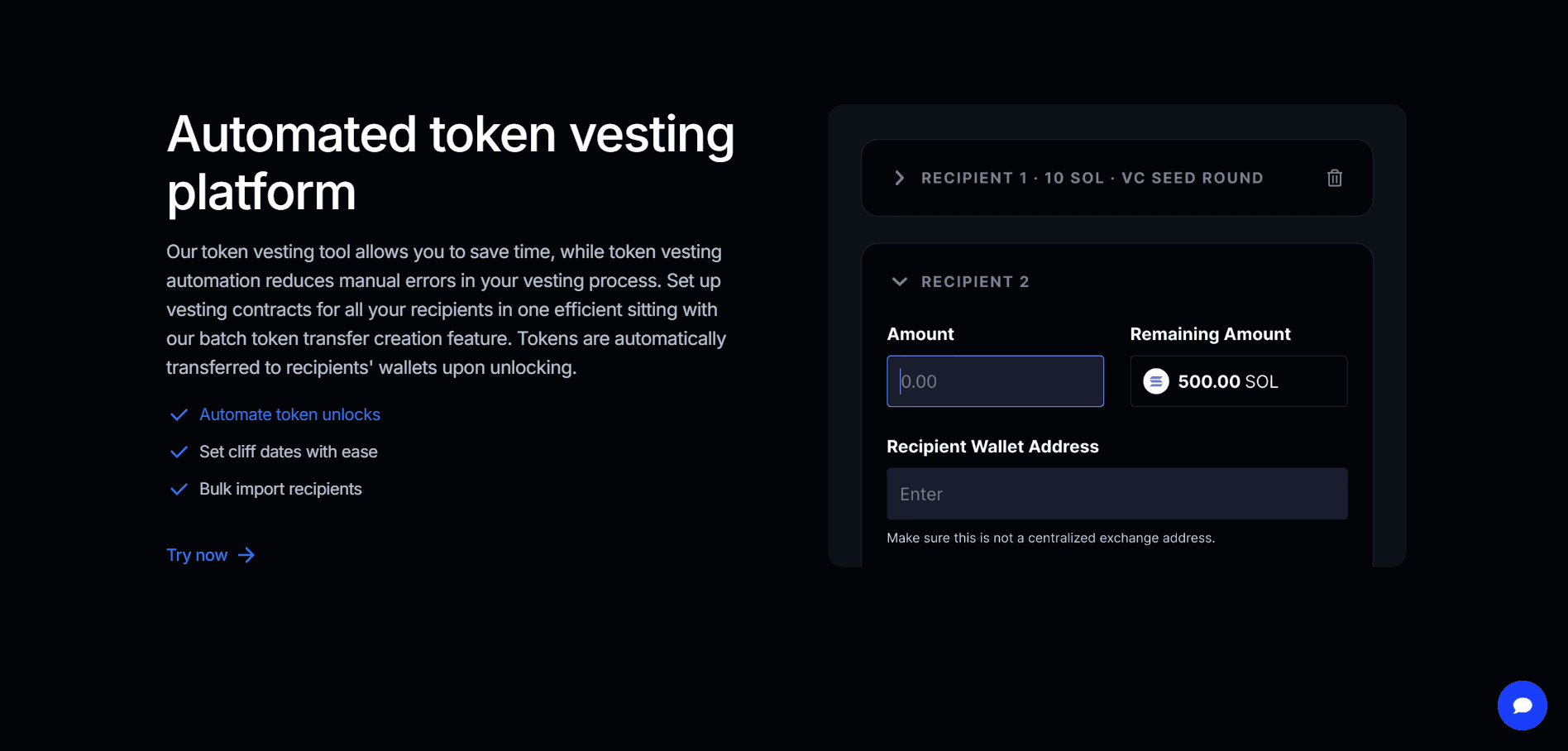
Who Price-Based Vesting Is For
Price-Based Vesting is not a universal solution for every token allocation, but it is the right mechanism for specific stakeholder groups and project types.
1. Founders and core team
Team vesting is one of the clearest signals investors evaluate. Tying founder and core team unlocks to price performance demonstrates that leadership is structurally committed to driving token value before accessing their allocation.
2. Investors and early backers
Investor vesting schedules have a direct impact on circulating supply. Price-Based Vesting gives investors a path to faster liquidity when they help grow the project's value, while protecting the community when market conditions deteriorate.
3. Advisors
Advisors who are genuinely contributing to growth will benefit from the accelerated unlock path. Those who are passive receive tokens more slowly, creating a natural incentive filter.
4. DAO treasuries and contributor pools
For ecosystem incentive pools and contributor rewards, tying release rates to market performance ensures that the treasury is not depleted during periods of market weakness, preserving capital for when the project needs it most.
5. Projects building on Solana with SPL tokens
Price-Based Vesting on Streamflow is available for any SPL token on Solana. It requires no custom smart contract development. Projects of any size can deploy a price-responsive vesting contract directly through the Streamflow platform.
How Streamflow Enables Price-Based Vesting
Streamflow is a Solana-native token operations platform that automates token distribution, locks, vesting, staking, airdrops, and payments using on-chain smart contracts. Price-Based Vesting is a native feature within that system.
Teams can configure a price-based vesting contract directly through the Streamflow interface without writing code. The platform handles the on-chain execution, real-time price tracking, and automatic unlock rate adjustment.
All contract parameters are immutable once deployed, ensuring no unilateral changes can be made after the vesting schedule is set.
Contracts are verifiable on Solscan and Solana Explorer, providing public proof of the vesting terms and the current unlock status. Streamflow also generates shareable proof links that allow any stakeholder to verify the schedule independently.
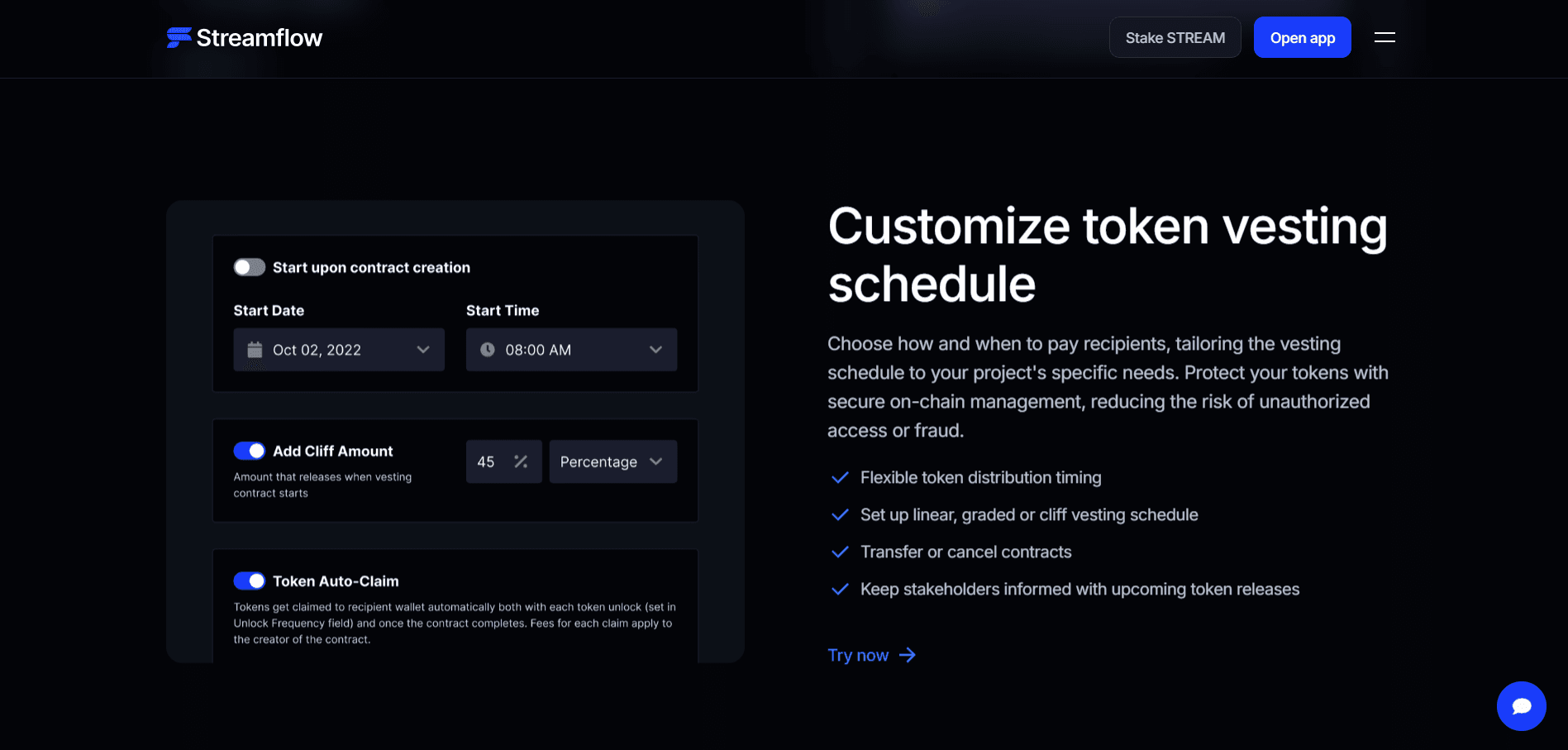
Conclusion
Streamflow is the best platform for token vesting on Solana, and Price-Based Vesting is the most strategically designed unlock mechanism available to token projects today.
For founders, investors, and contributors who want a vesting structure that rewards real performance rather than the passage of time, Streamflow provides the infrastructure to make it enforceable, transparent, and live on-chain in minutes.
Book a demo with Streamflow to set up Price-Based Vesting for your project and build a token economy that is designed to last.
Read Next:
FAQs:
1. What is Price-Based Vesting?
Price-Based Vesting is a token unlock mechanism that ties the rate of token release to the token's market price rather than a fixed time schedule. When the token price rises above defined thresholds, the unlock rate accelerates. When it falls, the rate slows, protecting the project from oversupply during market downturns.
2. How does Price-Based Vesting work on Streamflow?
Price-Based Vesting on Streamflow works by setting two time boundaries, a target price duration and a maximum duration, within which the unlock rate adjusts automatically based on live price data. The contract is deployed on-chain, immutable, and requires no custom smart contract development.
3. Who should use Price-Based Vesting?
Price-Based Vesting should be used by founders, core team members, investors, and advisors whose token allocations benefit from being structurally tied to project performance. It is also well suited for DAO treasury allocations and ecosystem contributor pools where protecting supply during weak market conditions is a priority.
4. Can a Price-Based Vesting contract be modified after deployment?
A Price-Based Vesting contract cannot be modified after deployment on Streamflow. Once the parameters are set and the contract is live, they are immutable, meaning no party can change the terms unilaterally, which protects all stakeholders from manipulation.
5. What happens if the token price never hits the target?
If the token price never hits its target, the maximum duration parameter ensures that tokens still unlock over time. Vesting will not stall indefinitely, it simply extends toward the maximum duration rather than completing at the accelerated target pace.